Centuries ago, on the plantations of colonial Saint Lucia, a language was born out of survival. French met African, mixed with English, and evolved into something entirely its own. A tongue of resistance, rhythm, and resilience. That language became Kwéyòl, the voice of a people determined to be heard.
For generations, Kwéyòl lived in the homes, markets, and hillsides of the island, passed down through speech but never script. But as time went on, English took centre stage. In schools, in workplaces, and in government offices, Kwéyòl became something many spoke quietly but rarely wrote, sometimes viewed as informal or “less than.”
Now, in a time of cultural revival, Kwéyòl is finding new strength. Across classrooms, social media, and community spaces, Saint Lucians, especially the younger generation, are reclaiming their language and redefining what it means to speak it with pride.
Among those leading this resurgence is Sylvie Soir Kwéyòl Smith, a Saint Lucian author and Creole enthusiast whose work is helping to bridge generations and preserve the sound of Saint Lucia’s soul.
“I always grew up around [Kwéyòl] — whether it be in Saint Lucia or when I would visit family from different locations,” she said. “From childhood, I was really into the language.”
Smith’s love for Kwéyòl was never something she had to search for. It was always there, embedded in her family life and community. Yet it wasn’t until she moved abroad that she began to see how fragile cultural understanding could be, especially when it came to language.
“I realised that a lot of people don’t know the roots of Creole,” she explained. “They don’t know how exactly we speak the language, why we have French words in it. So I decided that I wanted to go deeper into the language itself so that everybody can understand our true history.”
What she discovered was that Kwéyòl is far more than a collection of borrowed words, it’s a reflection of Saint Lucia’s shared past, moulded by struggle and survival.
“It’s really vital, it’s really important for us as Saint Lucians,” she said. “It reflects us… our experiences, the struggles of our ancestors, exactly how the language came about. I feel like if you don’t know your native language, then you don’t exactly know who you are.”
She believes that reclaiming the language is also about reclaiming identity. Speaking it, she says, is a way of carrying memory forward.
“Just being able to speak it every day carries our values and our social practices,” she explained. “Without it, there’s a risk that we’re losing a very important and integral part of our identity.”
Taking Kwéyòl to the digital age
In an era where a language can fade as fast as it spreads, Smith found a modern way to keep Kwéyòl alive — through the same platforms that often distract us from heritage. It started casually, with a tweet written in Creole, and grew into something much larger.
“I was on Twitter one time, just writing in Creole in the standard way,” she recalled. “People were like, ‘But how do you know how to write this?’ And then I figured, you know what, I’m going to start posting.”
Those posts, part education, part inspiration, quickly gained traction. They revealed something that surprised even her: how many Saint Lucians could speak the language but had never learned to write it.
“It was received well, and people were really into it,” she said. “I realised there was a lack in knowing the language fully — not just speaking, but writing it. With this knowledge, I thought, why not share it? Everybody deserves to know.”
The more she posted, the more her audience grew. What began as casual content became a kind of digital classroom. One that stretched far beyond Saint Lucia’s borders.
“I have people from countries you’d never think would know about the Creole language, and they’re learning with me, buying my books, and receiving it well,” she said. “I’m just really happy that all of this is actually working out for everybody.”
Bringing Kwéyòl back to everyday life
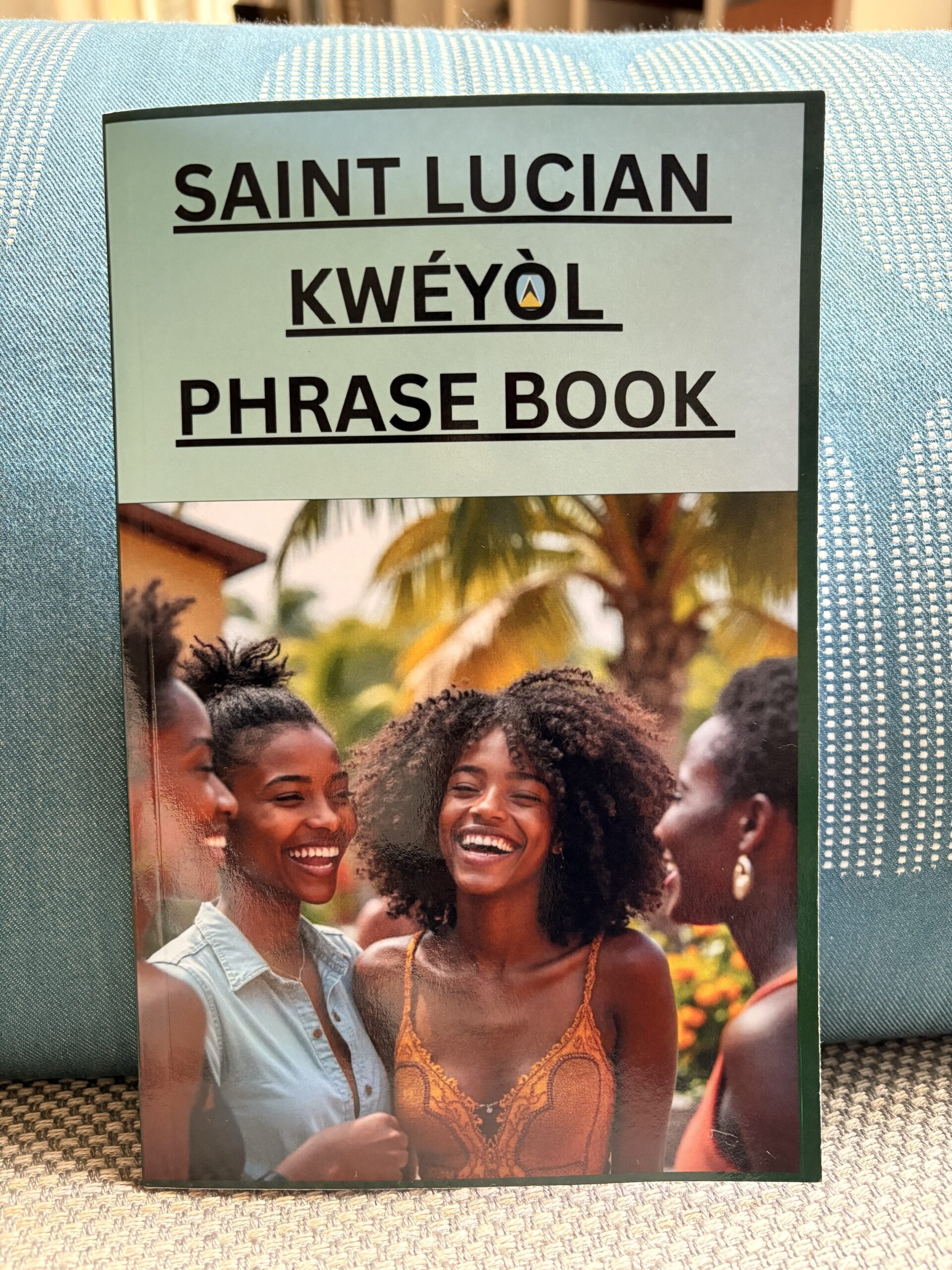
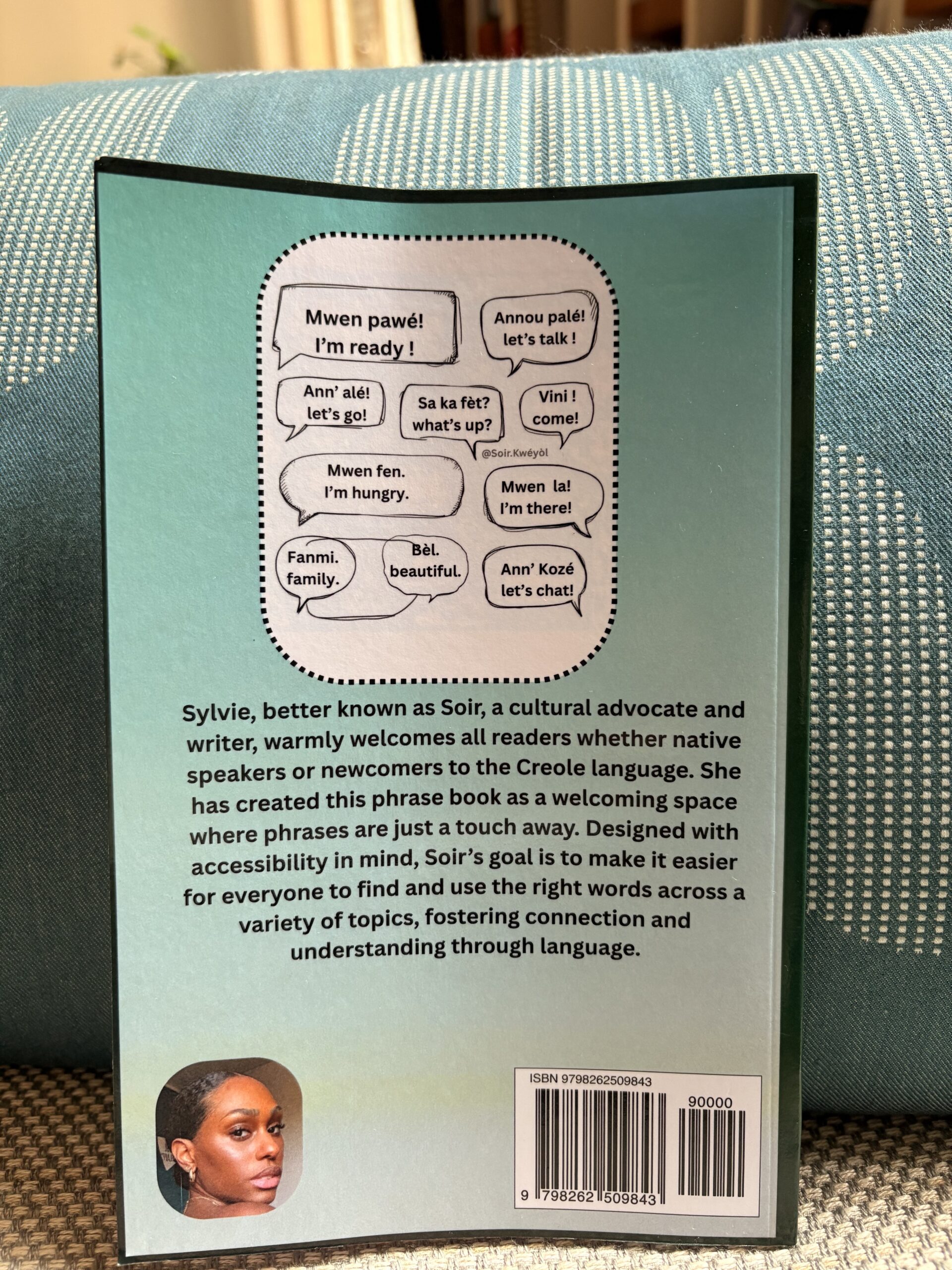
That growing global curiosity inspired Smith to take the next step — to create something tangible. The result was The Kwéyòl Phrase Book, a simple yet powerful guide that helps readers weave the language into everyday life.
“This book came about thanks to my Creole students,” she said. “While having classes with them, I realised they needed something tangible… not just online videos, but something they could carry everywhere they go.”
Filled with practical expressions and short conversational examples, the book makes Kwéyòl accessible to both locals and the diaspora who want to reconnect with their roots.
The response, she said, has been overwhelming. Not just from learners, but from Saint Lucians rediscovering the pride of seeing their language in written form.
“Everybody is always so happy to be able to have resources,” she said. “The responses have just been pleasant, really lovely, and thankful.”
Speaking for the future
Still, not everyone has embraced the movement. For some, old attitudes linger — seeing Kwéyòl as less important or less refined, but Smith believes that resistance is rooted not in rejection, but in misunderstanding.
“Of course, there are people who are always against the Creole language,” she said. “But that stems from a place where they just don’t know.”
Her mission now is not just to teach, but to change perceptions. To show that language is not static, and that preserving it is an act of unity.
“Just to foster our community, I think it’s very vital for us as Saint Lucians,” she said.





Well-done – a great tool for St Lucia’s cultural revival and continuity.
Great stuff!
Where can we buy that book?