
The launch of On the Shoulders of ‘Peasants’ was both a scholarly reflection and a heartfelt tribute, as author Louise Mathurin-Serieux framed her work as an act of remembrance and national affirmation.
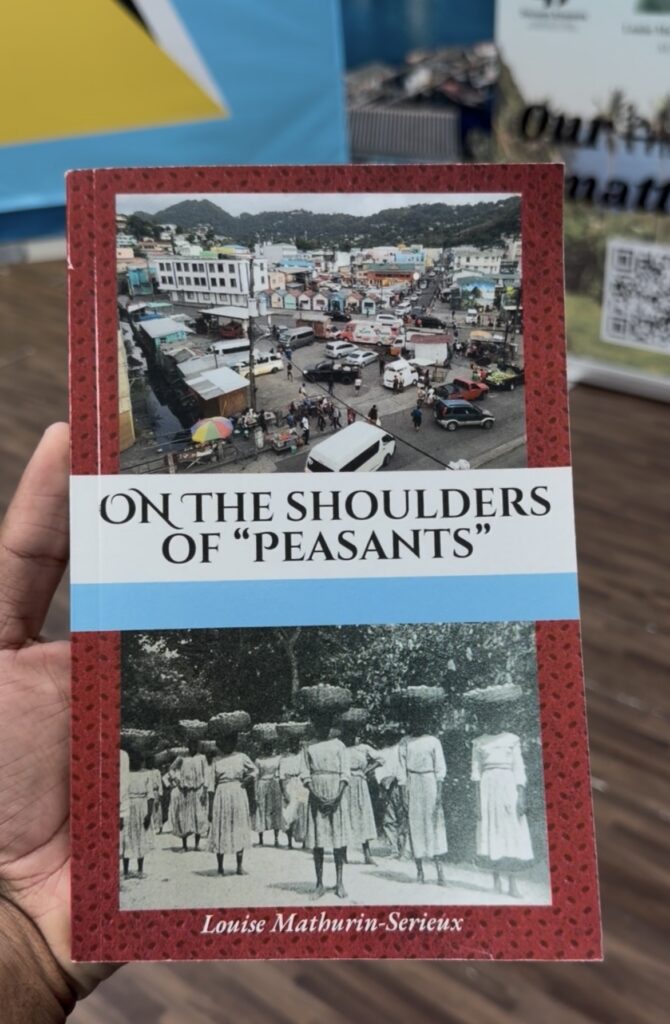
Opening her address, Mathurin-Serieux made clear that the occasion was about far more than a book but was in “honour of all of our ancestors”, pointing to those who, in the years following emancipation, refused merely to endure hardship.
She described them as people “who felt that it was not enough to simply survive the years that followed the post-emancipation solution, but it was critical to thrive,” adding that “in so doing, they built the foundation of the Saint Lucia that we know today, an independent nation.”
The author explained that the project began as an economic inquiry, in which she sought answers about how the island’s economy developed over time. However, the research soon took on a deeper, more personal dimension. She expressed gratitude to those who contributed to the study, saying, “The oral history was a critical part of the research.”
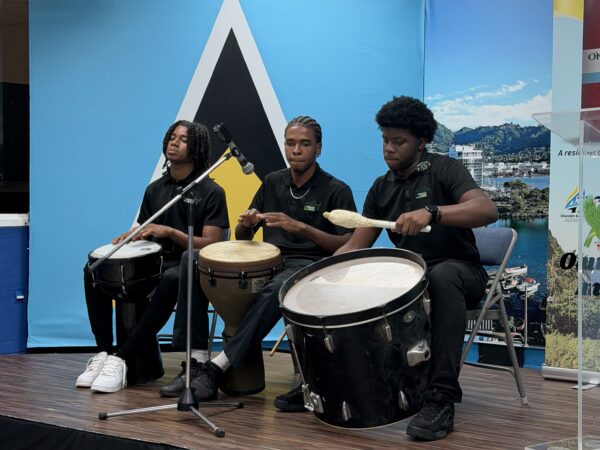
Mathurin-Serieux used the platform to issue a call to preserve community memory. “I do believe that we must engage with that oral history,” she said, and people “must put more effort into keeping these records”.
“Most of the persons I interviewed are no longer with us, so we need to make some effort towards preserving our oral history if we are really going to learn and maintain the story for our next generation.”
The book traces Saint Lucia’s economic transformation from emancipation through the rise and fall of key industries. Her process, she said, included reading earlier works on the peasantry.
Although she presented elements of her research regionally and internationally, the author admitted that the urge to publish persisted. At the heart of the data, she said, was something far more compelling “in the midst was the story of our people, the landholders, the farmers, the rural persons”.
In earlier presentations, she conceded, those individuals had been secondary to the statistics. Yet “their story kept screaming out to me”, she said, adding that she would joke that “I was holding a story hostage.” Determined to correct that imbalance, she resolved to centre on their experiences. “To write this book, I needed to work on centering them in the telling of our story,” she said. In doing so, she discovered that “when we connect with our past in that way, we empower ourselves as Saint Lucians.”

She also recognised the need to go deeper, returning to the immediate post-emancipation period “to better understand how and why they did it…this is where the book begins, chapter one, from emancipation to the peasantry”.
In that formative era, she found a people seeking autonomy and dignity. Despite “closed doors of legislation and taxation which limited their options in earning independently, and obstacles in owning land”, they did not surrender to circumstance. Instead, “they chose to focus on the openings that came in the form of the sugar crisis… market day, door to door sales, friendly societies and the rise of new industries like cocoa, limes, coconut and eventually bananas.”
She outlined how, within years of emancipation, formerly enslaved people were “buying and renting land and selling sugar to the remaining sugar factories,” later standing “at the forefront of building the cocoa industry by 1894”. By the early 20th century, “they owned considerable areas, areas of land, and were at the forefront of these industries, while also producing to feed the nation.”

While chapters two to six examine economic contributions, Mathurin-Serieux said she could not ignore their wider impact. In chapter seven, she addresses “their efforts in advocating for better conditions for all, and their determination to build their communities and a better solution for the next generation”. Whether through media or friendly societies, she noted, “they sought to make things better.”
The book’s title reflects a dual meaning. On one hand, rural landholders and farmers “helped build the economy and on the other, “the bulk of the consequences that came with each collapse, industry fell on their shoulders”. It is therefore “critical for us to celebrate their contributions to building this economy, but to also recognise the sacrifices that they made in the process of nation building”.
Closing her remarks, Mathurin-Serieux reminded the audience that the gathering transcended literature. “We gather not just to launch a book, but to honour the resilience of a people,” she said, describing history as “an anchor, one rooted in strength and national pride”.




Congratulations to the author – there are many individuals who made significant contribution to St. Lucia history and development over several decades. I know that research is extremely pain staking – however I am curious to know which time frame was utilized for this project.