The fatal fer-de-lance attack on Valence Alfred has intensified calls in Thomazo for further intervention, as residents live with the fear that the venomous snake is slithering closer to their homes.
On the afternoon of January 20, while taking his usual route home, a young resident, Eric, spotted an ailing Alfred lying next to a neighbour’s hedge.
Noticing Alfred’s swollen face and hand, “I asked him what happened to him,” Eric told St Lucia Times. After learning that Alfred had been bitten by a Saint Lucian fer‑de‑lance, he immediately called for an ambulance.
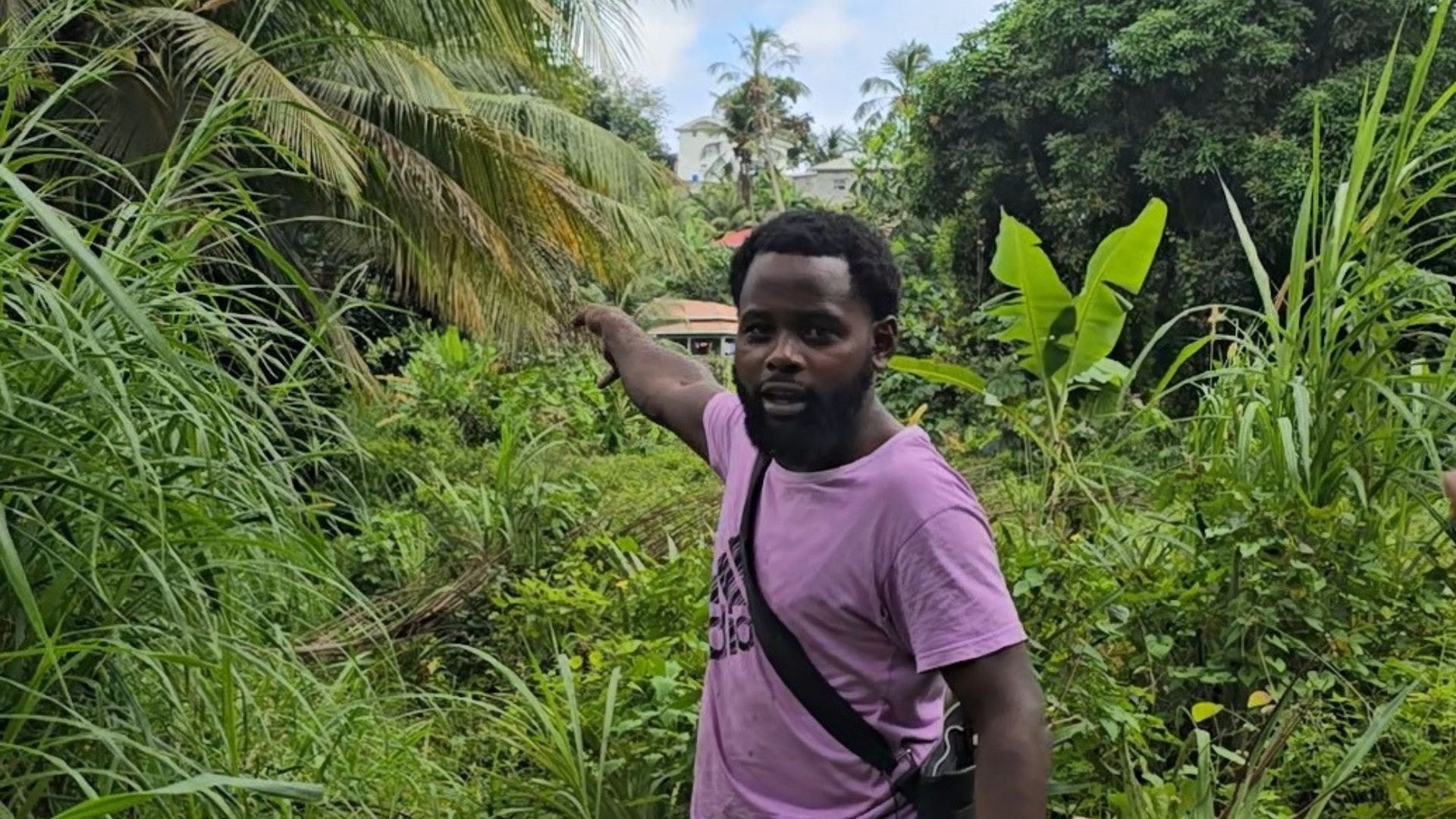
According to residents, Alfred was in Thomazo to work at a home. While on the job, he felt a sharp sting on his hand but did not see what had bitten him. As he investigated, he described a large snake lunging at his face, inflicting another bite.
A terrified Alfred eventually made his way through heavy foliage and onto a narrow concrete bridge to cross a nearby river, where he crouched down by a house next to the main road.
Eric said it took the ambulance about 20 to 30 minutes to arrive, during which time a police officer who saw the scene unfolding also stopped to offer assistance. When the ambulance arrived, paramedics asked Eric and other residents to fetch water to help wash Alfred’s wounds as they assessed him.
Alfred was later treated at the Owen King European Union Hospital, where antivenom was administered. Unfortunately, by the next day, his heart stopped beating.
“All I could say is praise God I found him there,” Eric said. “Afterwards, I heard that he passed. I was surprised.”
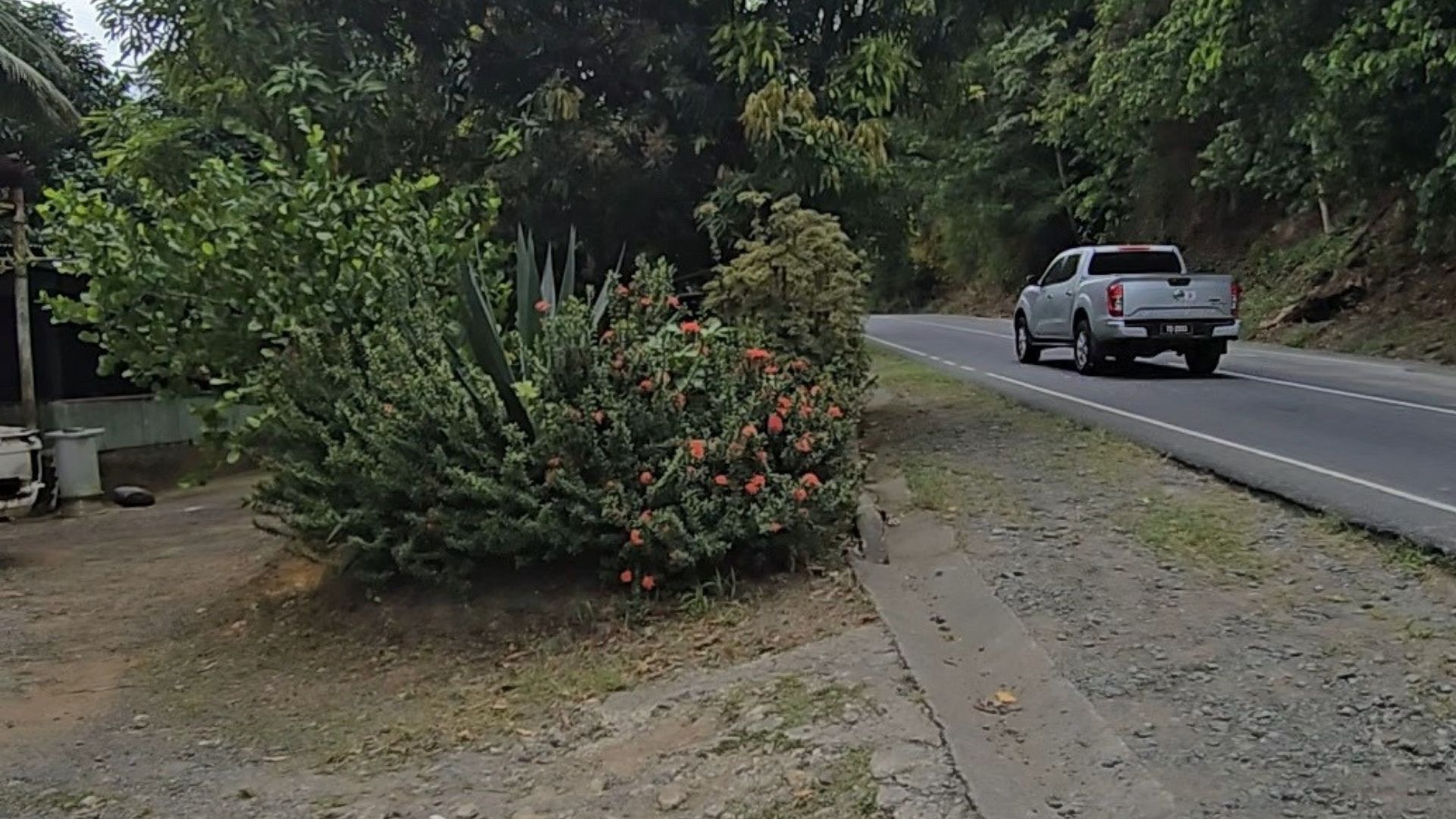
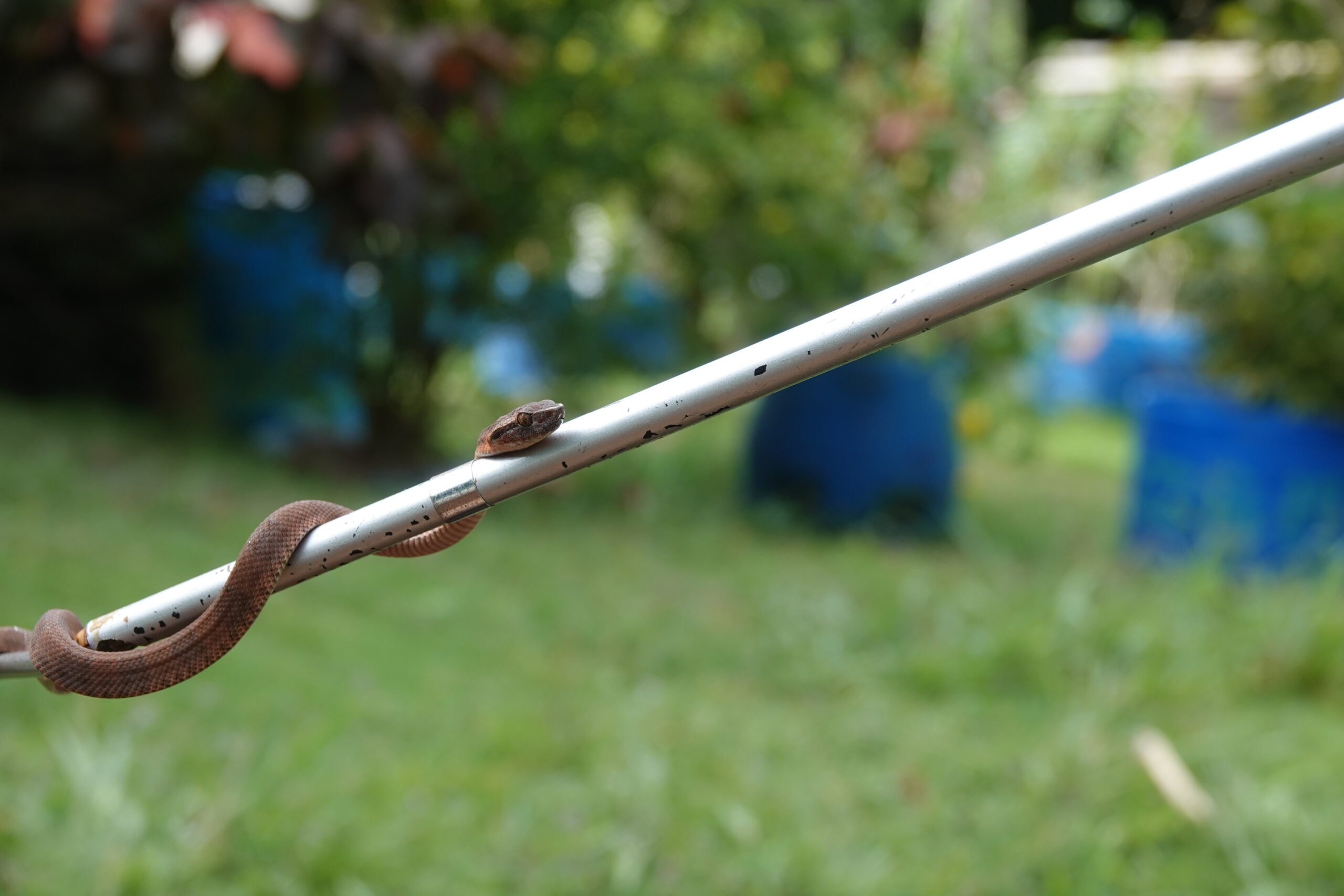
Later, when officials checked the area where the incident took place, residents said the snake that bit Alfred was never found, but three smaller ones were.
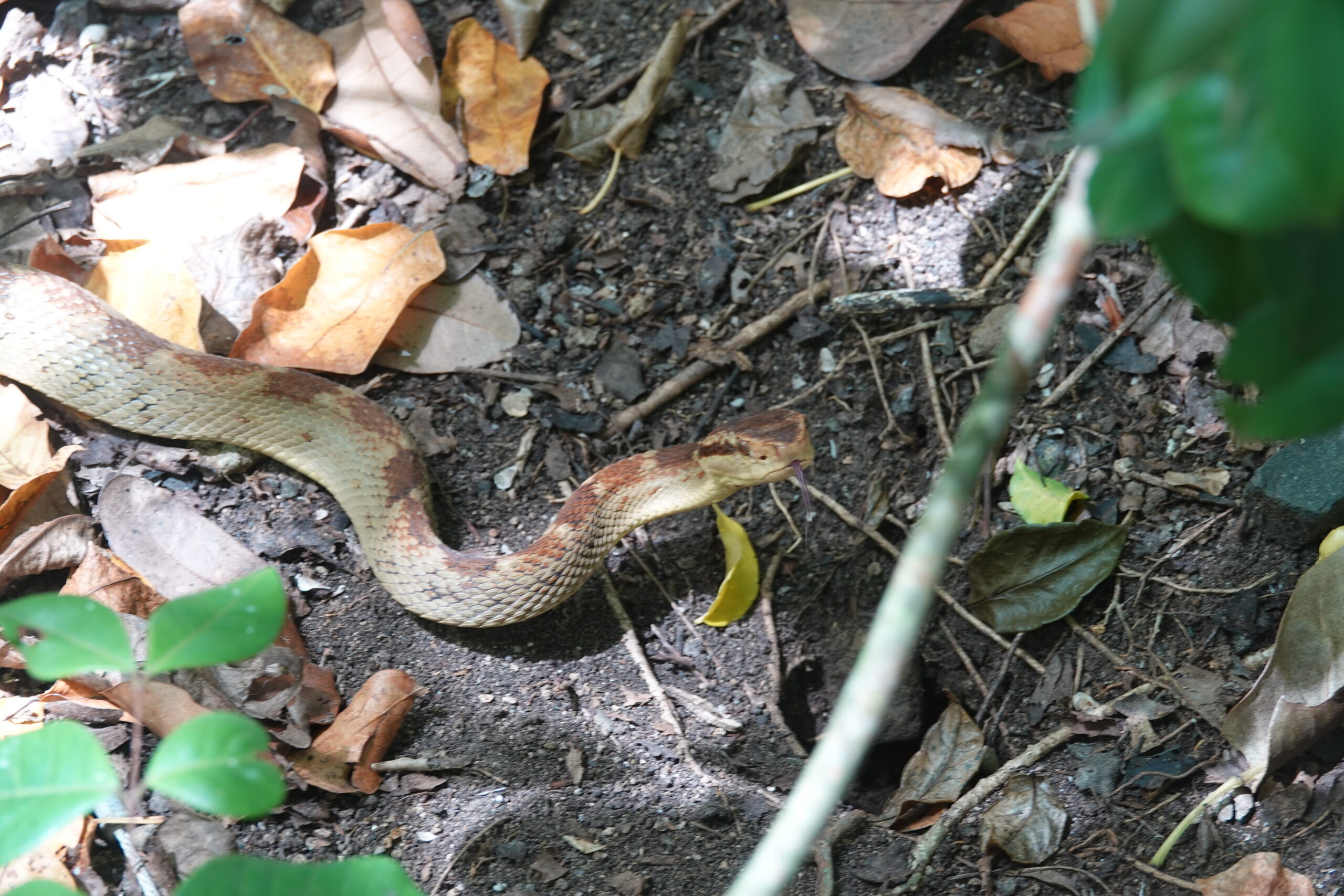
Though fer-de-lance-related fatalities are rare, and experts say the snake’s natural instinct is to avoid humans, sightings have become increasingly common in Thomazo, particularly at night when the nocturnal creatures tend to move about, residents say.
Up the road from where the late Alfred was found is the Thomazo Local Bread, a popular family-run bakery stop for many Saint Lucians and visitors traversing through Dennery, and a common meeting spot for Thomazo residents. People casually gathered there said that while they had not encountered the animal themselves, they knew friends and family who had. They told St Lucia Times that a young doctor was bitten two weeks ago. Fortunately, his bite occurred on his ankle, near the bone, and he received immediate medical care. He survived. An owner of a salon in the area also went outside at midnight to find a fer-de-lance snake near her front door.
“Right now, everyone is anxious; they really want something to be done about it,” said Sammy, who goes by the alias Kenterberry and helps his family run the bakery. “The feeling isn’t a nice feeling. Sometimes when you go to bed, you don’t want to sleep because you have snakes on your mind.”
One of Sammy’s main roles in the family business is sourcing natural ingredients for pastries from his nearby garden, trees dotting the surrounding area, or the supermarket. He says he now pays close attention, surveying a wide perimeter around every spot he stops to pick fresh produce.
Having grown up in the area, Sammy says fer-de-lance snakes aren’t new to the community or surrounding areas in Grand Rivere, Dennery. However, in recent years, the community has sensed that the snake population is encroaching. He believes this may be due to a combination of factors.
“More people used to do gardening in the area and manage the land, but they’re not there anymore, so the lack of people gardening, trust me, the snake will take their place,” Sammy said. He also believes spraying and the use of chemicals to help manage the situation in surrounding forested areas could potentially drive snakes toward residential properties.
Although in-depth research on Saint Lucia’s fer-de-lance snakes has yet to be conducted, experts also speculate that reduced gardening and farming activity could be playing a role.
“One theory is that in the past, you had extensive banana farming in areas where snakes might be, so widespread use of pesticides and clearing of the landscape for planting, these kept the snakes at bay,” said Lenn Isidore, a biologist and reptile specialist who has extensive experience assisting with handling Saint Lucia’s endemic fer-de-lance. “Pesticides would kill insects, resulting in fewer lizards and frogs, and that’s fewer prey items for small snakes. So, maybe that kept the snakes away. Maybe that also kept rodents away because that’s fewer items for larger snakes as well.”
Both residents and experts have also observed that a growing wild pig population in forested zones may be displacing snakes, as reports of dug-up earth and disturbed habitat spaces for the endangered snake have increased.
Before heading down near the river to his land in Thomazo, which he had been away from for the past year, Morris, a resident, told St. Lucia Times that even as he walked along the main road to his property, neighbours cautioned him about the snakes. However, he said he is unafraid. He, too, plans to manage the situation using a chemical mixture of Gramoxone and other unnamed substances, one of which he expects to obtain from Saint Lucia Distillers. “They told me to come for it in two weeks… I’ve used it on the land before, and it worked.”
Some residents believe previous chemical methods are effective and can have an impact for months. Others are calling for increased use. Sammy says he hopes officials will visit Thomazo and the surrounding communities more frequently. “They might need to start using chemicals a little bit more, at least around the homes, instead of just the forest….I’m not sure what exactly needs to be done, but we have to take another step,” he said.
Efforts were made to clarify whether the local Forestry Department is conducting chemical spraying in forested areas; however, a response was not received at the time of publication. The division did note that it intends to roll out a strategy focused on public education and awareness regarding Saint Lucia’s fer-de-lance and human safety.
Isidore said he is unfamiliar with any official use of chemicals by local authorities as a standard practice. He also cautioned that the use of harsh chemicals, including Gramoxone, may have long-term environmental consequences, including soil degradation. If crops are later planted in treated soil, he warned, there could also be health implications when food is consumed.
He, too, though drawn to reptiles from a young age, says he wants to keep people safe. “As much as I love wildlife, I love people more. What draws me to the human-snake conflict space is wanting to make a difference by supporting livelihoods and helping people live better and more safely,” Isidore told St. Lucia Times.
He said he is aware of increased efforts aimed at keeping residents safe. Snakes typically travel in search of food, shelter and mates, he explained. Reducing contact with humans can include regularly managing foliage around homes, clearing yards of large rocks, coconut husks, wood piles, and other large discarded materials, such as sheets of galvanised metal, which snakes may use for shelter. Since fer-de-lances primarily feed on rats, properly disposing of food scraps to reduce rodent populations is also critical in keeping snakes away from homes.
Fauna & Flora recently announced its Saint Lucia Fer-de-Lance Project, which is being implemented in partnership with the Durrell Wildlife Conservation Trust, the local Forestry Department and the Ministry of Health. The stated aim of the project is to reduce the number of snake bites in Saint Lucia while also ensuring the snake population remains stable, and its benefits are better understood.
Last year, activities carried out under the Strengthening Access and Benefit-Sharing Policies and Institutional Frameworks through Demonstrable Models project (ABS) included community outreach workshops where over 70 residents in communities bordering central forest reserves and areas where snake populations are known to exist, including Dennery North and South, Micoud North and South, Anse La Raye, Canaries, Millet and Praslin. Participants were trained in safe handling and identification of fer-de-lance snakes, according to Project Coordinator Beana Joseph.
As the project is funded by GEF, implemented by UNEP and executed by the International Union for Conservation of Nature and the Department of Sustainable Development, Joseph said the wider scope of ABS also includes developing policy frameworks to govern any future international research into Saint Lucia’s genetic resources, including the snake’s venom. In the event that foreign institutions conduct studies, contracts would ensure that Saint Lucia retains control over biological compounds derived from the species. Though the benefits of Saint Lucian fer-de-lance venom are currently unknown, other types of venom have proven to offer medical and other benefits and uses. Should commercialisation of Saint Lucian fer-de-lance venom arise, she explained, negotiations would be required between the country and external entities to secure national benefit.
Snakebite treatment is also covered under Saint Lucia’s Universal Health Coverage programme. Since February 2025, seven snakebite victims have been treated, according to SLUHC Director Alisha Eugene-Ford.
Environmental experts say that while comprehensive research on the movement patterns and population size of Saint Lucia’s fer-de-lance does not yet exist, such data could prove vital in managing human-snake coexistence in a way that protects residents while preserving a species found nowhere else in the world.