
The thing that drove Laurah John to tackle one of the most complex challenges of this generation — the high volumes of plastic and glass used every day — was her determination to help lift disenfranchised communities out of poverty.
With a background in social development, John incorporated Jua Kali Ltd in 2014 and committed herself to finding what she described as ways to help “materials maintain their value while communities maintain their dignity”, venturing into the largely uncharted territory of full-scale recycling.
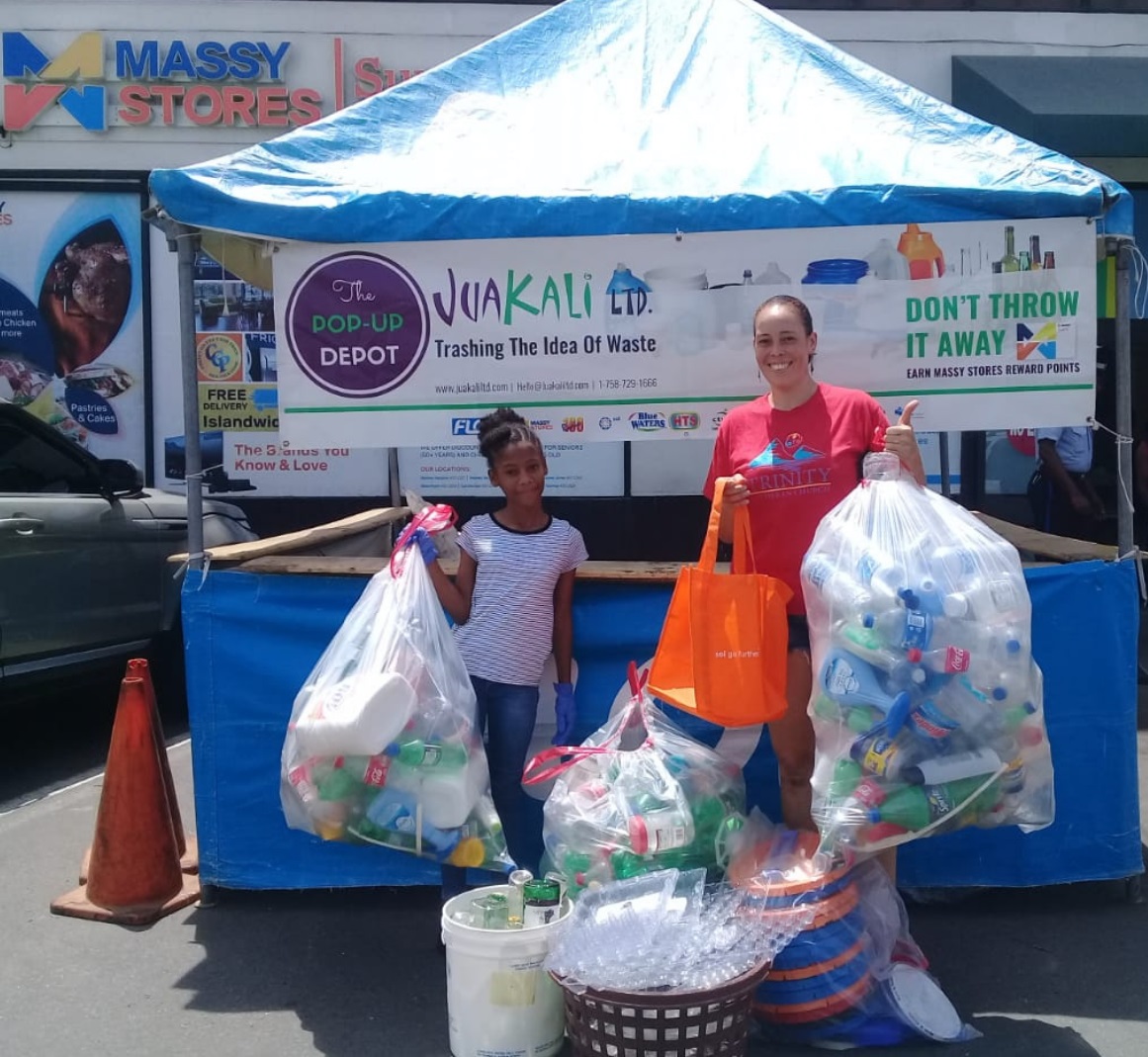
That vision produced Jua Kali’s most recognisable initiative to date: the pop-up depot pilot project. In collaboration with Massy Stores, residents brought used plastic and glass to a pop-up depot outside select Massy Store branches at specified dates and times, to receive Massy reward points in exchange. Jua Kali then assumed full responsibility for the material, transporting tonnes of waste for recycling instead of letting them live out their lifespan at the landfill — facilities that, on average, are said to have only a 20-year lifespan.

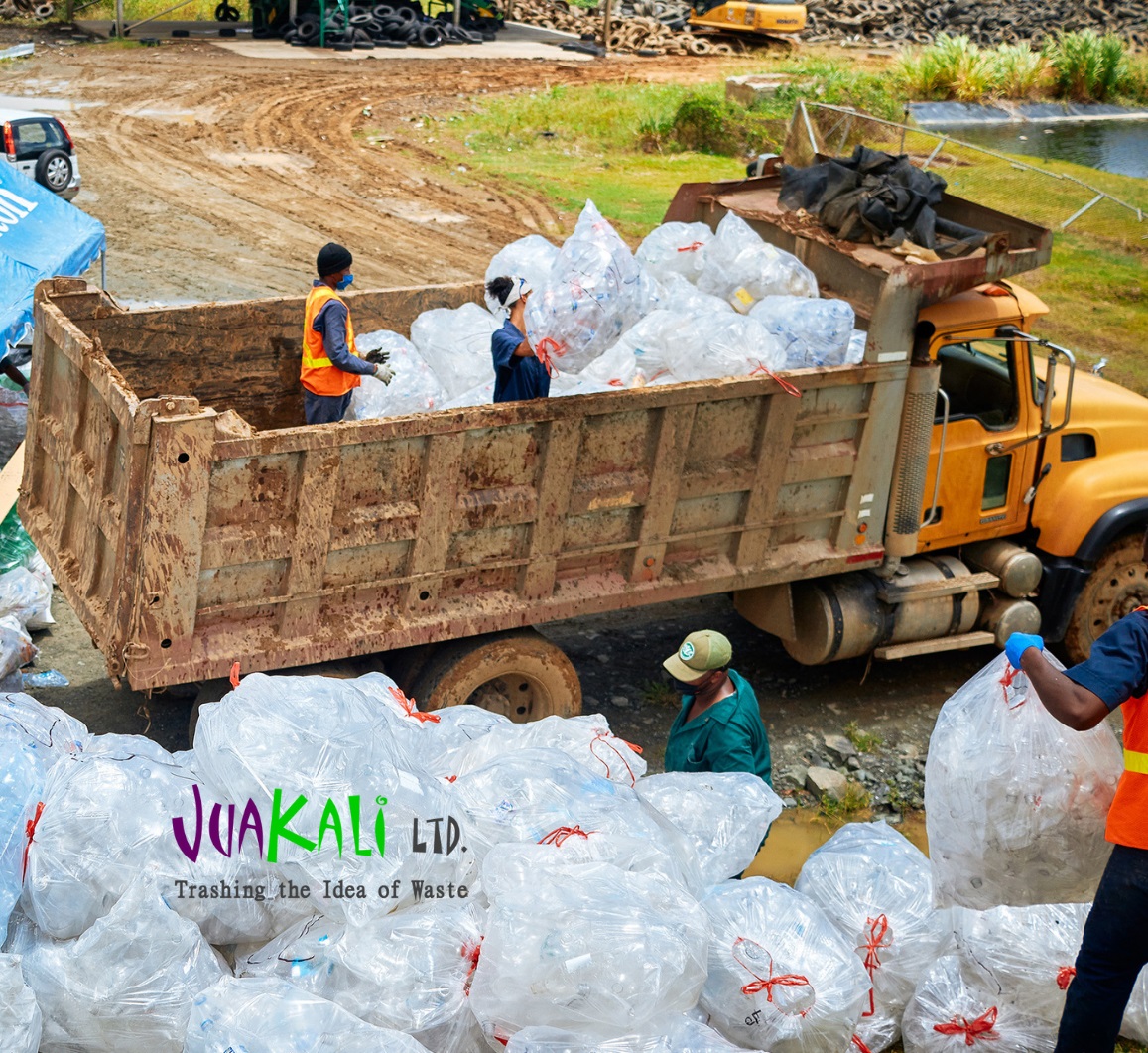
According to John, the project collected 32 tonnes of recyclable materials. “At the end, we were only able to divert successfully 24 tonnes, with just over 7 tonnes ultimately going to the landfill,” she told a press conference on Monday, December 8. “Material that had been cleaned, sorted [and] bagged had to ultimately be dumped, and that was a hard loss because it was material that was ready for processing.”
The outcome, though imperfect, was still significant. Kelly Mitchell, Divisional Head of Marketing and Corporate Communications at Massy Stores, described the initiative as the kind of impact the company strives for with every environmental project. “We have very strict KPIs in terms of environmental impact… we know we have a big responsibility by the nature of what we do,” he said, noting that this is why the supermarket chain partners with organisations “who share that vision and see the big picture”.
Mitchell highlighted Massy’s longstanding commitment to circular economy efforts, including its revamped e-waste collection programme and its green fund, where proceeds from Massy-branded reusable bags go toward community environmental projects such as Jua Kali’s.
He added, “We want to see the impact of the work being done…. For us, measurement and reporting are very critical. I must say publicly we are happy with the quality of the work that Jua Kali is doing in that space — the level of reporting, communication and dialogue… we will continue to work with Jua Kali.”
And so, a more ambitious milestone is already taking shape. Guided by lessons from the pilot phase, John is preparing to move into a second phase of the project.
She says the pilot proved that an incentive-based model is effective, but it also revealed deeper structural gaps, notably challenges with downstream markets and the absence of a functioning circular economy.
“One of the most profound insights was not really about the behaviour but rather the infrastructure….” she said. “We had the material recovery facility at the Deglos Sanitary Landfill, which was provided by the Saint Lucia Solid Waste Management Authority, that was filled to capacity with material.”
While the project succeeded at collection, she explained, “Without accessible end markets, without buyers, materials have nowhere to go.” The 7.4 tonnes that ended up in the landfill were lost because “the system was incomplete”.
“You cannot build a circular economy on collection only,” she added, “and you cannot scale the system when processing and logistics are fragmented or underfunded.”
From the pilot, four essential conditions emerged:
- Incentives do matter when encouraging behavioural change, especially when tied to initiatives placed within people’s everyday routines.
- A decentralised system is required to improve efficiency as transportation costs proved to be a major bottleneck. “… we had materials that were high in volume, low in value, and having to transport them to a central storage facility,” John stated.
- The region needs reliable local and regional buyers. “There has been a culture, traditionally, of exporting our recycled materials… freight costs become quite a significant barrier when it comes to moving that material outside of the country,” John said, arguing that instead of focusing on exports, “let’s build a manufacturing base that can ultimately help support our own local industry by reintroducing materials… that can be used as material inputs into their own processes. That, ultimately, is the circular economy.”
- And responsibility, she stresses, must be shared; no single company, agency or person can manage this alone.
“These insights are the scaffolding before what we’ve always envisioned as phase two,” she said. The upcoming phase focuses on building the infrastructure and partnerships needed for a functional circular economy, including decentralised collection with preprocessing capability, identifying reliable local buyers, and creating a strong multi-stakeholder partnership model.
“We can’t do it alone,” John said. “So part of what our hope is moving forward from today is that we can engage with our private sector partners who support us…. It’s not just about doing lots of small environmental pilot projects. We want sustained, impactful and sustainable long-term solutions that actually transform our communities.”