
The Ministry of Youth Development and Sports (MYDS) kicked off its 2025-2026 school sports programme on September 30 with Under-19 boys’ basketball. There are 13 teams registered for this year’s competition. Under-15 boys’ football will kick off in mid-October, with 19 teams down to participate. Under-19 football will include 20 schools. This term is also expected to see competition in U19 and U15 girls’ netball, with 13 schools involved, boys’ and girls’ table tennis, as well as primary and secondary schools’ road races.
“In basketball in particular, we’ve seen the number of schools increasing, probably two or three more schools coming on board for basketball, which is a good sign,” indicated Director of Youth and Sports Clivus Jules. “I mean, basketball’s been on the down low in Saint Lucia for a little bit.
“A lot of things have been a little better than they were last year.” Jules conceded noting that the Ministry of Education and the schools themselves often face difficulty preparing for school sports. “But this year, we were able to get ahead of that. We’ve had meetings with the Ministry of Education, and we hope to engage them a little bit more with respect to getting a more synchronised operation, more seamless, and making the school sports programme enjoyable to the students, and of course to the school system as well.”
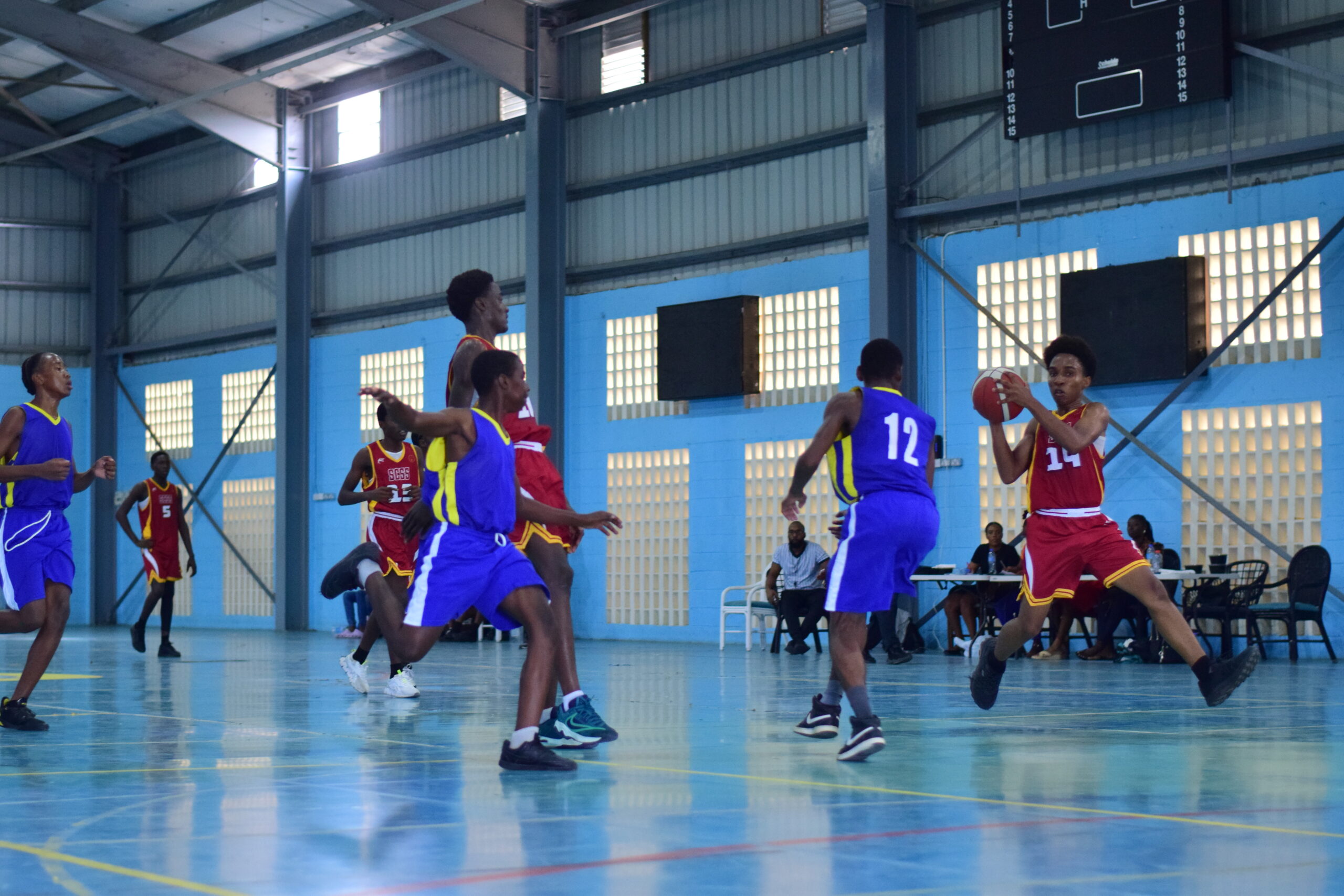
Jules explained that from the perspective of the MYDS, school sports are a crucial complement to the academic programme. He pointed out that the examples of successful athletes such as Julien Alfred, Daren Sammy, Levern Spencer, Johnson Charles, and others have demonstrated the potential for sport as a profession.
“As a matter of fact, that came up in a discussion that we had with the Ministry of Education recently,” Jules revealed. “It’s a question that we will ask the Ministry of Education, because the Ministry of Sports has their view on that. I think we believe that sports can be a viable career alternative for a lot of our young people. We believe that sports can fit within the school system to enhance and provide an option for our student-athletes. And I hope the Ministry of Education has that same belief as well. By and large, I think they do.”
Speaking on the standard of school sports, Jules admitted that there is a significant imbalance between different schools and the ways in which they approach the programme. He pointed to schools like Vieux Fort Comprehensive, St Joseph’s Convent, Leon Hess Comprehensive, Soufrière, and St Mary’s College as exemplars. But not all schools have such a systematic approach, and Jules told St. Lucia Times that the ministry intends to be more strategic going forward.
“You have coaches, former players, athletes around the communities that can go back and give to the schools,” he observed. “So we’re trying to connect the community to the schools and to get them to assist in developing proper programmes within the schools, because that’s a challenge that we have. It’s a real battle, and a lot is left on the PE teacher now, to try to coach all sports and be the coach for basketball, netball, volleyball, you name it.
“But now we’re trying to get them to engage people from the community outside. The Ministry of Youth and Sports has some coaches available, but we’re very limited in that, and we would like to grow that as well. But for now, we’re just trying to get the schools to work with their communities to improve their sporting programme and to get us in a way that will bring a semblance of that kind of competitiveness within the schools.”

Jules also echoed Minister Kenson Casimir’s expressed desire to get alumni associations operating within all secondary schools. He believes that this is one of the ways to help build rivalries, get more resources into school sports, and grow the level of competitiveness.
The disparity between the number of schools participating in different sports is another hurdle. Jules revealed that some national federations have strong development networks, significant numbers of active trained coaches, and direct ties to schools and communities. Others, he said, need to build the sort of administrative wherewithal that would allow them to grow the numbers and raise the standards.
Notwithstanding the burden that is placed on the ministry with its current workload, however, Jules also expressed the hope that tennis, swimming, girls’ basketball, football, and cricket can be integrated into the calendar of events. He said that discussion to that end has been held with the governing body for cricket, and the return of tennis to the school schedule is imminent.
All in all, the director declared his satisfaction with the prompt start of this year’s events. But he and his ministry are actively seeking to make school sports better, and to create more opportunities for coming generations of emerging athletes.