
Nearly six in ten people at Bordelais prison are still waiting for their cases to move through the courts, leaving the island’s main prison operating at 96% capacity despite an 11% drop in its population over the past year.
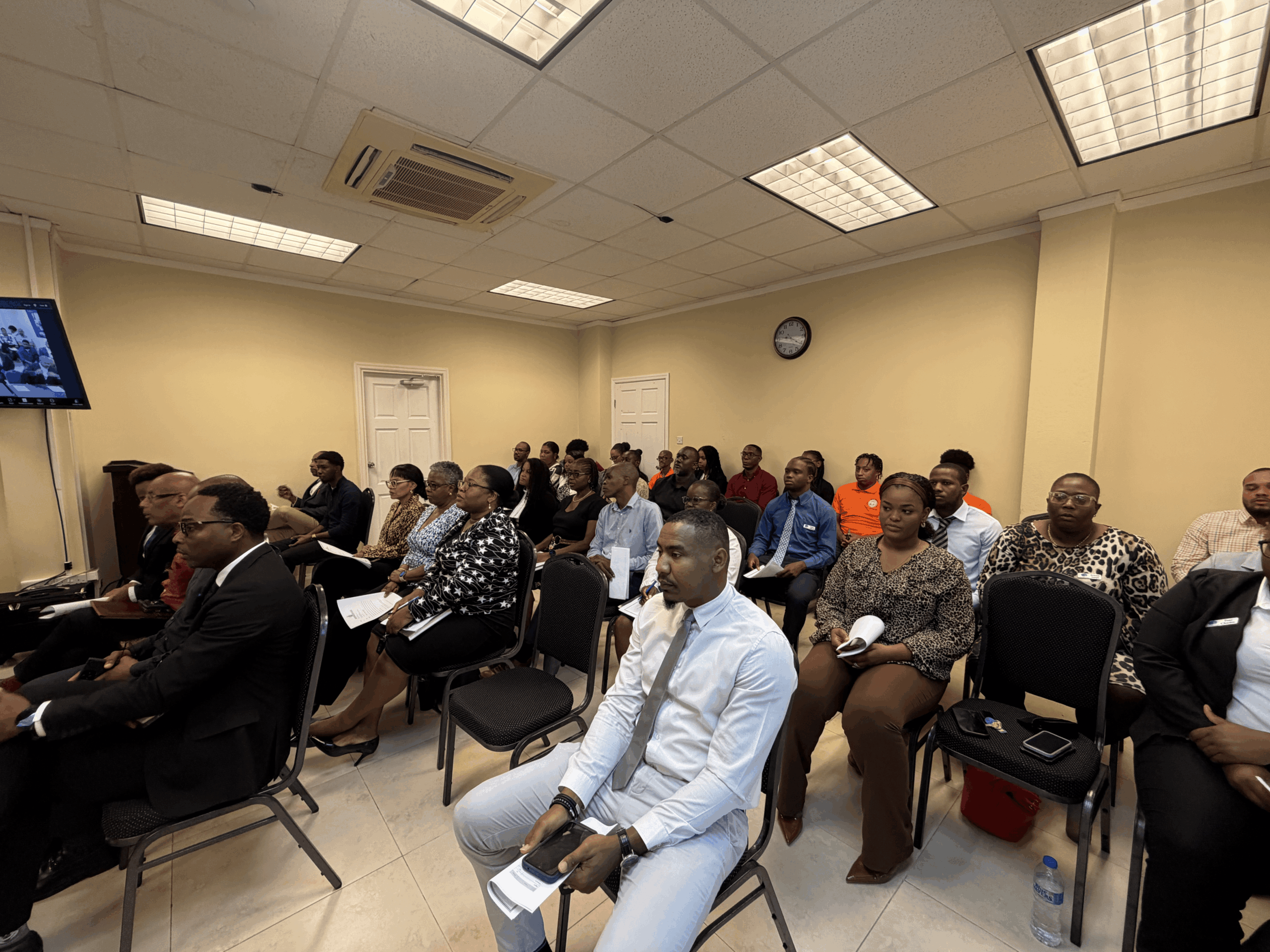
The heavy concentration of untried detainees set the tone for Friday’s Jail Delivery exercise at Nyra Court, where justice officials reviewed case delays, inmate management and the system’s ability to protect the rights of those still awaiting trial.
The annual review, required under Saint Lucia’s criminal code, offers a snapshot of how quickly cases are advancing and whether the justice system is easing pressure on a facility that continues to house large numbers of people who have not yet been tried.
Justice Vivian Taylor‑Alexander acknowledged that although the law calls for Jail Delivery at the end of every court term, the demands on the criminal division make that difficult. Still, she said the exercise remains essential for tracking delays, clearing backlogs and safeguarding vulnerable detainees.

Covering the period December 19, 2024, to December 11, 2025, the Bordelais Correctional Facility’s annual report reaffirmed its adherence to international human rights standards, including the United Nations’ Mandela Rules. The institution emphasised its mandate to provide safe, humane and rehabilitative correctional services, aligned with its mission “to protect society by providing a controlled, secure, safe, humane, productive and rehabilitative environment”.
As of December 10, the facility remained close to full, with men making up the overwhelming majority of residents.
BCF Snapshot — December 10, 2025
- Total population: 557
- Convicted residents: 233
- Detainees awaiting trial: 324
- Capacity: 611 beds
- Occupancy rate: 96%
- Population change: –11%
- Male residents: 542
- Female residents: 14
- Foreign nationals: 15
Residents awaiting trial were at various stages of the court process, from sufficiency hearings to High Court commitments.
Court Status of Detainees Awaiting Trial
- High Court – committed for trial: 61
- First District Court – awaiting trial: 16
- Second District Court – awaiting trial: 7
- Awaiting sufficiency hearings: 145
The report also detailed the range of offences across the population.
Offence Categories
- Murder / Causing death: 25
- Attempted murder: 7
- Aggravated burglary / Robbery: 25
- Wounding / Assault: 35
- Kidnapping: 1
- Property offences: 62
- Weapons / Ammunition: 58
- Drug‑related: 32
- Sex‑related: 16
- Escaping lawful custody: 3
Fifteen foreign nationals are currently housed at the facility – 14 male remands and one male convict – with offences including causing death, drug importation or possession, firearm matters, sex‑related offences and prohibited immigrant issues. They originate from Jamaica, Dominica, Barbados, Guyana, Trinidad and Tobago, the United States, Colombia, Venezuela and England.
Admissions between December 2024 and December 2025 spanned all age groups: 10 under 18, 79 aged 18-25, 119 aged 26-35, 54 aged 36-45 and 48 aged 46 and older. Over the period, 299 males and 15 females were admitted, including 288 on remand and 26 convicts. Repeat offenders numbered 140, while 174 were first‑time offenders. Castries accounted for the largest share of admissions (143), followed by Vieux‑Fort (49), Gros‑Islet (21), Dennery (15) and Babonneau (13), with smaller numbers from other communities.
Discharges totalled 394 – 121 convicted inmates and 273 remand detainees – while the facility facilitated 1,662 court attendances across the Supreme Court, Magistrates’ Court and Court of Appeal.
Rehabilitation remained central to the BCF’s operations. Programmes focused on anger management, conflict resolution, self‑esteem, stress management, grief counselling and emotional regulation. Through a partnership with the Saint Lucia Social Development Fund, psychologist Callistus Jean Louis delivered the therapeutic programme Behavioural Transformation: Reinventing Yourself for Success and provided individual counselling.
The partnership also extended to community service, with inmates assisting in the construction of homes for vulnerable individuals. One home was completed in Micoud with wheelchair access, and another is underway in Grand Riviere, Dennery.
BCF’s internship programme continued with support from Lubecco, Caribbean Grains, Winner Chow Mein and the Bexon Farm. Education programmes expanded, with 65 inmates enrolled – six women and 59 men – studying English, Mathematics, Social Studies and Agriculture up to CSEC level. A tailoring instructor was also employed, and cultural development workshops were held in collaboration with the Cultural Development Foundation.

Acting Director of Corrections Kerwin Albert praised the impact of these initiatives. “It is working fantastically,” he said. “At this point, we have 65 persons enrolled in the education department, 6 of them are females, and 59 males.”
Health services remained active, with 3,017 patients receiving nursing care, 1,708 receiving medical attention from the facility’s doctor, and 58 psychiatric patients receiving treatment and prescribed medication. The psychiatric clinic operates twice monthly, and Albert said he intends to engage the Ministry of Health to increase the frequency of visits.
BCF also continues to work toward agricultural self‑sufficiency, employing 15 inmates in farm operations. Livestock totals include 36 piglets, 56 weaners, 64 sows, four breeders and eight ducks.
The facility’s challenges were also highlighted, including ongoing contraband smuggling. “We have an issue with contraband coming over our fence,” Albert said, adding that new surveillance technology is being used to help “control the reception of the cell phones”.
He also pointed to the careful management of gang‑related tensions, saying the facility works to keep members of the 6 and 7 gangs apart while ensuring they receive counselling. “The greater population of our gang members is between 18 to 25,” he said.




I am curious to know why the UK’s coat of arms is there?