
The forecast for Saint Lucia’s 2026 dry season is grim. Meteorological officials warn of a high-impact drought comparable to the severe events of 2020 and 2009-2010.
Vigil Saltibus, Director of Meteorological Services, cautioned that “persistent dry and warmer-than-normal conditions will remain the dominant feature of the season”, stressing that coordinated water management and public cooperation are vital to blunt the socioeconomic fallout.
Saltibus underscored the severity at a press briefing on Monday.
“The 2026 dry season in Saint Lucia is developing as a high-impact meteorological event…” he said, a warning that sets the stage for what WASCO itself has described as “a rough one”.
The transition from the 2025 wet season into 2026 was marked by sharp rainfall deficits. Hewanorra International Airport recorded a 41% shortfall, while George F. L. Charles Airport saw a 28% deficit.
Already, the Caribbean Institute for Meteorology and Hydrology (CIMH) is pointing to short-term drought conditions across the island, with stress on rivers, streams, and ponds, and longer-term risks to reservoirs, groundwater, agriculture, and bushfire vulnerability.
WASCO’s Challenges & Measures
At the news briefing, WASCO acknowledged a 50% decrease in production on its southern network and significant intake reductions in the north.
Chief Operations Officer Aly Anthony admitted the season will be “a rough one”, but pledged to manage reserves to avoid prolonged outages.
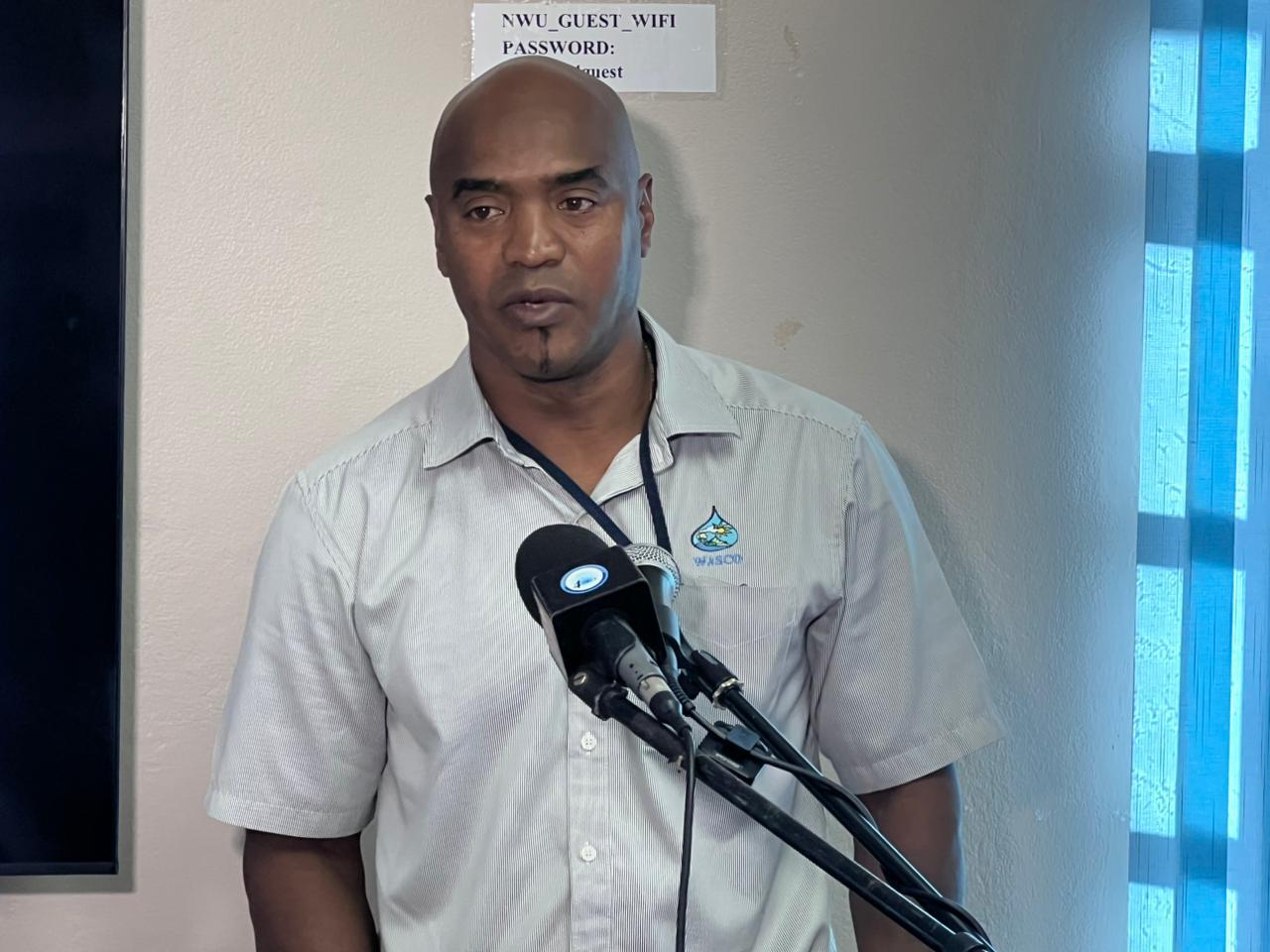
Short to medium-term measures include replacing filters at the Theobalds treatment plant and continuing pipeline upgrades, particularly the raw water pipeline from the John Compton Dam, described as “the main artery to the heart” of the northern supply.
Longer term, Anthony said Saint Lucia has “no choice” but to embrace desalination, given growing demand from hotels, businesses and residents.
“We have now come to the point where this is a must, and this must be a common feature in our conversations. We do not have a choice anymore. We have to go the desalination route,” he said.
Prime Minister Philip J. Pierre reinforced the urgency, urging citizens to make rainwater harvesting routine during a pre-Cabinet briefing on Monday.
“Most of the water I have at my house is harvested water,” he said, stressing that WASCO’s challenges will not be resolved overnight.
Pierre’s appeal builds on the Ministry of Agriculture’s message that water capture is both a personal and national responsibility in the face of climate change and infrastructure strain.