
Enduring standstill traffic has become part of some Gros Islet to Castries commuters daily routine.
Relief may be on its way but some experts say as with any development project, a period of discomfort will likely preclude change.
Last week, Prime Minister Philip J Pierre shared that “work on the Gros Islet highway will commence most likely in the first half of this year.”
According to official government statements, the work in reference involves a three-kilometre upgrade that will convert the highway between Monchy and Gros Islet into a dual carriageway featuring four roundabouts and four pedestrian bridges. Construction will be supported by a US$20 million loan from an OPEC Fund agreement. Roadworks in Gros Islet also include a US$13 million project that will expand the road between the Choc bridge to Marisule into a dual carriageway with drains, culverts, and a new roundabout at the Marisule junction. This will be financed through a Kuwait fund.
These changes will follow expansion of alternative “back roads” commonly used by some aiming to avoid gridlock traffic, particularly expansion of the Vieux Secreux road, which may become crucial when major construction on the main highway is underway.
“With the widening of Vieux Secreux, people will have alternatives to come off the highway but still be able to get into the Castries area,” Kurt Harris, president of the Association of Professional Engineers of Saint Lucia told St. Lucia Times as he reflected on the upcoming highway reconstruction.
“It seems that over the last ten years there was a deliberate plan to improve those roads at the back to allow the construction of the Castries to Gros Islet road to have a lesser effect on commuters by having options.”
For some residents in the north, dealing with traffic congestion has meant permanent adjustment to daily routines.
“If I need to be in town extra early to get to the bank or run an errand before work, I try to leave by 7 a.m.,” one elderly Beausejour, Gros Islet resident who travels into Castries daily by bus shared with St. Lucia Times.
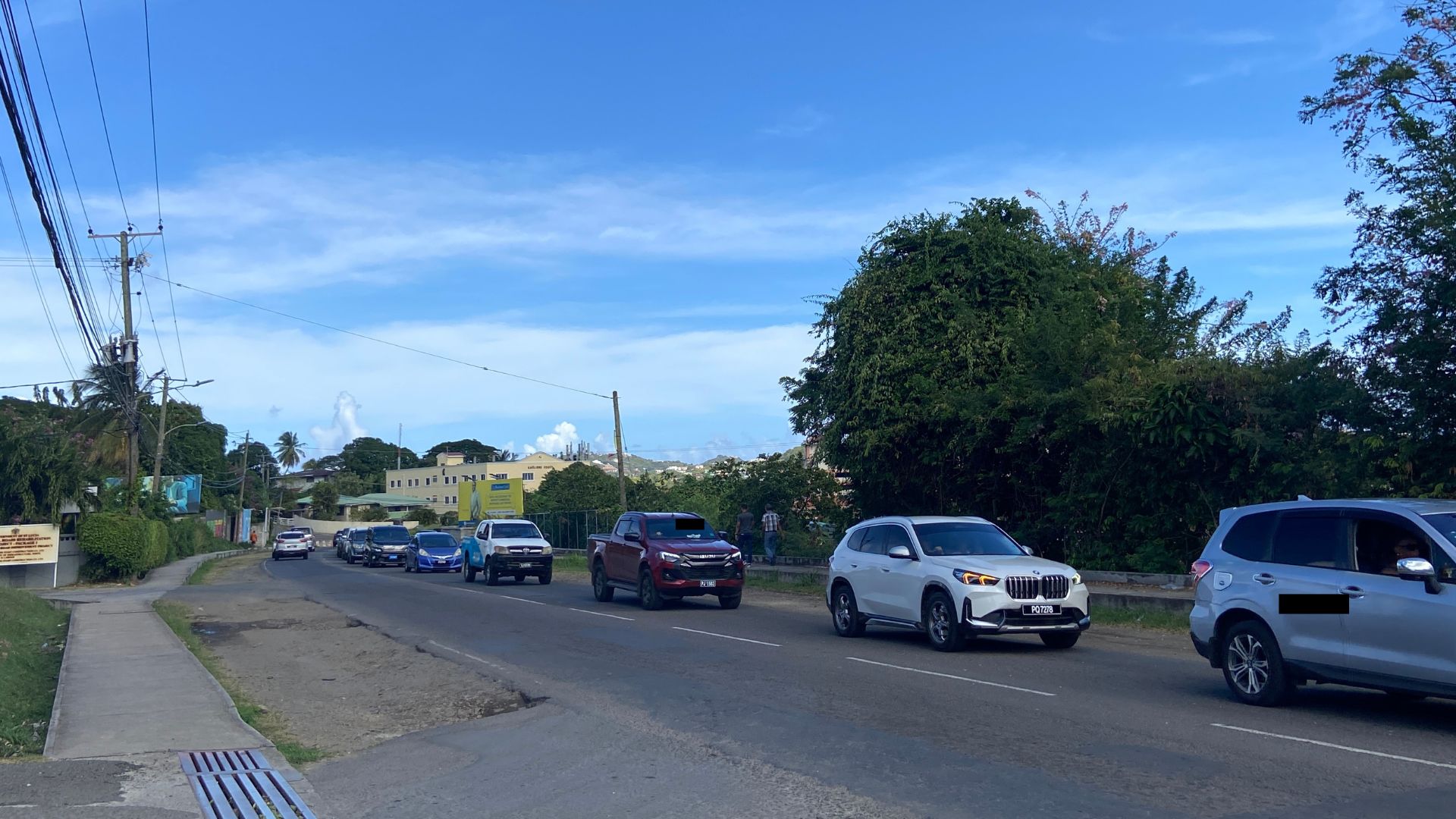
Gros Islet bus drivers servicing the busiest bus route on the island have attempted to adapt. Some, like other private drivers, have tweaked routes to rely on shortcuts through adjacent community roads, but the practice has seen pushback from communities expressing safety concerns over reckless driving and bus passengers who’ve been forced to alight before their preferred bus stop due to sudden route changes.
To move past the inconvenience of gridlock traffic will mean adjusting to upcoming construction periods. Harris says, though the exact reasoning for the current approach to road reconstruction has not been completely explained to the public, ideally, decisions would be made based on site specific requirements, and although alleviation of traffic congestion would require comprehensive plans that take into account population movement, business development, and would require decentralisation, when it comes to construction-based solutions, reducing on the number of right turns will be effective.
“The biggest challenge with the traffic on the Gros Islet highway is the number of right turns. If you notice, from Union, you have at least 40 right turns before you reach Gros Islet. Every time a vehicle turns right it breaks the traffic, so the traffic has to stop — whichever direction it is going — and then stop the traffic in the other direction so that it can do a right turn. Imagine you have 40 right turns, that means you are stopping the traffic 40 times to allow people to cross the road… the dual carriageway simply increases the volume of traffic but if you increase the volume of traffic and still have the right turns, you will still have that traffic problem,” Harris explained, noting that the erection of medians and the construction of roundabouts would help curb the issue.
The government has not yet made public the exact timeline of the upcoming roadway expansion projects. Harris says temporary inconveniences due to construction may be par for the course: “Part of development is temporary inconvenience for improvement… Persons need to understand there will be inconveniences so you try to mitigate the inconvenience but it may not be eliminated completely.”




The authorities could put 100 lanes on that route and the traffic still won’t be alleviated. There is no cure for the stupid indiscipline and lawlessness in this country. The authorities recognised that the right turn onto the highway at the computer world junction was a massive cause of the backups. They erected a prominent “No Right Turn” and camera yet the morons still turn right. Others go through the Computer World and adjacent parking lots to bypass the directive. Have the police ever followed up to ticket those violating the no right turn? Unless you put a whip on those people’s backs (including the police for follow up enforcement) nothing will change. Genetic imprinting and a legacy of being whipped unfortunately. St. Lucians only understand force.
It’s a bit late for that solution eh 4 lanes will not do the job so the authorities need to lower their expectations….between all the intersections and all the vehicles on the road with massive development plans for Rodney Bay area…..traffic woes are here to stay! Trust me cause I am a farmer who knows about roads.
Traffic sucks daily so anything at this point will be an improvement!!! And Please fix the road by and between the Sandals CAP speed bumps it’s been horrendous for many months! Also Wasco is our life support and in Cap Estate after Sandals Cap the streets have received NO WATER only 2-3 times since last year! So Please if you are for the people than priority should be drinkable water consumption regularly not 1-2 times a month!,, I Thank You.
water sent into Cap since Christmas 3 times!!!
I believe that the solution is to
1.) strategically place roundabouts along the highway
2.) implement no right turns through out the entire highway (in both directions.)
Drivers will have to drive up or down to the roundabouts to gain access the other side of the road.
That way traffic keeps flows.