
Facing rising seas and shrinking fish stocks, Saint Lucia and Micronesia have joined forces to trade survival strategies.
The Eastern Caribbean and Pacific island nations exchanged ideas on strengthening economic systems that help to conserve marine environments, also known as the blue economy, under the BE-CLME+ Micronesia Challenge Twinning Initiative.
Over the course of a week, officials discussed best practices in environmentally sustainable ocean governance and community-based fisheries management in small developing countries experiencing heightened climate risks.
Officials from Saint Lucia shared the country’s blue economy agenda, which they say is directly linked to affordable protein, long livelihoods and national development.
Meanwhile, Saint Lucians were able to learn about Micronesia’s customary tenure systems and “community stewardship of marine resources”.
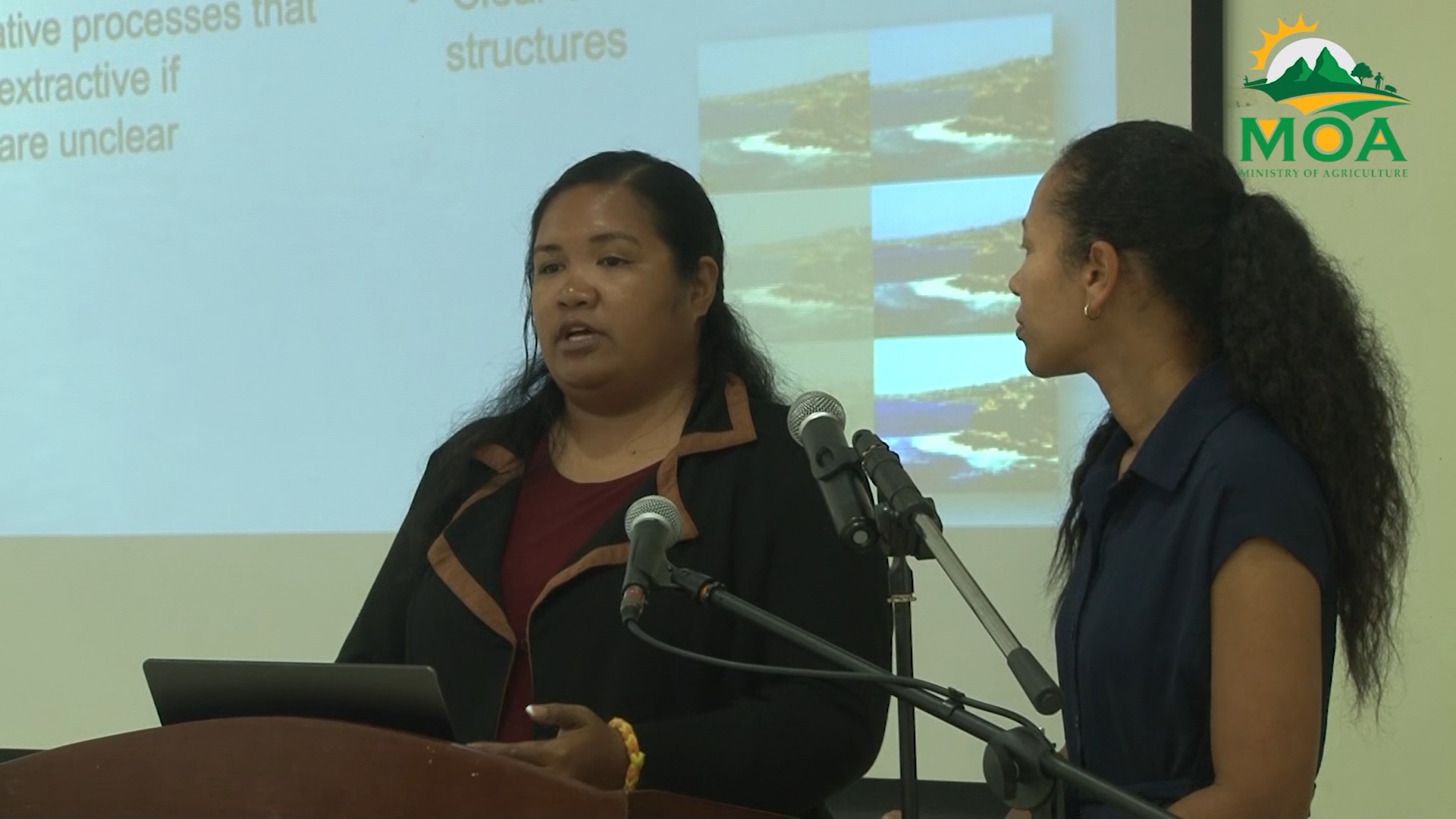
In videos shared by the Ministry of Agriculture, a Micronesian participant highlighted their country’s traditional governance methods and inherent community authority systems that they say help achieve sustainable marine management.
“A strong customary tenure is in place. Although we have adapted to a more westernised system, we still have our traditional customary practices,” she told a room of participants during a presentation. “We still have our chiefs, we are birthed into our families, we know where we come from.”
According to the Micronesian delegation, community hierarchies and boundaries are adhered to and form part of a cohesive system that helps with marine management.
The team also examined community involvement in development projects. “One thing that I was noticing as well is that a lot of the projects you want the community to come in, but most of the time the projects are kind of designed beforehand,” one presenter said. She highlighted the importance of engaging local communities during planning phases in delivering more effective projects.
The Ministry of Agriculture said the week-long initiative provided insights into best practices from another small nation. The initiative is also aligned with Saint Lucia’s national blue economy priorities, offering an opportunity to strengthen institutional capacity and promote resource management that centres on people and local systems, while also fostering international cooperation.
Deputy Chief Fisheries Officer Thomas Nelson described the exchange as an opportunity to enrich Saint Lucia’s efforts and “reinforces the principle that collective action is essential in addressing common challenges related to ocean governance, food security and climate change”.