
In 2021, Saint Lucia’s seamoss industry saw a wave of new farmers and exporters after edible seamoss exports rose from EC$4.3 million to $6.4 million. But this growth was short-lived. Industry players say the surge happened because many people lost jobs during the Covid-19 lockdown and turned to seamoss farming for income. Since then, some farmers have found other jobs.
That decrease has been evident in Savannes Bay, one of Saint Lucia’s seamoss farming hubs, where farms are scattered around the inlet. Farmers and environmentalists say some farms remain in operation, while others have been abandoned.
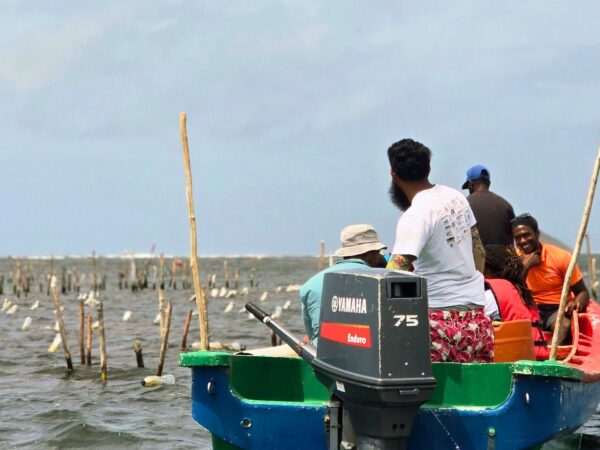
This has prompted a project to remove abandoned farm materials and to use mapping and zoning to help interested farmers rejoin the industry. The project also encourages seamoss farming in designated priority areas and tests new, more environmentally friendly methods.
The Marine Debris Removal and Deployment of Sustainable Raft Systems Project is a $215 000 initiative coordinated by the Saint Lucia National Conservation Fund (SLUNCF) and the Department of Fisheries. It aims to improve safety for farmers, fishers, people who use the bay for recreation, and marine life in the area.
Vincent “Jeg” Clarke, a seamoss farmer since 1986 and president of the Eau Piquant Agriculture and Seamoss Producers, said he supports the project.
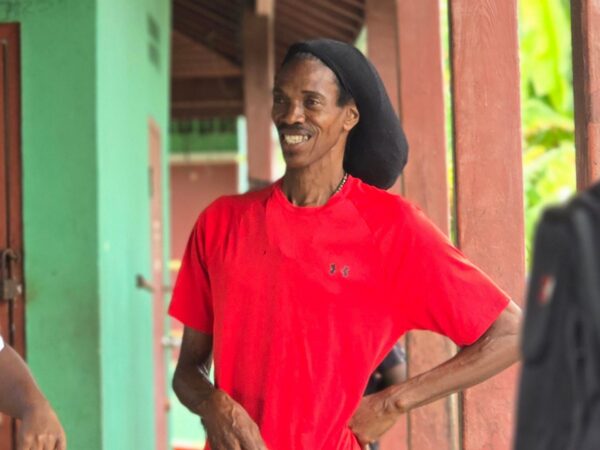
“What you all have just seen is a forest in the sea, we’re trying to take this method out…” Jeg said during a media field visit to the site on Tuesday, June 23, as he referenced the prevailing cultivation method in the area, where farmers have used several wooden stakes erected on the seabed to support seamoss lines. Plastic bottles or containers are also attached to seamoss lines and can be seen floating along the sea’s surface.
As part of the SLUNCF project, wooden stakes and plastic containers left behind when farms were abandoned will be removed.
“… We’re trying to curb deforestation and go to more environmentally friendly practices,” Clarke added, noting that the wooden sticks are often sourced from neighbouring forested areas.
Drawing on his own experience, he says he has been exposed to several cultivation methods over the years, including a PVC raft system he observed during a programme in Belize. That method will now be piloted in Savannes Bay and surrounding coastal areas in Vieux Fort, including Boreil Beach and Bois Chadon.
SLUNCF Chief Executive Officer Craig Henry said the PVC raft system is intended to achieve multiple objectives.
“What we are trying to do is support the department of fisheries and other agencies in continuing the effort to bring some manner of regulation and order to how seamoss is cultivated, but also reducing the environmental pressures related to traditional methods of cultivation,” Henry said.
The PVC raft system features floating, parallel PVC rods, with seamoss growing on lines that are attached and stretched between them. Each rod is secured by up to four wooden stakes.
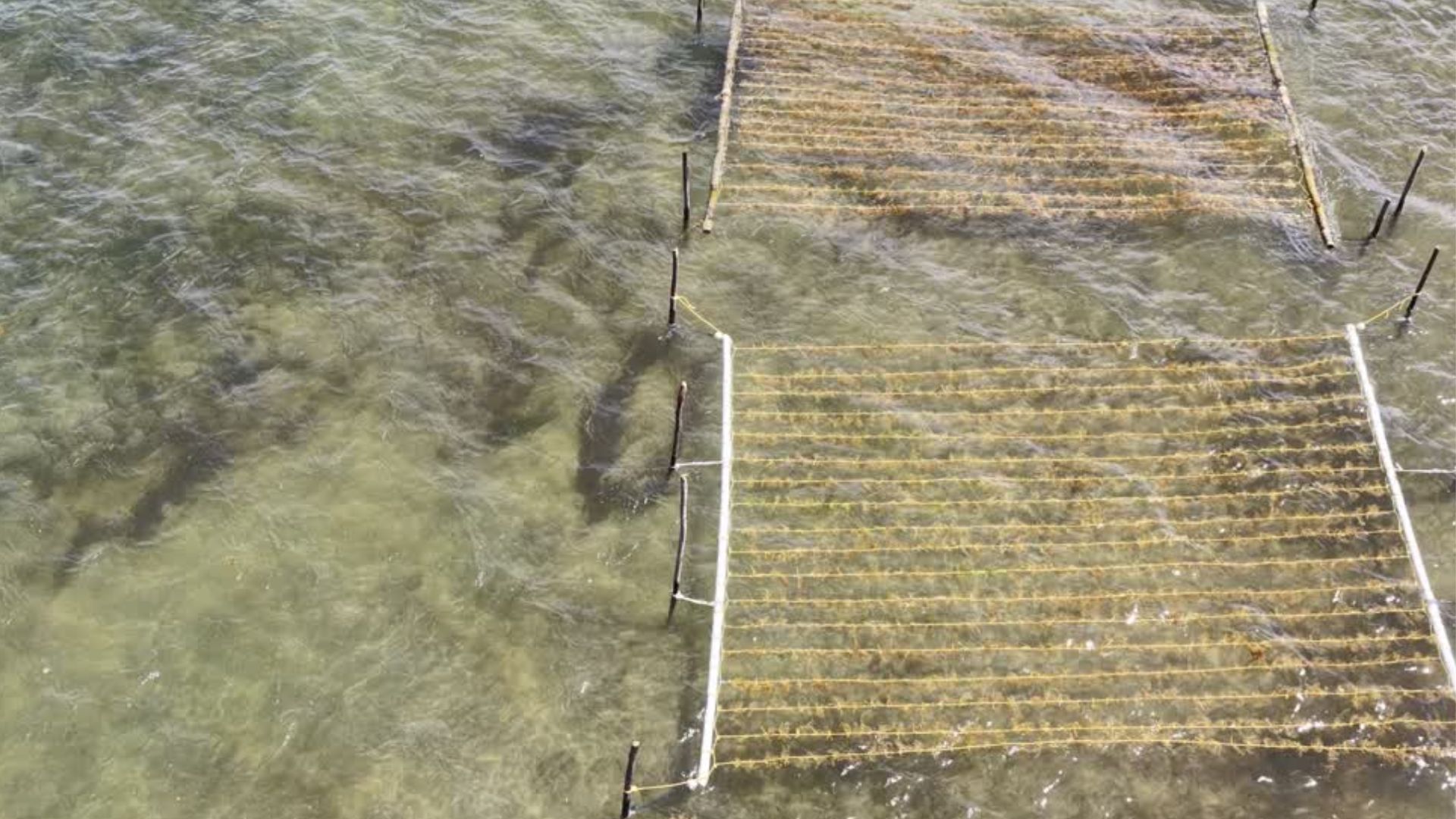
“The floating devices offer the advantage of dealing with the flow of the tides; they are a more efficient way in terms of harvesting and cultivation,” said Henry. “So they allow more seamoss to be cultivated over a particular square footage.”
Head of the Agriculture Unit at the Department of Fisheries, Vaughn Serieux, says the project is also intended to help ensure the seamoss industry remains environmentally sustainable.
Petuna Joseph, a seamoss farmer for over 14 years, pointed to the physical demands of cultivating and harvesting the crop and the impacts of changing weather patterns as her main challenges, but said she is hopeful about the project and, more importantly, that it will continue beyond its initial implementation.
“I like what I’m seeing happening, I like it, I just hope it goes in a positive way,” Joseph told St Lucia Times.
Organisers say about 45 farmers and fishers are being engaged through the project, and at least 37% are women. They are also working with current and former seamoss farmers and others who use the sea to make sure the project works well.
A system has also been set up for people in nearby communities to share their concerns and feedback with the SLUNCF throughout the project.
The project is being funded by the Agence Française de Développement through the Caribbean Biodiversity Fund under the Caribbean Regional Architecture for Bioversity Project.