For some people, hearing loss may begin after standing too close to a speaker at a concert. Others are born with hearing loss or notice it developing slowly as they get older.
These issues were highlighted on Thursday at a Deaf Health Fair held by the Society for the Deaf at Derek Walcott Square in Castries.
The event on September 24 was one of several activities during a week dedicated to raising awareness about people who are deaf or hard of hearing.
Lyndell St Ville, president of the Society for the Deaf, said the goal was to make hearing health services more accessible and help people better understand what deaf individuals experience.
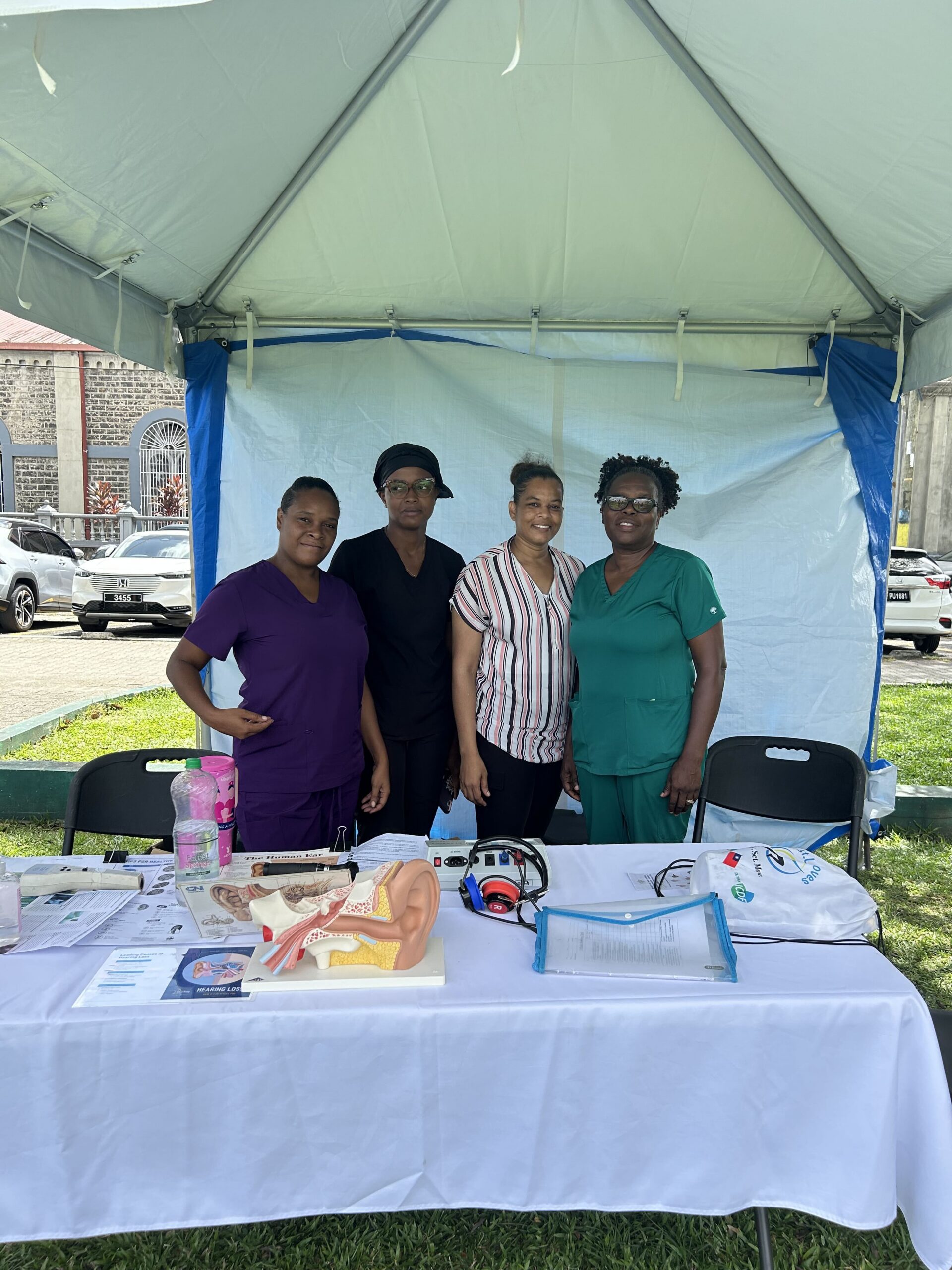
The fair featured hearing screenings and assessments, information from the Ministry of Health and basic sign language instruction.
St Ville said the public could learn simple signs for everyday greetings like “hello” and “good morning”.
However, a bigger issue underlies these activities: many people might be damaging their hearing without even knowing it.
St Ville pointed to prolonged exposure to loud noise and music as one issue that should concern Saint Lucians.
“You see people driving cars and the noise is deafening,” he said, warning that repeated exposure to loud sounds can eventually contribute to hearing loss.
Audiologist Natalie John, who recently returned to the island, was at the health fair to explain what happens during a hearing check.
John explained that an assessment can begin with something as simple as looking inside the ear to check for wax, perforation, discharge or other problems.
The person is then exposed to different sound levels to determine the softest sound they can hear.
John explained that normal hearing usually falls between zero and 20 decibels.
She also highlighted the different ways hearing loss can occur.
Some children are born with hearing loss, while others may develop it because of exposure to excessive noise.
John said being close to powerful speakers at concerts can damage the ear’s delicate structures. Workers in noisy environments, including construction sites, can also put their hearing at risk if they do not use proper protection.
Sometimes, the problem is much simpler.
John said hearing can be affected by something like earwax blocking the ear, which can often be fixed by removing the blockage.
For the Society for the Deaf, however, the conversation does not end with hearing tests.
St Ville believes Saint Lucia should keep working to include people who are deaf or hard of hearing in schools, workplaces and the wider community.
He mentioned the Lady Gordon Opportunity Centre, formerly called the School for the Deaf, as a place where students with different levels of hearing loss get support.
“There’s a need for more,” St Ville said.
And that, he says, is one reason why events like Wednesday’s health fair matter.