
Chair of the CARICOM Reparations Commission, Sir Hilary Beckles, has appealed directly to King Charles III to use his position to advance reparatory justice, as the monarch visits the Caribbean ahead of the Commonwealth Heads of Government Meeting (CHOGM) in Antigua and Barbuda next week.
His appeal comes amid renewed calls for Britain to address the legacy of the transatlantic slave trade and colonial rule, including the social and economic inequalities that, reparations advocates argue, continue to affect Caribbean societies.
In a statement, Sir Hilary said his appeal was not being made to the King in his capacity as Head of the Commonwealth or as constitutional monarch.
“I’m appealing to Charles Windsor, a parent, a grandparent, a man today who reflects upon the history of his family,” he said.
“We’re calling upon the King as a man, as a human brother, to provide leadership to this organisation over which he presides – the Commonwealth.”
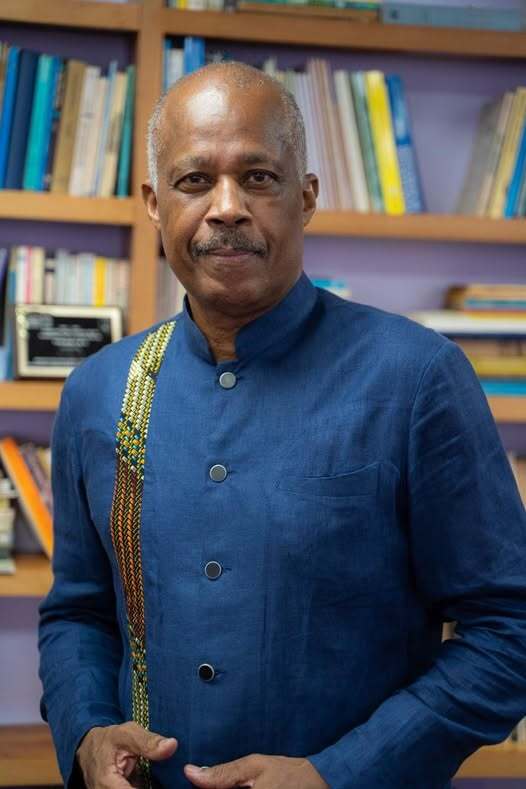
Sir Hilary said the Commonwealth had historical links to the transatlantic slave trade.
“The Commonwealth historically was the site of this crime (chattel enslavement),” he said.
He argued that the organisation could become a moral institution committed to human justice.
“… And this is what we are calling for in CARICOM, in the African Union, all of us who are committed to this process for reparatory justice for the people who have suffered the gravest crime in the modern world.”
Eric Phillips of the Guyana Reparations Committee also voiced support for the appeal, expressing confidence that King Charles could encourage further discussion on the issue.
“The King is a decent monarch based on his lifelong commitments to the world in which the environment for him is sacred. We Africans are also part of that sacred environment,” Phillips says.
“As an enlightened monarch, I strongly believe King Charles will want to promote a conversation of decency that reflects his character and values.”
On Tuesday in The Bahamas, the King’s first stop in the region, a group of Rastafarians staged a peaceful protest calling for reparations and restitution.
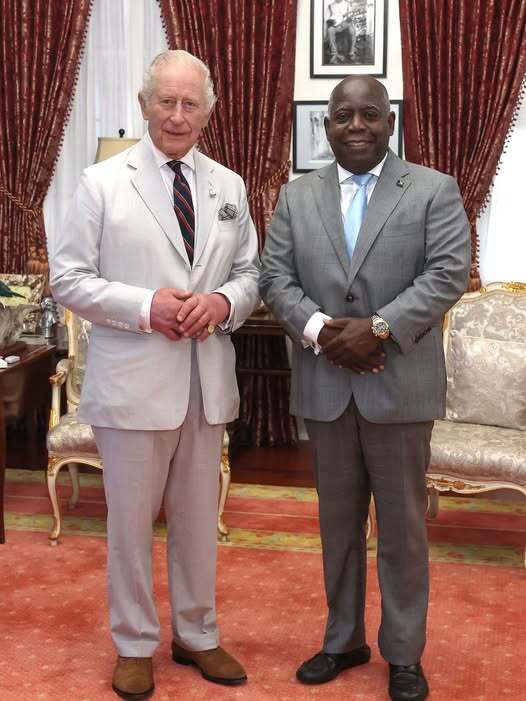
The King is visiting Guyana from October 29 to 30 ahead of CHOGM, scheduled for November 1 to 4. Guyana’s President Irfaan Ali has said that while the monarch has previously acknowledged slavery as a dark chapter in history, a formal apology is the necessary next step.
Ali has proposed a structural reparations framework centred on development financing, debt relief and targeted investment to address historical and continuing economic inequalities.
The proposal aligns with the CARICOM Reparations Commission’s 10-point plan, which calls for, among other measures, a formal apology, debt cancellation and public investment in health and education.
The British Government has repeatedly rejected demands for an apology or reparations in connection with the transatlantic slave trade.




This reparations committee makes no sense. The (European) raders purchased slaves from African traders (who had slaves to sell). They purchased slaves which at the time was a lucrative business investment. The traders slaves in Africa and transported them to the Americas where there was a demand for slave labour. If reparations are to be paid, the reparations committee should ask the African slave traders to meet that cost. The argument that Europeans profited from the trade is shallow and ridiculous. After all, the purpose of business is to make it profitable and if the Europeans made a success of their enterprise, why are we busying ourselves trying to make them feel guilty. We were left with the islands on which our forefathers slaved. Let’s make it work.
Making such an uneducated, superficial remark about reparations proves you don’t understand the first thing about history. Leave this discussion to the experts who actually comprehend the unique horrors of chattel slavery, because you are completely out of your depth. The argument that the transatlantic slave trade was merely a successful business venture collapses when confronted with the violent reality of racialized chattel slavery. European empires codified a brutal, generational system that legally classified human beings as inheritable livestock to extract centuries of unpaid labor through absolute terror—branding people with hot irons, whipping them to death, rape, breeding them like farm animals and tearing families apart for profit. While West African rulers initially traded localized war captives without foreseeing the permanent horrors of the plantation machine, Europeans and other whites demand more for your socalled profits by systematic kidnapping. This stolen wealth directly built the foundations and industralization of europe and modern Western banking, insurance, and industrial infrastructure, while emancipated populations were abandoned with zero capital, zero land, and broken island economies. Pursuing state-level reparations through CARICOM is not about forcing emotional guilt, but about legally balancing a structural economic deficit and settling a massive historical debt built on calculated human atrocity.