Monday’s sessions of the ongoing commission of inquiry into the July 18 Anse Cochon boat collision offered insight into the rescue operations deployed after the incident and the investigations that followed.
While rescue efforts resulted in the recovery of the victims, statements made during the inquiry raised questions about whether standard operating procedures (SOPs) exist for events of that magnitude, and how effectively the responding maritime agencies coordinated.
Corporal Luciano Garde, head of the Marine Intelligence and Investigation Unit and lead investigator into the incident which claimed four lives, was questioned during the morning session. Garde, the son of Police Commissioner Vern Garde, referred to his notes throughout. At times, his statements were difficult to follow, a point noted by the Commission’s chair, Mario Michel.
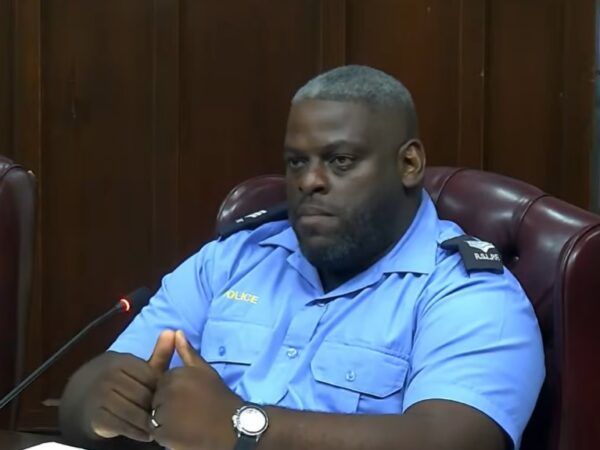
Garde recalled some details, such as the deployment of two vessels, but could not recall others, including the exact number of personnel who took part in the rescue effort.
The collision happened at 11:55 p.m. on Saturday, July 18, 2026. Search, rescue and recovery efforts by the Police Marine Unit began soon after.
Garde, who leads a team of four, said two other officers initially took the lead on the investigation: Superintendent Irvin Alfred and Acting Sergeant Mario Chicot of the Police Marine Unit. He was assigned at 5:09 p.m. on Sunday, July 19, 2026, to act as lead investigator.
Asked about assistance given to his small unit, Garde said he requested additional support be deployed to his team from Superintendent Alfred. The request was denied because, according to Garde, Alfred said, “it was not needed”.
Asked about the status of the investigation, Garde said some details had been collated, and the investigation is ready for guidance from the Director of Public Prosecutions.
Garde was also asked whether his unit was following a specialised SOP. He said no specialised investigative SOPs were being referenced for an event of that nature, but that general investigative practices were.
“Sir, this incident is an unprecedented one; it’s the first of its kind, to be honest, but it was treated as any investigation would have been treated,” Garde said.
Later in the inquiry, Acting Sergeant Chicot was asked about existing SOPs within his unit. He said they exist.
Asked whether, based on what he has observed, investigations are being conducted in line with those SOPs, Chicot said, “Yes, based on what I have seen, the steps taken in the investigation are in keeping with the SOPs of the Marine Unit.”
In the latter part of the inquiry on Monday, other Marine Unit officers confirmed that two vessels were deployed immediately as calls came in about the incident. One was used for the search. The other, a larger vessel, was near the yacht in Anse Cochon Bay, where some crash victims boarded and an altercation ensued.
Officer Gonzague, a member of the dive team and crew of one of the rescue vessels, said in his statements that upon arrival at the crash site, the vessel he was aboard went to attend to the incident in the bay where someone was said to have been bleeding. Questions were then raised about whether an appropriate level of urgency was demonstrated following a collision where victims were still missing.
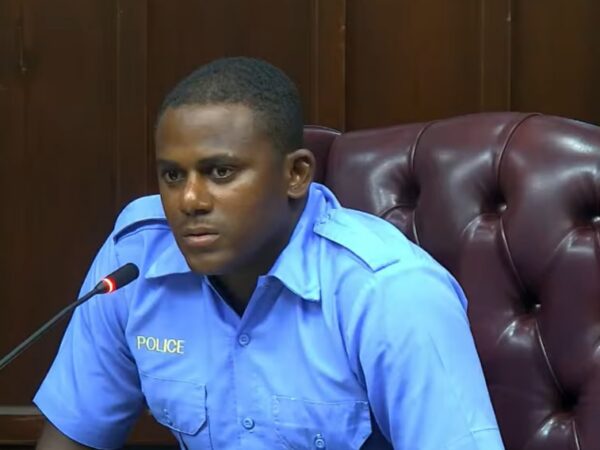
Gonzague also said he was not familiar with Police Marine Unit response procedures for fatalities during a maritime collision.
Questions were also raised about coordination between the maritime agencies that responded, including the Police Marine Unit, the investigative unit within the department and the Maritime Division of the Saint Lucia Air and Sea Ports Authority (SLASPA). Officers said they managed despite accounts seeming disjointed.
The inquiry is scheduled to continue on Wednesday, November 11.