
On a Wednesday morning in early November, Alvin Thomas, a Dennery native, carved time out of a demanding schedule as a clinical psychologist and associate professor of human development and family studies at the University of Wisconsin-Madison for a pointed and considered conversation on fatherhood.
It is familiar ground for the host of the Webby Award-winning podcast, The Black Fatherhood Podcast.
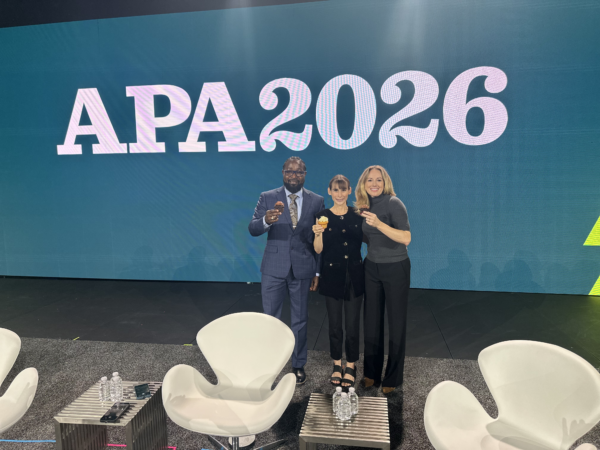
In a sprightly discussion, he delved into a recent article he published in TIME Magazine, “Paternity Leave Is More Than a Perk. It Builds a Baby’s Brain”. TIME joins a growing list of publications where he has shared his views, including Salon, The Hill, the Huffington Post and others.
His public commentary extends decades of scholarly study on young black boys, fatherhood, and child development. That work has made him an active advocate for paternity leave to be viewed as more than a workplace scheduling “technicality”.
In his interview with St Lucia Times, he explained why he says countries like Saint Lucia can only benefit from stronger paternity leave policies applied nationally.
One of those reasons is that in those initial days after a child is born, present fathers, like many new mothers, have a desire and need to understand and settle into their new roles and identities.
“A mom asks herself, ‘What does it now mean to be a mom?’ She needs time for that, for hormone adjustments, for this sense of identity to solidify. Dad needs the same thing as he asks himself, ‘What does it mean that I’m somebody’s father? I’m responsible for this person for the rest of my life’.”
The shift is not only emotional.
“There’s a lot of research that demonstrates that there are hormonal changes that happen for men. Just like women have postpartum, men have something similar to it, where it results in depression, anxiety, and other symptoms, but they’re just demonstrated differently.”
Babies also benefit from having both parents present to support each other during postpartum. Research has long linked paternity leave to benefits like better cognitive, emotional, and social regulation skills in children.
Sociologists Richard Petts and Chris Knoester have co-authored multiple papers analysing data that link fathers being home and mentally present for their newborns to stronger bonds with their children as they grow older. In 2019, a paper by Petts, Knoester, and Columbia University’s Jane Waldfogel, “Fathers’ Paternity Leave-Taking and Children’s Perceptions of Father-Child Relationships in the United States,” found that nine-year-olds whose fathers took leave, particularly two weeks or more, reported feeling closer to their fathers. Stronger father-child bonds yield additional benefits over time.
In his TIME Magazine article, Thomas explored how strong father-child relationships, nurtured from the postpartum days, create a pathway to active involvement. That includes physical play, high attendance at school events, and a knack for active listening, all essential for healthy child development.
“Secure attachment, more prosocial sibling interactions, and better social competence result in other benefits, like self-regulation. This is a hallmark indicator of school readiness and success, and here, too, father engagement pays dividends,” he wrote.
On play, Thomas draws from Canadian researcher Daniel Paquette, whose work highlights the excitement, surprise, awe, and temporary shock and disruption that fathers’ play incites in children. He notes that the practice is often the foundation of critical skills including risk-taking and self-advocacy.
“What looks like fathers’ rough-housing, developmentally speaking, is training for children to build capacity for self-regulation, managing arousal, and controlling impulses and emotions in real time,” Thomas wrote.
The benefits of paternity leave can also be applied across cultural contexts, including Caribbean countries like Saint Lucia, despite complex discourse on fatherhood.
“In the Caribbean, our general assumption for fatherhood is that men have chosen to walk away from families, walk away from children, chosen not to be involved,” he told St Lucia Times. “…While the assumption may be true for some men, it does not reflect the large majority of men who have stayed.”
“They are functioning. They are supporting their partner. They are supporting their children. They are raising their children. That’s the large majority of men, and we spent so much time, so many decades, focused on the men who are not doing, and ignoring the men who are actually doing.”
In Saint Lucia, there is no national expectation for fathers to be granted paternity leave in the private sector. The Labour Act does not set a paternity entitlement, so private sector leave depends on company policy or collective agreements. Public servants are granted five days of paternity leave, once per calendar year, under government policy and collective agreements.
Maternity leave policies can themselves come under scrutiny. However, paternity leave offers an opportunity to examine how both parents are represented in labour law, and Thomas says the long-term gains are enough to overcome the challenges and perceived risks of implementation, especially when they are informed by parents’ lived realities alongside research findings.
He noted that Nordic countries like Norway, Sweden and Iceland introduced reformed parental leave laws between 1993 and 2000, including Norway’s four-week fathers’ quota. The payoff took years to show.
“The benefit shows after five to 10 years, and I think that’s the challenge,” said Thomas. “The challenge is that people often, especially in the Caribbean and other spaces where financial resources are limited, want to see immediate effect, but ultimate success has to be measured down the line.”
Noting further hurdles like national expenditure and the need for collective willingness to adapt among the private sector, Thomas reinforced his belief that the long-term benefits may make the effort worthwhile.
“Governments have to be courageous. A $10 million investment in paternity and maternity leave across the board for all Saint Lucians who are having children could rebound to one or two generations of Saint Lucians whose academic prowess is significantly improved, whose social skills, emotional skills, and cognitive skills are all significantly improved over the next 20 years.”