
The Ubuntu Movement has officially launched its Ambassadors of Justice and Peace Project, an initiative aimed at empowering young people to become leaders of positive change within their communities through education, mentorship and community-based action.
The programme was launched on Wednesday, November 18, and is funded primarily by the Government of Canada through the Canada Fund for Local Initiatives, with support from the Ministry of Equity.
In an interview following the launch, President of the Ubuntu Movement, Goddess Itopia Archer, said the project seeks to give young people the tools, guidance and support they need to identify challenges in their communities and develop practical solutions.
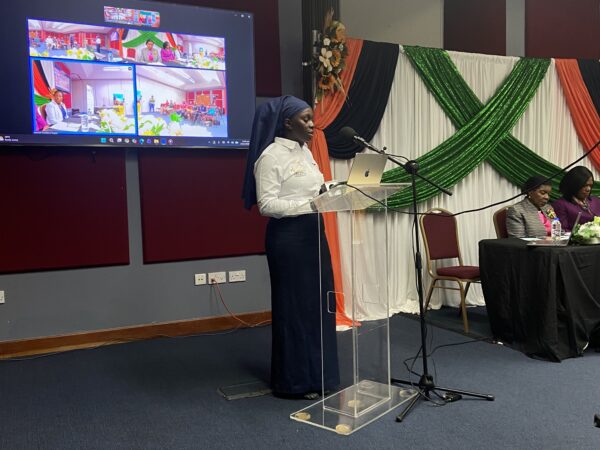
The programme is currently being implemented in Soufrière, Vieux Fort, Castries, and Gros Islet, and has recently expanded to the Sir Arthur Lewis Community College (SALCC), bringing the total number of participating communities to five.
Archer said the initiative has attracted approximately 49 active members, exceeding the initial target of 40 participants for its first cohort.
“The project provides youth that want to be drivers of positive change in their community with a space where they can be supported to do so,” she explained.
Participants will receive training in key areas including leadership, human rights and civic responsibility, equipping them with the knowledge and skills needed to address issues affecting their communities.
The programme will also encourage participants to identify a specific community problem, develop a proposal outlining a possible solution and implement their project with the support of mentors, the Ubuntu Movement and relevant community stakeholders.
Archer said the initiative is built on the belief that young people themselves are capable of identifying the solutions to the challenges they face.
“The unique quality about this project is that it recognises that the youth know the solution,” she said, adding that the movement’s role is to guide and support participants in transforming their ideas into meaningful action.
The programme is targeting young people between the ages of 15 and 35, with Archer noting that becoming an ambassador does not require extensive experience or formal qualifications.
Rather, she said, the most important attribute is a genuine desire to make a positive difference.
“If that young person sees that there is this problem in their community and they can identify how it is a problem, then we provide them with training to be able to tackle that problem,” Archer explained.
At SALCC, the project was introduced as one of the clubs students could choose to join during the institution’s club fair, helping to expand its reach among young people.
Archer also highlighted the role of social media in attracting participants, noting that recruitment efforts have largely been conducted through the Ubuntu Movement’s social media platforms, without extensive mainstream media promotion.
She said the response has been encouraging, with young people reaching out to express interest in becoming part of the initiative and contributing to community development.
The Ambassadors of Justice and Peace Project is expected to culminate in a Justice and Peace Summit in February 2027, where participants’ achievements and completed community projects will be showcased and recognised.
Archer expressed optimism that the initiative will help foster a generation of young people who are more engaged in civic life, conscious of their rights and responsibilities, and committed to building stronger, more peaceful communities across Saint Lucia.