
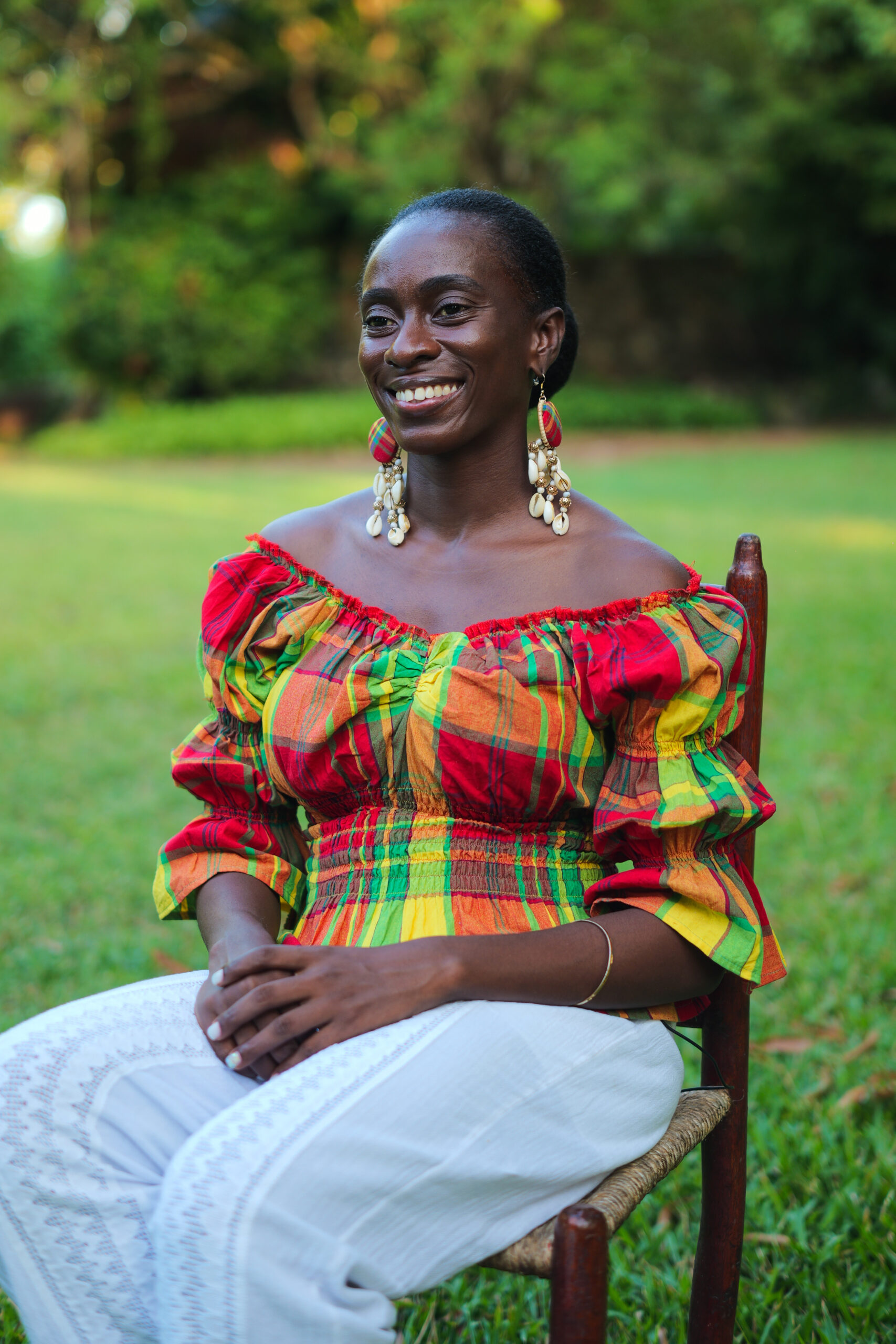
Creole and Saint Lucian culture always have a place far beyond the bounds of Mwa Éwitaj Kwéyòl, says Rhyesa Joseph, an educator, political scientist and cultural advocate. Her personal, academic, and professional pursuits reveal a deep cultural awareness and a keen interest in Saint Lucian Creole preservation.
Growing up in Vieux Fort, with roots in Mon Repos, Joseph’s childhood was backdropped by authentic Saint Lucian culture through storytelling, music, food, and community. Through research and observation, she has seen first-hand how cultural erosion takes root: a shift towards individualism, a disconnect between generations, and economic systems that keep parents away from home. In a conversation with St. Lucia Times’ Keryn Nelson, Joseph reflects on the state of Saint Lucia’s Creole language, the values embedded within it, and why preservation still matters.
KN: What are your general thoughts on the use of the Creole language today?
RJ: It is kind of two extremes. While there are some gains that have been made, there are also drawbacks in terms of reduced usage. In the media landscape, for example, when you examine a person who actually has the fortitude to engage in bilingual conversation on a professional level — in ministries or businesses — that’s rare. At the school level, there is some awareness, but I don’t think it’s substantive enough to take us where we need to go. Sometimes it’s used only as an aesthetic, or we limit it to October. But October should not replace full education and sensitisation throughout the year.
KN: Beyond the language itself, “values and systems” come up often in your talks about Saint Lucian culture and Creole? What exactly do these refer to?
RJ: It’s not something most people know in detail because of the nature of our education system. But when you look at how Saint Lucian societies once were, communities developed their own character through cooperative living. The community mattered, not just the individual, and one person’s success was tied to that of the whole. Koudmen is an example of a system of cooperative assistance. These systems shaped how we approached funerals, parenting, caring for children, and accountability. These may have existed informally, but they gave us a Saint Lucian ethic. As society fragments and outside values influence us, that ethic is weakened.
KN: Some argue that investing in Creole is wasted effort because it doesn’t improve global marketability. How do you respond?
RJ: That kind of view is rooted in generational propaganda. Rather than admit you feel incompetent in a language, you shame the language itself. But Creole is an important cultural tool. Many people believe that speaking English alone marks you as intelligent, which disqualifies Creole from relevance. That’s a prejudice we must unpack.
KN: I know you’ve done research into the topic. What can we attribute this attitude to?
RJ: Yes. When we think about colonisation, we think only of chains. But it was also about robbing people of identity. Creole was persecuted as part of that. If you spoke Creole, you were mocked and seen as ignorant — that’s still with us. Colonial writings described it as the language of “uneducated” or “toothless” people, and colonial governors openly said they wanted it eradicated by any means.
KN: And how have those historical prejudices towards Creole trickled down into the present?
RJ: The late Hazel Simmons-McDonald wrote about this. But during earlier times, if you were a full Creole speaker, you might have been intelligent, but the education system wasn’t built for you — it was built for English speakers. If you didn’t adapt quickly, you were disqualified. Many individuals carried that trauma and, without realising it, passed the same fear onto their children.
KN: What can be done for Creole language preservation today?
RJ: For non-speakers who want to learn, it might seem simplistic, but if you think the language is important, invest in it. Practice every day. Learn a new word, buy a dictionary, seek out speakers, build your confidence and literacy. It takes courage, but it’s worth it.
KN: Do you think our institutions are doing enough to support the language?
RJ: I don’t think our public services in a number of development areas make the necessary synergies between education, culture, and communication. If we said, “20 per cent of our programming should be in Creole,” that would matter. Campaigns by the Ministry of Health, for instance, often need both English and Creole to reach everyone, and sometimes the Creole version is even more effective.
In her closing remarks, Joseph acknowledges Creole’s historical weight as a carrier of stories and a language embedded in the public sphere — through music, politics, and beyond. Yet she cautions against reducing it to an aesthetic or mere tool, insisting that its value runs deeper.
“Creole is significant, but the significance cannot be simply when we want to utilise it as something to give us an advantage over someone else, but to be valuable in and of itself, which it already is.”