
Party liquor can only be classified as tequila when it’s made from tequilana or blue Weber agave — a plant grown in specific regions of Mexico. Similarly, sparkling, sweet celebratory drinks can only be called champagne if the grapes are cultivated and the beverage bottled in the northeastern region of France bearing the same name.
And now, distinctive, colourful African prints can only be officially classified as Kente cloth if produced in specific parts of Ghana, such as Agotime and Adanwomase. This follows the fabric’s endorsement under Ghana’s Geographical Indications Act in October, affirming its authenticity and value on the global market, while guarding against imitation.
That development prompted a question in the newsroom: Can Saint Lucia’s Creole and national wear ever receive similar recognition?
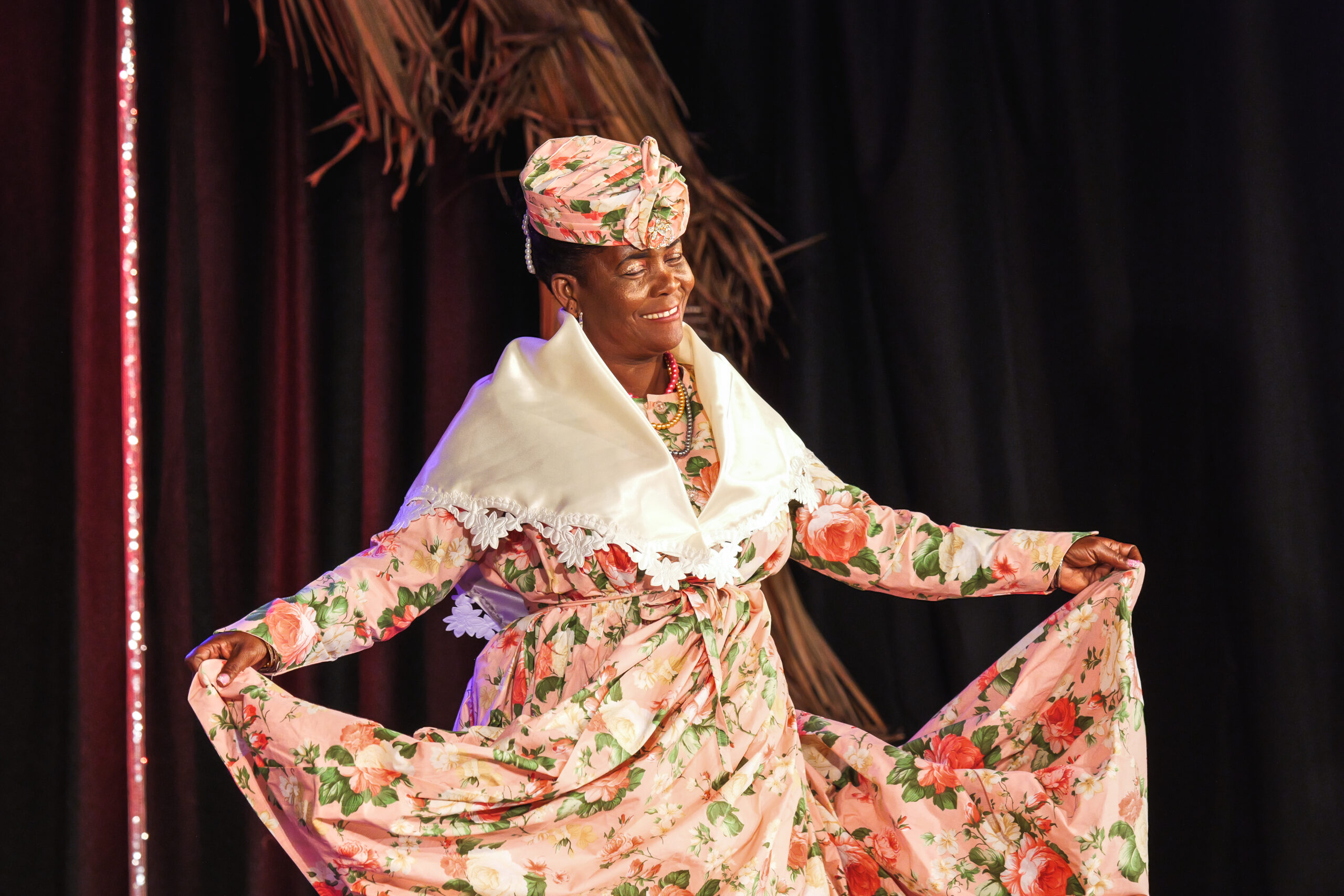
Across the Caribbean and the Americas, fabrics and garments known as cultural emblems often trace their origins to centuries of interwoven identities. In Saint Lucia, Madras — a colourful, checkered fabric which originates in Chennai (Madras) India — dominates. Yet, according to designer, artist, and cultural advocate Sean Greaves, floral print made of cotton was once the fabric of choice.
“The two fabrics that we used were the floral material, for the Wòb Dwiyèt — that was for the poorer people — but those who had connections to French Guiana would receive French brocade material by boat. That’s how they identified the rich from the poor,” said Greaves. “Madras has always been a part of it, but it was mainly used for tying the hair — even for everyday use.”
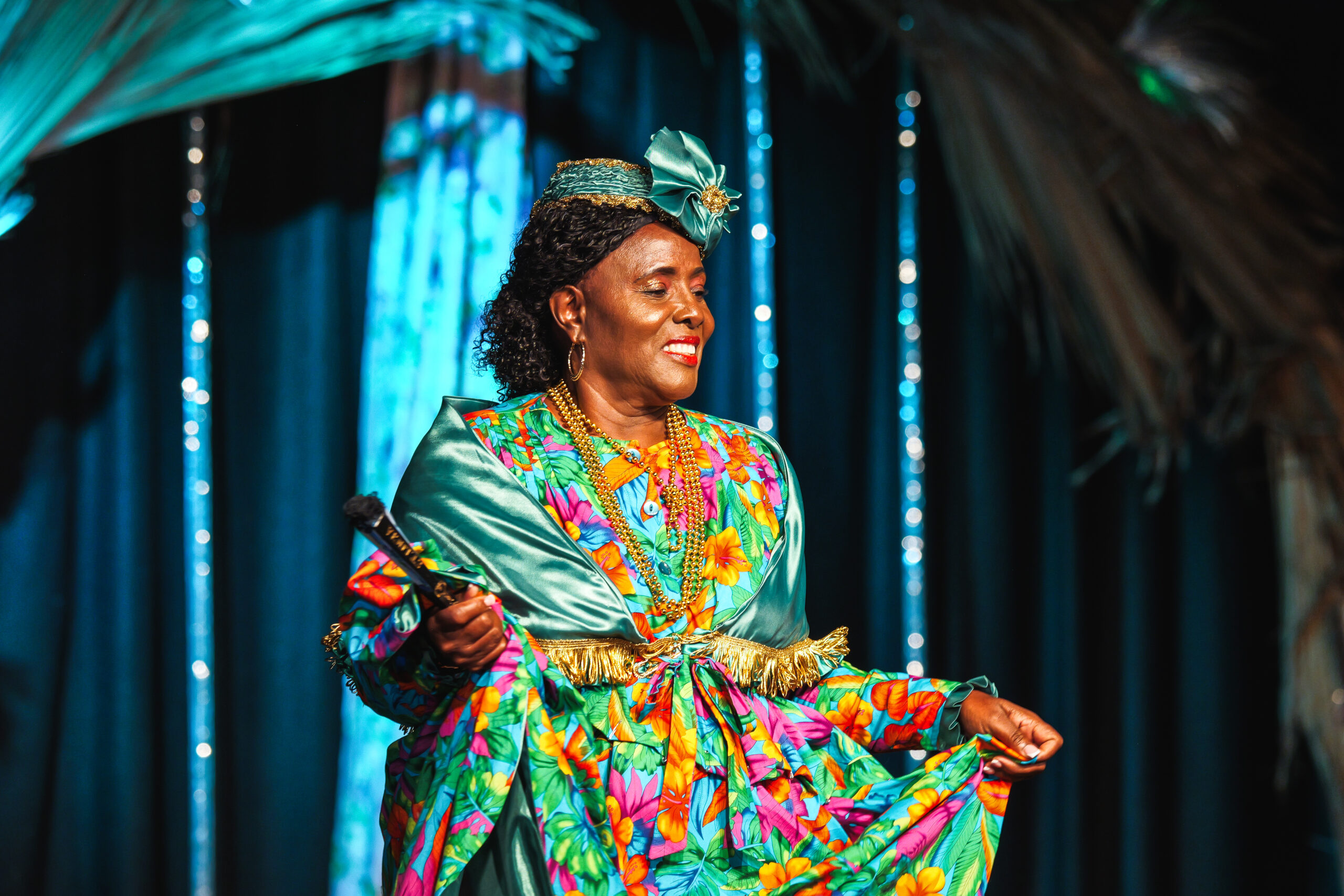
But focusing on garments reveals subtle cultural shifts that have taken place in Saint Lucia over time. A review of academic papers on the history of national costumes in the French Caribbean reveals an eclectic evolution of dress among all social groups.
– The French Caribbean national costume, known as the douillette, was the product of creolisation — a blending of cultural forms that sometimes clashed with European standards. Historian Franklin Knight, in 1997, describes this as an amalgamation of African, Asian, East Indian, European, and Indigenous American influences.
– The douillette typically featured coloured or shiny fabric worn over a petticoat, accessorised with a satin foulard shawl draped over the shoulders.
– French women were also said to wear wide, flower-printed cotton or silk skirts, their heads covered with white cloths, later replaced by Madras material for the same purpose.
– Enslaved Africans were dressed in chemise-jupe styles — a calf-length skirt paired with a white cotton or poplin blouse, often trimmed with red ribbons at the collar and sleeves.
– Initially worn by French settlers, mulattas, and free Black women, the douillette was later adopted by formerly enslaved women after Emancipation, as some resisted the styles that had been imposed upon them.
– Saint Lucia was said to have inherited both the chemise-jupe and the douillette through its colonial history. The chemise-jupe evolved under the broad “Madras” label — featuring a Madras-print headpiece, a chimiz dékolté (white cotton blouse), and a lace skirt overlaid with a low Madras-print skirt.
– The Madras skirt, or jip, is considered an “offspring” of the Wòb Dwiyèt, now recognised as Saint Lucia’s national dress.
The conversation around national and Creole dress in Saint Lucia deserves more time and attention to trace its history to reveal how and when Creole women and men, who historically donned white shirts, black trousers, and Creole fabric accents transitioned from floral prints to predominantly Madras fabric.

Greaves believes the shift may have been shaped, in part, by accessibility as most of the fabric used for Creole wear today is imported, often from Trinidad and Tobago.
“Sometimes we can’t travel to go and get fabric,” he said. “I think it’s the shops here bringing in more of the Madras, maybe, and then it being advertised as Jounen Kwéyòl.”
He added that he has often urged local shop owners to import more floral prints. One store in Castries, Stardust, currently offers a modest selection.

Yet, unlike Ghana’s Kente, which originates and is still produced in Ghana, Saint Lucia’s national wear reflects its layered past — a culture shaped and inherited by those who arrived here through the transatlantic slave trade and indentured labour.
The subject brings to mind a point raised by entrepreneur Anselm Mathurin earlier in September, following his first runway show at New York Fashion Week, when he spoke of his Calabash Wear print as filling a need for something distinctly Saint Lucian when it comes to authenticity. In the meantime, however, the question remains of whether authenticity, in the Caribbean sense, is about origin, or rather about the way we reinvent what history left us.
References:
- Indian Heritage in the French Creole-Speaking Caribbean: A Reference to the Madras Material (International Journal of Humanities and Social Science)
- Souvenir du Carnival — A photographic record of French Antillean dress from the Smithsonian




Sorry to say. I prefer the colour full dressed we have not than the original flowered dresses.
That’s my opinion!
Sorry to say. I prefer the colour full dressed we have now than the original flowered dresses.
That’s my opinion!