
“Especially men — we have a crisis in Saint Lucia where the men refuse to dance,” joked Jason Bachelor Joseph.
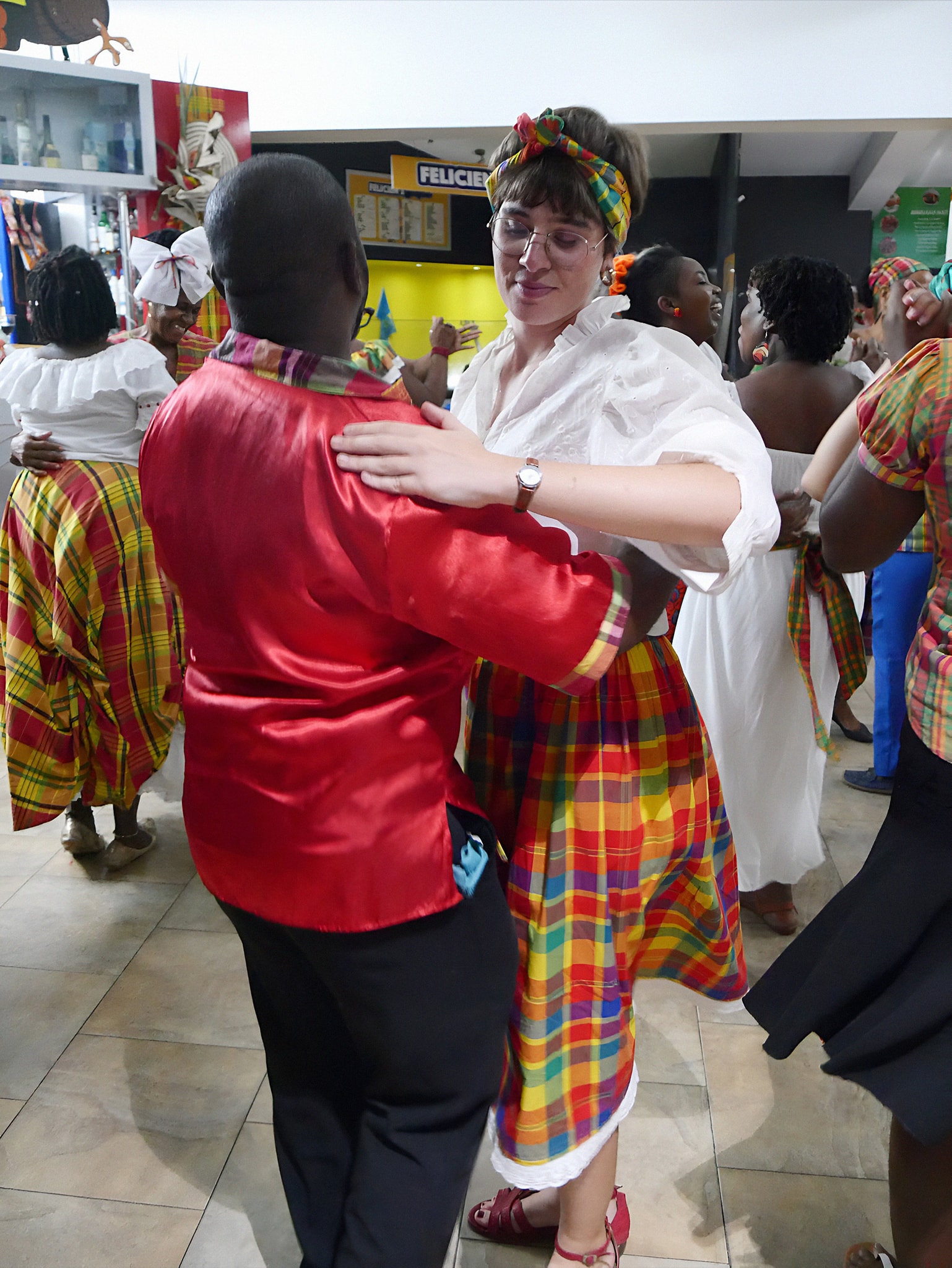
It’s the wake of Joseph’s recently wrapped 14th annual Dansé Kwòdril [Quadrille] sessions held at the JQ Rodney Bay Mall. The weekly event, which ended on October 23, has been a staple since 2011 and has been officially sponsored by JQ Mall for the past five years. But for Joseph, it extends beyond a series of dance sessions. It’s about preservation and participation — marking his continued effort to get Saint Lucians moving again.
Joseph’s affinity for dance began when he was a boy attending his church’s Saturday Night Socials. He learned Quadrille largely through observation, but his adoration for movement took a pause for several years, even as he built a household name as a musician and his own brother developed a fondness for salsa. It wasn’t until a personal turning point in his life that Joseph found himself drawn back to the dance floor, and he hasn’t stopped since.
Over the past decade, he has become one of the island’s most visible promoters of Quadrille, a dance with deep roots in European ballrooms of the 18th and 19th centuries that evolved in the Caribbean through the creative adaptation of enslaved Africans.
While local cultural groups continue to perform Quadrille on stage, Joseph believes preservation also happens through participation. “It’s important that, apart from seeing groups perform for tourists or at events, Saint Lucians themselves learn to dance — with their husbands, wives, children, and friends,” he said. “That’s the nature of the dances. They bring people together.”
Each year, Joseph leads a series of public Quadrille dances running from early September through October, drawing participants eager to reconnect with their heritage. Attendance has grown significantly over the years — a shift he attributes to consistency, corporate sponsorship, and the growing influence of his Kwéyòl Sent Lisi brand on social media.
“In the beginning, we would have just a handful of people showing up,” he said. “But it started to pick up — probably with the support from JQ and the live band, and the online buzz.”
Still, Joseph wishes the enthusiasm for cultural dance extended beyond Creole Heritage Month. He’s now working to make communal dancing a year-round affair. “My mission these days is to get everybody to start dancing,” he said. “It’s not only a great social activity or a way to meet people — it’s good for your health, your peace of mind, and for relieving stress, especially if you don’t have time to exercise.”

Beyond Quadrille, Joseph is also focused on reviving African-influenced dances still performed in pockets of communities like Piaye and Babonneau. “We’re working on bringing back dances like the bélé, the débòt, the kutumba — all of those with strong African roots,” he said.
As for getting more men back on the dancefloor, Joseph laughs as he puts it plainly: “I don’t know if it’s because they think it’s not manly enough or they’re afraid of being ridiculed — but we need more men to participate. Because right now, I’m having all the fun with all the women — and I can’t handle all those women alone.”