
As soon as Jounen Kwéyòl ends, many Saint Lucians say it is officially time for Christmas. The shift shows up quickly in WhatsApp statuses, Instagram stories and casual conversations, with people expressing a familiar desire to “feel the Christmas spirit”.
For many, that feeling begins with sound. Music and tradition play an integral role in shaping what Christmas feels like in Saint Lucia, anchoring the season in memory, culture and shared experience.
When St. Lucia Times asked everyday Saint Lucians what their favourite Christmas songs were, the responses varied widely in genre and origin. While not limited to local music, each song carried personal significance, often tied to childhood memories and family traditions.
Among the songs named were Slice of the Pie by Ras Africa, Twadisyon Nwel and Merry Christmas, Saint Lucia Style by the Mighty Pelay, Santa Looking for a Wife by Bindley Benjamin, My Christmas Pork by Ricky T, Christmas Medley by Ruff & Ready, This Christmas by Papa Vader, and Put Jesus in Your Christmas by Crazy. Regional and international favourites also featured, including Wish You a Irie Christmas by Jacob Miller and Black Cake Lover by the Sugar Aloes.
Saint Lucian reggae artist Semi describes the local Christmas sound as a “mixing pot”, shaped by the many musical influences that coexist during the season.
“It’s really a unique kind of Christmas sound associated with Saint Lucia,” Semi said. “Without the music, there’s no Christmas.”
He explained that Christmas music in Saint Lucia moves with the day itself, offering different moods from morning to night and a unique sound suited for each person’s ear.
“You could start off with the slower stuff in the early morning, not too hard on the ear, just nice and mellow, to bring you into Christmas,” he said. “And later on, you have the parang and the socas.”
This year, after years of recording Saint Lucian-style covers of reggae Christmas songs, Semi released his first original Christmas track, Merry Christmas, Baby. He said the song was inspired by the emotional tone of the season.
“Some of the lyrics centre around happiness, people being happy, and having their loved ones around Christmastime,” he said. “You make something that people can relate to.”
Don’t fear the Papa Jab
But the sounds of a Saint Lucian Christmas extend beyond music alone. Cultural performances, particularly the traditional masquerade, remain a central part of how many communities experience the season.
For June Frederick, producer at the Youth in Arts Theatre Company, the masquerade, especially the Papa Jab entourage, is synonymous with Christmas.
“We have two groups,” Frederick explained. “One that performs to the music of the masquerade and one that moves to the rhythm of chant, and they do a dramatic death and resurrection ritual on the street. That second group does not come out any time but at Christmas time. “Somehow during the course of things, they became the traditional Christmas masquerade,” she said.

Frederick noted that the masquerade evokes a powerful, often “unexplainable” response from performers and audiences alike.
“I don’t know… it’s like magic. When that band plays, there is an excitement that they have which is totally unexplainable,” she said. “It’s a celebration of us, of who we are, and our link to our African heritage.”
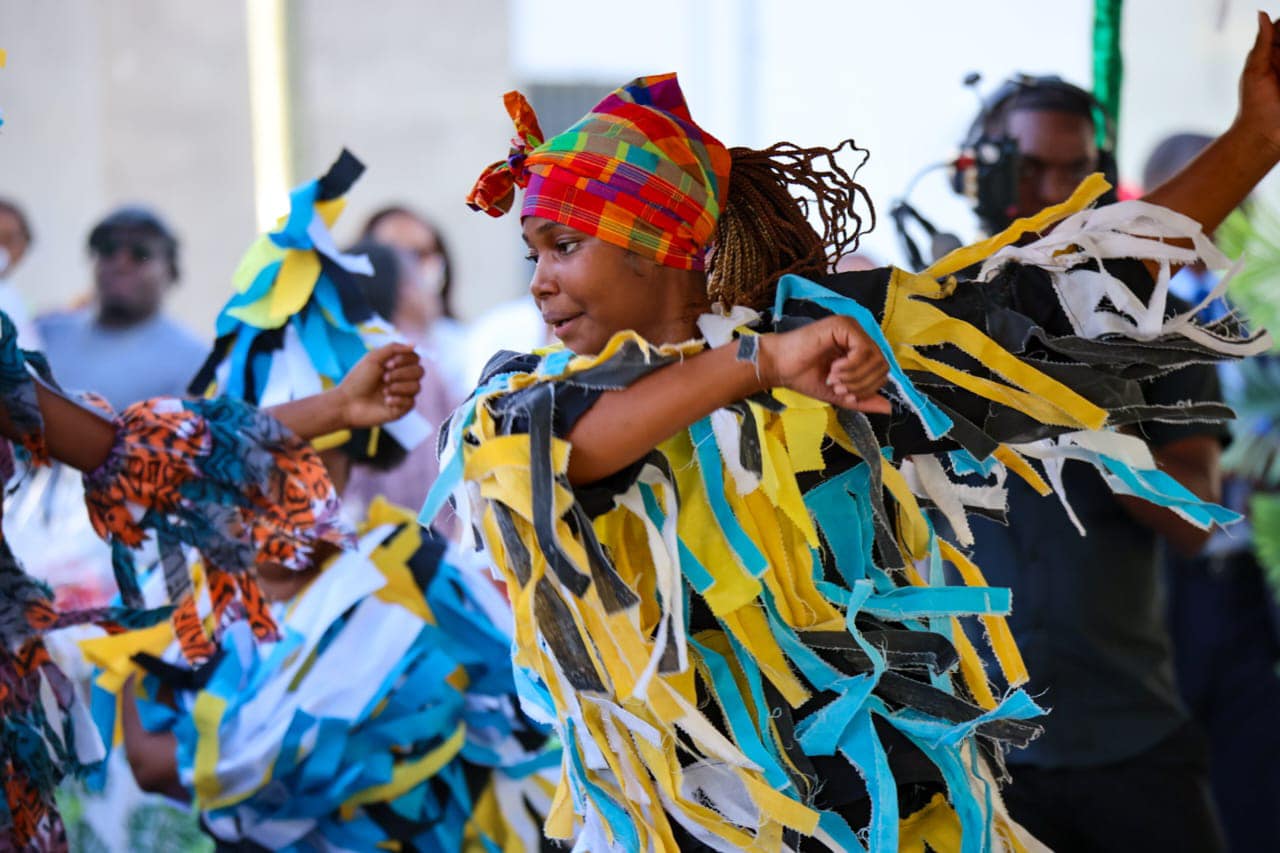
At the same time, she has expressed concern about increasingly aggressive reactions toward masquerade performers, driven largely by fear, including an incident as recent as the Festival of Lights celebration. Despite the unpleasant interaction, Frederick said the young performers were not derailed and continued the performance, a moment she described as both difficult and telling.
“People are beginning to attack our Papa Jab and his entourage out of fear,” Frederick said. “It’s okay to be afraid. I used to be afraid.”
She noted that while fear has always been part of the masquerade’s mystique, the line is crossed when it turns into physical or verbal aggression, particularly toward young performers who are simply carrying on a long-standing tradition.
“So I’m begging people, please, please, please, Papa Jab is going to be out during the season,” Frederick said. “Adults are more afraid than children. Please try to control your fears and do not lash out at our performance.”
She stressed that fear, joy and excitement have always coexisted within the masquerade tradition, and that learning to sit with those emotions is part of what makes the experience meaningful.
The renewal
In years past, Frederick said she felt the art form was dying. Today, however, she is encouraged by what she describes as a clear sense of renewal. While challenges persist, she points to increased involvement from schools, a greater emphasis on theatre arts, and growing support from civil society, government and the private sector as signs that the tradition is regaining momentum.
“So I think it’s growing, and I think it will continue to grow,” she said. “We’re even trying to commercialise it. We’ve written a short movie on the masquerade, and I think that will help.”
Together, the music people listen to – and the traditions they gather around – continue to shape the sound of Christmas in Saint Lucia, a season defined not by one rhythm or genre, but by the many voices, movements and memories that come together at year’s end.
Youth in Arts Theatre Company – Performing Schedule
December 20
FarmHers Christmas Market – Aquatic Centre Grounds, Rodney Bay: 7:30pm
Frydays Bar – Gros Islet: 8:30pm