
The One Village One Product (OVOP) model demonstrates that what is produced within a village and the story behind it can generate demand and be transformed into a sustainable livelihood. This principle guides the One Community One Product (OCOP) initiative in Saint Lucia.
OCOP is being implemented by the Japan International Cooperation Agency (JICA) in collaboration with the Ministry of Agriculture, Fisheries, Food Security and Climate Change, using a community-based value-chain approach to local product development. The initiative focuses on strengthening skills, adding value to what is already grown, and ensuring that economic and social benefits extend across the community; from farmers and processors to households and consumers.
Over the past year, communities including Soufrière, Micoud, and Laborie were engaged through early OCOP activities. These engagements allowed the project to test approaches, assess community readiness, and refine how the OCOP model could be adapted to the Saint Lucian context. Currently, the project has now entered a more focused phase, with attention centred on Babonneau as the pilot community.
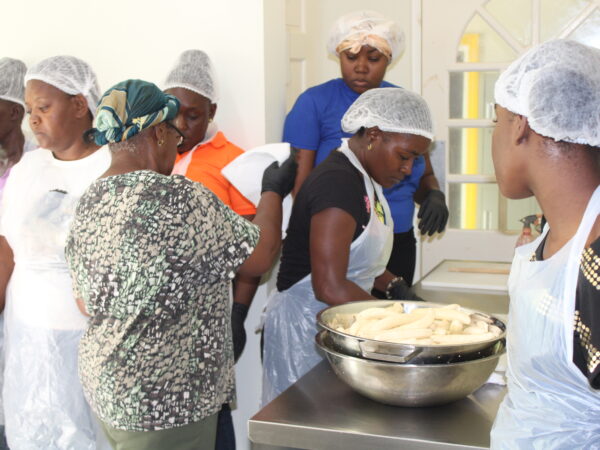
Babonneau was selected due to its long-standing culture of household-level value addition, particularly among women who have traditionally processed local produce for home use. Central to this phase is the Saint Lucia Network of Rural Women Producers (Babonneau Cluster), alongside approximately fourteen women from the Babonneau community, many of them mothers who are currently receiving hands-on training in value addition and agro-processing under OCOP.
“This phase of OCOP has been very intentional,” says Kendra Payne, local consultant supporting the implementation of the project in Babonneau. “It’s about working with what already exists in the community and shaping it into something realistic, sustainable, and meaningful for the people involved. Care has been taken to ensure that the approach works on the ground and that the benefits are shared across the value chain.”
The Babonneau pilot has also benefited from collaboration with partners such as the Inter-American Institute for Cooperation on Agriculture (IICA), which has worked closely with the Babonneau Cluster over the years and continues to provide institutional support. The Ministry of Agriculture’s Marketing Unit has likewise played a key role in supporting rollout activities.
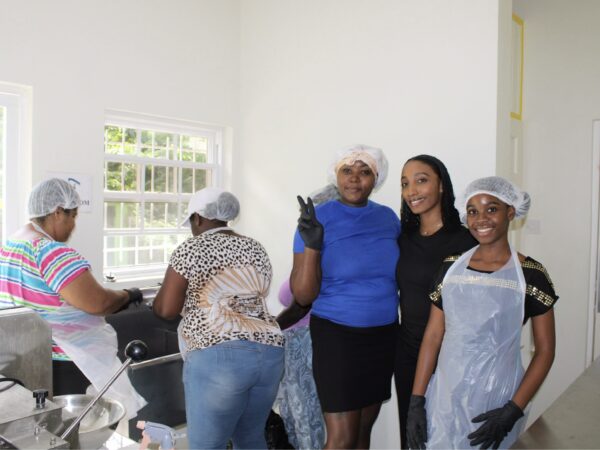
Special recognition is due to the women of the Babonneau Cluster themselves, whose willingness to share knowledge, mentor new participants, and lead community engagement has been central to the project’s progress.
As OCOP continues in Babonneau, the lessons learned will guide future expansion into other communities, ensuring that each product not only reaches the market, but truly reflects what OCOP stands for — a story in every product.
(PR)