
Uber’s recent launch of its taxi service in Saint Lucia has sparked mixed reactions. Some residents have welcomed the added choice and convenience, while others argue that the global ride-hailing company could threaten local operators.
That debate has raised a practical question about how Uber’s pricing actually compares with existing services.
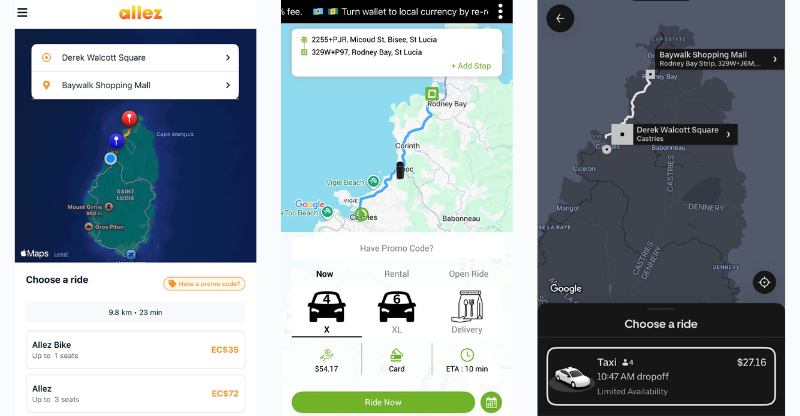
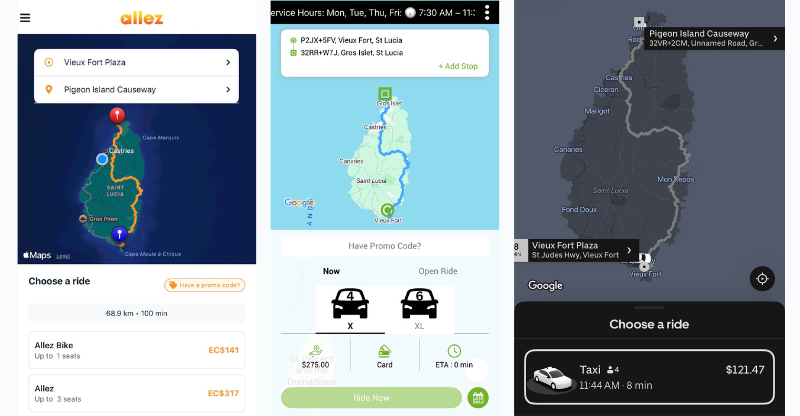
To find out, St. Lucia Times compared Uber’s estimated fares against two well-known local ride-hailing apps, Allez and Tropicab, using two common routes. The first was a short commute from Derek Walcott Square in Castries to the Baywalk Shopping Mall. The second was a longer trip from Vieux Fort Plaza to the Pigeon Island Causeway.
For consistency, the comparison focused on the most basic multi-seat option on each platform, typically accommodating three to four passengers. All prices reflect the estimated fare displayed in each app before the ride is confirmed.
Users should note that Uber currently lists fares in US dollars rather than Eastern Caribbean dollars.
On the Castries to Baywalk route, Uber quoted a fare of US$27.16, which converts to approximately XCD$73 using a $2.7 exchange rate. Tropicab listed the same trip at XCD$54.17, while Allez came in at XCD$72.
For the longer journey from Vieux Fort to Pigeon Island, Uber’s upfront fare was US$121.47, or about XCD$328.28. Tropicab priced the trip at XCD$275, and Allez at XCD$317.
In all cases, the fares shown were upfront estimates and may increase by the end of the journey, depending on factors outlined in each company’s terms and conditions.
From a usability standpoint, all three apps offered a smooth, user-friendly experience. Routes were easy to select, prices were clearly displayed before confirmation, and signing up required little more than an email address and phone number.
Though Uber is still new to the local market, its pricing appears in line with the established services.