
By Ingrid Levine
When the world imagines the Caribbean, it often conjures images of postcard beauty – brilliant sunshine, turquoise seas, lush mountains, and cooling trade winds. Yet that same sun, wind, water, and geothermal heat represent an energy powerhouse hiding in plain sight.
The United Kingdom recognises this untapped advantage and is increasingly focused on partnering with Caribbean countries to turn these natural assets into affordable energy, driving clean, resilient and sustainable growth.
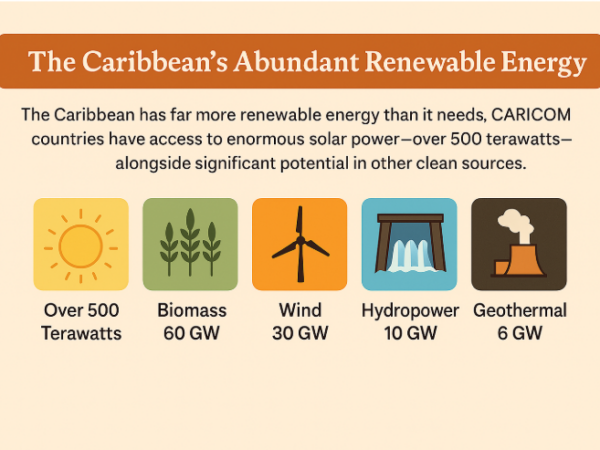
The Caribbean has the potential to generate more clean energy than it can use, with many islands able to run entirely on renewables and have excess to supply their neighbours. Some countries could also convert renewable electricity into transportable fuels like green hydrogen, ammonia, and methanol.
However, around 87 per cent of CARICOM’s energy mix is still based on fossil fuels, leading to high electricity prices. Many Caribbean families pay from twice to nearly three times what households elsewhere spend on electricity. This dependence on fossil fuels perpetuates economic vulnerability, high debt burdens, and energy insecurity.
The UK – a strong partner in CARICOM’s energy transition
Since 2015, the UK has provided US$39 million to support the energy transition in the region. The UK has supported geothermal development, solar PV installation, energy efficiency retrofits to public buildings and training initiatives to boost regional capacity in the Eastern Caribbean, and the groundwork for a regional offshore wind market.
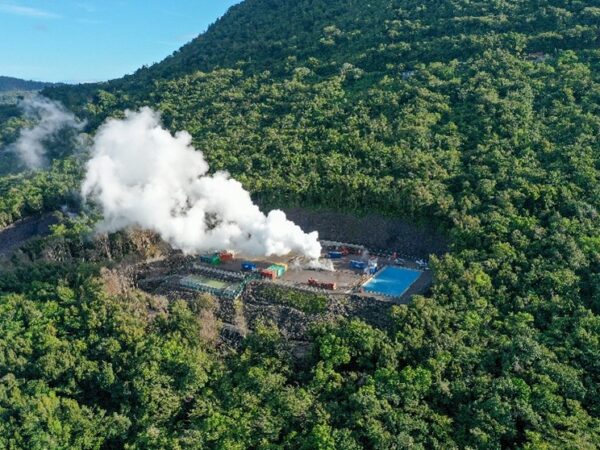
A major success story is the UK’s support for Dominica’s geothermal development, which ‘de-risked’ the upstream cost of drilling and provided the private sector with the confidence to invest. Dominica is now poised to commission the first geothermal plant in the English-speaking Caribbean in April 2026. This plant has tremendous transformation potential for Dominica, but it took several years of government commitment and leadership, patience, collaboration and flexibility of several development partners. We are aiming for similar success with ongoing projects in Grenada and St Lucia.
UK support to install energy-efficient street lighting and a solar PV plant at the international airport has also led St Vincent and the Grenadines to save millions of dollars and avoid hundreds of tonnes of carbon dioxide emissions. And our support for assessing offshore wind potential, while fledgling, has enormous development potential.
Why isn’t the Caribbean a global clean power front runner?
CARICOM set a bold target in 2013: 47 per cent renewable electricity generation by 2027. The region has made slow progress, achieving roughly 13 per cent renewable energy by 2023. But the numbers are clear – the pace must accelerate dramatically to reach the 47 per cent goal.
Progress has been uneven. A few countries have taken meaningful steps toward scaling solar, wind and geothermal power, but others continue to lag.
Like most Small Island Developing States (SIDS), the region’s biggest challenges are structural: small grid sizes, high capital costs, limited technical capacity, and fragmented markets that prevent economies of scale. Many countries also lack modern grid infrastructure and updated regulatory frameworks – both essential for integrating intermittent solar and wind.
A moment of opportunity
But solutions exist. Regional pooled procurement and project aggregation can lower costs and attract large investors. Modernising grids and updating energy regulations can open the door for greater private sector participation. Blended and concessional finance can help governments overcome prohibitively high upfront costs. And building local engineering and technical capacity will ensure long-term sustainability.
Everything the Caribbean needs is within reach – there is no time to waste. With decisive action, coordinated regional leadership, and strategic partnerships, the region can turn its natural abundance into energy security, lower electricity bills, and a more resilient future.
The UK stands ready to partner with the Caribbean. Through the Global Clean Power Alliance, we’ve agreed on a concrete Caribbean action plan for 2026–2028, providing on‑demand UK private‑sector and technical expertise to tackle key barriers and attract the investment needed for progress towards clean energy.
The resources are already here. The moment is now.





The UK just impost visas on us so we won’t be able to travel there to get training. How about linking up with China on that project. They actually lead the world by a significant margin in renewables. Let’s get over our Stockholm Syndrome please.
what has the UK done for st lucia? nothing. just impose racist lying policies. people at their home office just make up lies . and their government respond in kind. time for a republic.