
Why are Babonneau residents still struggling with water shortages despite the community’s water resources?
By Jahia DeMerville
For many Babonneau residents, turning on the tap has become an act of hope rather than certainty. Weeks-long water outages have disrupted daily life across the community, leaving many asking the same question: Why does a district blessed with rivers and springs still struggle to provide reliable access to water?
According to WASCO, the Babonneau community is primarily supplied by a single major centralised water system, known as the Hill 20 Water Supply System.
Research published by HR Hallingford, which investigated solutions to long-term water supply-demand balance challenges at the Marquis Estate in Babonneau, detailed features of the water network in the general Babonneau area. The publication noted that instead of a large reservoir dam, the Hill 20 system uses multiple natural “river intake” structures built along local waterways and springs to feed the treatment plant.
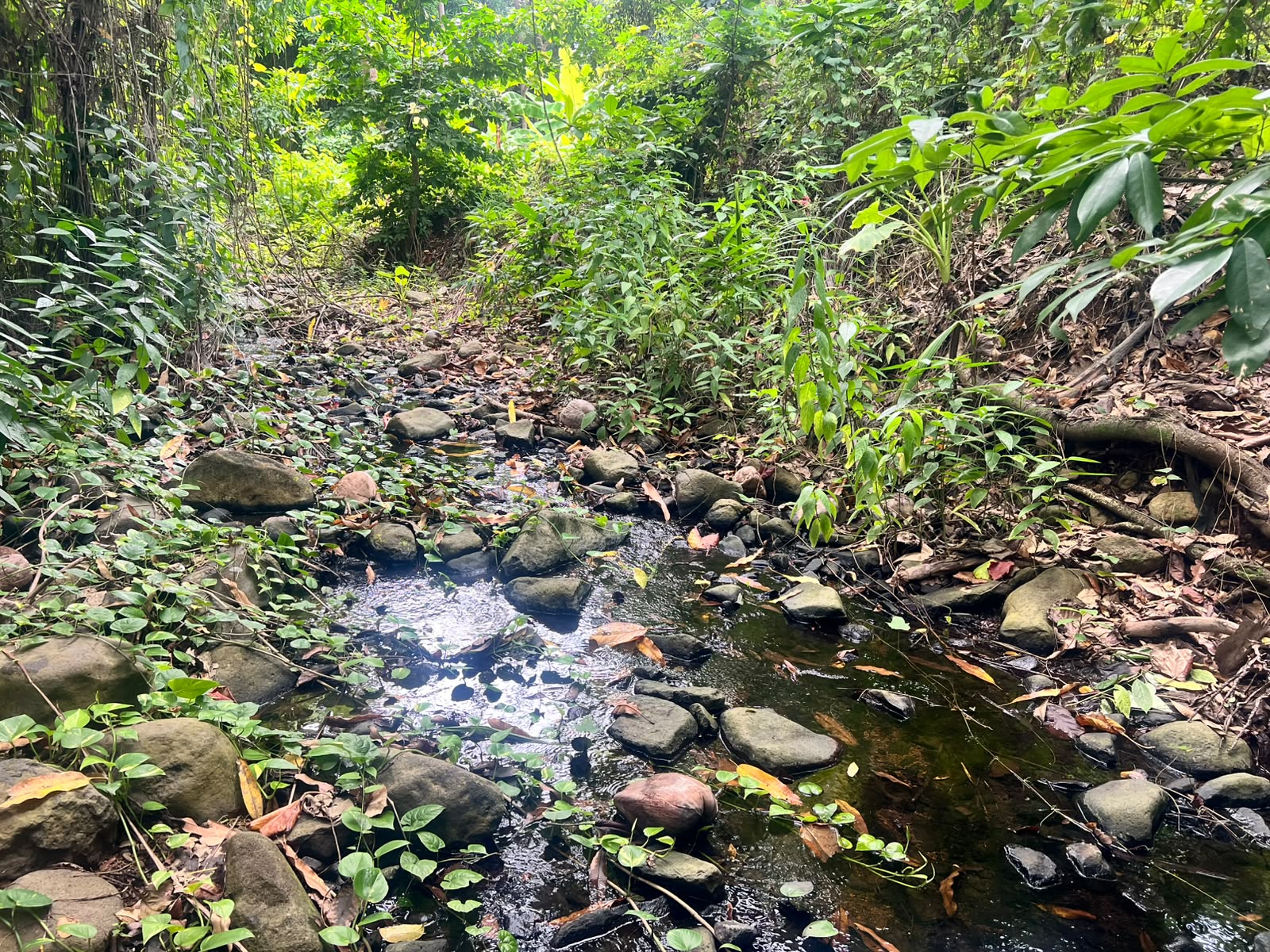
The Hill 20 plant draws raw water from the Marquis River (Marquis intake) and the Babonneau tributary (Talvern intake).
Unlike the main water supply system in Babonneau, smaller, more rural areas have localised mini reservoirs or dammed spring constructions along the community’s natural spring heads.
WASCO recently indicated that a community-wide water outage began in late April or early May; in some areas, the outage is still ongoing. According to WASCO, the areas most affected during outages are those at higher elevations, including Garrand, Fond Assau, La guerre, Paix Bouche, and Boguis.
According to HR Hallingford’s research, the difficulty in supplying water to elevated areas during or after an outage is a mix of hydraulics (physics), high infrastructure costs, and system mechanics.
Saturn Engineering Group explains how pumping water uphill requires immense electrical energy to fight gravity. In a comprehensive sector report, the market research firm Bluefield indicates that high-lift pumps are often a water utility’s biggest expense. The American Water Works Association suggests that during periods of economic strain, keeping these pumps running at full capacity continuously is financially and operationally difficult.
The American Water Works Association (AWWA) M11 manual explains how modern pipelines and pumping stations are engineered to withstand substantial operational demands, yet managing extreme hydraulic force remains a critical challenge for water utilities. When a system pumps water up steep terrain to high-altitude communities, gravity pulls the massive weight of that water downward, creating immense static head pressure at the lowest points of the network. As water moves through a system with significant elevation differences, static pressure increases with the vertical drop. Approximately 2.31 feet of water head corresponds to 1 PSI of pressure. According to the Bernoulli principle, if this force is left unmanaged, the severe pressure build-up will rupture the weaker, ageing distribution pipes at the bottom of the hill rather than damaging the pumps themselves.
Because of this, the utility balances the pressure so that it is high enough to go up, but low enough to balance the network.
The AWWA M51 manual suggests that when a water outage occurs, miles of empty distribution pipelines quickly fill with trapped air. If a utility attempts to restore the supply at full operational velocity, the rushing water rapidly compresses these air pockets against bends or closed valves, generating a violent hydraulic shockwave known as a water hammer. And according to WASCO, this sudden, immense pressure spike can severely compromise or rupture water mains, requiring technicians to pump water slowly and incrementally to safely bleed out the air and refill the system.
The delay is not necessarily caused by weak equipment, but by the combined effects of gravity, air displacement, and demand from lower-elevation areas.
Some residents have expressed frustration over the perception that water is deliberately withheld after rainfall.
Unlike high-speed chemical plants, the Hill 20 system in Babonneau relies on slow sand filtration, a process where water moves gently through sand beds over several hours. When heavy rainfall occurs, the local rivers become choked with thick mud and silt. Because this mud would instantly clog and ruin sand filters, the water and sewage company must completely shut down the river intakes until the river naturally clears. Once the intakes are reopened, the slow filtration process takes hours to cycle through. Furthermore, it can take additional time for the system to be repressurised and for water to reach higher-elevation households.
These operational challenges explain why service restoration can take days after heavy rainfall. The next question, however, is why outages have become so frequent in recent months.
According to the Saint Lucia Meteorological Services, the country is experiencing an unusually dry period, placing significant stress on the island’s water supply. The increase in water disruptions could stem from three primary issues.
First, drier weather. Saint Lucia’s Meteorological Services have indicated that the island entered the year with its reservoirs already in a stressed state, as recent wet seasons had less rainfall than average.
Secondly, to prevent areas from going completely dry, the water and sewage company (WASCO) has indicated that it intentionally locks major valves to shut off water to certain neighbourhoods for days at a time so that the network can build enough head to be diverted to other areas.
For steep and elevated communities in Babonneau, this means tap water disappears for weeks at a time.
The third reason is turbidity caused by flash rains. According to WASCO, brief, heavy rains wash loose and dry soil into the rivers, making the water muddy. Because mud clogs Babonneau’s slow sand filters, WASCO must shut off the system entirely until the water clears. This can cause sudden outages.
While these challenges help explain the disruptions, they do not erase the impact of prolonged outages on residents, many of whom continue to call for long-term improvements to the island’s water infrastructure. These conditions leave the utility with limited short-term options while placing additional strain on its operations.
Why are outages happening in Babonneau specifically?
According to WASCO, Babonneau is uniquely difficult to supply with water because of how mountainous it is. Because of this, there is an elevation bottleneck.
WASCO says that when an outage occurs, it takes massive amounts of electrical power to pump water uphill to high-elevation areas. According to the water company, lower-elevation communities can receive water before higher-elevation residents for extended periods, leaving the high-elevation residents completely dry for weeks – a frustration frequently highlighted by community members.
A lot of people question why the utility company doesn’t use the desalination technique (which is the process of removing dissolved salts and minerals from seawater to turn it into clean, drinkable, and fresh water). But while desalination offers a drought-proof alternative, relying on it for long-term supply across the entire Babonneau grid would place WASCO at a severe operational disadvantage.
Because desalination plants should sit near the coast of the sea – as stated by clean water technology providers like Elemental Water Makers – the utility would face exorbitant, continuous electricity costs to pump that water up into Babonneau’s steep, high-altitude communities, as mapped out in HR Wallingford’s National Water Master Plan for Saint Lucia. Furthermore, according to former government minister and energy specialist Dr James Fletcher, speaking with The Guardian, ageing infrastructure causes WASCO to lose roughly 45 per cent of its distributed water to non-revenue water; pumping highly expensive desalinated water through a compromised network could increase costs.
Ultimately, a heavy reliance on desalination runs entirely counter to the utility’s current climate-resilience strategy, which, as reported by St Lucia Times, focuses on cost-effective, solar-powered upgrades like the newly commissioned facility in Des Barras, Babonneau.
These factors present significant challenges to the widespread use of desalination as a solution to Babonneau’s current water shortages.
Another reason why the water and sewage company would be hurt in the desalination process is that, according to the World Health Organisation (WHO), desalinated water is very chemically unstable and potentially corrosive if not appropriately treated. WASCO says that its pipes are old and fragile. If this water is pumped into the company’s old, fragile, and already leaking iron pipes, it can speed up internal corrosion, leading to more bursts and leaks.
Many people question why the water and sewage company does not change the old pipes. But it is important to know that replacing an underground network is a slow, multi-year engineering process. The water and sewage company cannot simply dig up the island overnight due to extreme logistical and financial limitations.
While technical factors such as elevation, pressure management, and water treatment help explain why service restoration can be delayed, many residents remain frustrated by the frequency of outages.
In an informal community snapshot of 13 Babonneau residents conducted for this article, two respondents (about 15.4 per cent) reported experiencing water outages every week, with residents of Fond Assau and Talvern reporting some of the most frequent disruptions.
One resident questioned why water trucks are sometimes seen transporting water from local catchment areas to other communities while nearby residents continue to face shortages. While this claim has not been independently verified, it reflects the concerns and frustrations expressed by some members of the community.
So what can residents do to adjust to the water outages that have been more frequent?
The first thing you should do is to store drinking water. The US Centres for Disease Control and Prevention recommends storing at least one gallon of water per person per day. The CDC explains that this water can be used for drinking, cooking, and brushing teeth. Furthermore, a survey conducted for this article confirmed that residents routinely rely on stored water during outages, with some reporting disruptions lasting up to three weeks. So, for example, a family of three storing drinking water for each person would store 63 gallons of water for drinking and brushing teeth for a three-week outage. It is important to know that the amount of water stored per person per day depends on how much water one person drinks in a day. This example only refers to drinking water. The amount of water that each person uses overall will be much higher.
The Federal Emergency Management Agency (FEMA) says that you should fill buckets of water to use for flushing toilets. The CDC also recommends using stored water wisely.
The CDC also advised that when the water service returns, do not immediately use it to fill emptied bottles or do laundry. Let your tap run for two minutes or until the water begins flowing clearly, as sediments or air may have built up in the pipes.
Understanding the engineering behind Babonneau’s water system does not lessen the hardship residents experience. Instead, it highlights the need for long-term investment, transparent communication, and infrastructure improvements. Until those changes are made, many families will continue living with uncertainty every time they turn the tap.

Jahia DeMerville is a 14-year-old student at Corinth Secondary School and a resident of Babonneau. She has a keen interest in youth advocacy and enjoys writing, sketching, and researching topics that interest her.




Too much to read
I’m expected to believe a 14 yr old Corinth student wrote all of this without help (human or AI)? Anyway I echo the sentiment of the first commenter– way too much to read.
All these years I thought Fond Assau was valley.
Informative article. Please encourage more young folks to contribute articles.
In the months of March, April and May , water trucks were lined up every day carrying water all day out of the community and residents taps were left empty. Why is it that WASCO knows when communities don’t have water but still bill them for services which were not provided? What exactly are persons paying for?
I read this article with great interest and was taken back by the amount of research that went into it. Coming to the end, I’m realizing that it’s the work of a 14 year old!!!!!
I am very impressed.
I congratulate the young student and encourage her to keep up the the good work.