
As droughts at the Panama Canal push up shipping costs, Prime Minister Philip J. Pierre is urging Caribbean countries to focus on local solutions. He suggests improving ferry connections, increasing agricultural production and building stronger links between tourism and agriculture.
Pierre was responding to a warning from the CARICOM Private Sector Organisation that low rainfall and El Niño are making it harder for ships to use the Panama Canal, raising shipping costs and putting Caribbean imports at risk.
A release issued by the CPSO last week said that reduced rainfall between May and August 2026, coupled with additional climate pressures from El Niño – a weather phenomenon that is projected to intensify the 2027 dry season – is reducing water availability in the Panama Canal watershed and affecting operations at the canal, a key shipping route for some products entering the region.
How low rainfall is affecting the Panama Canal
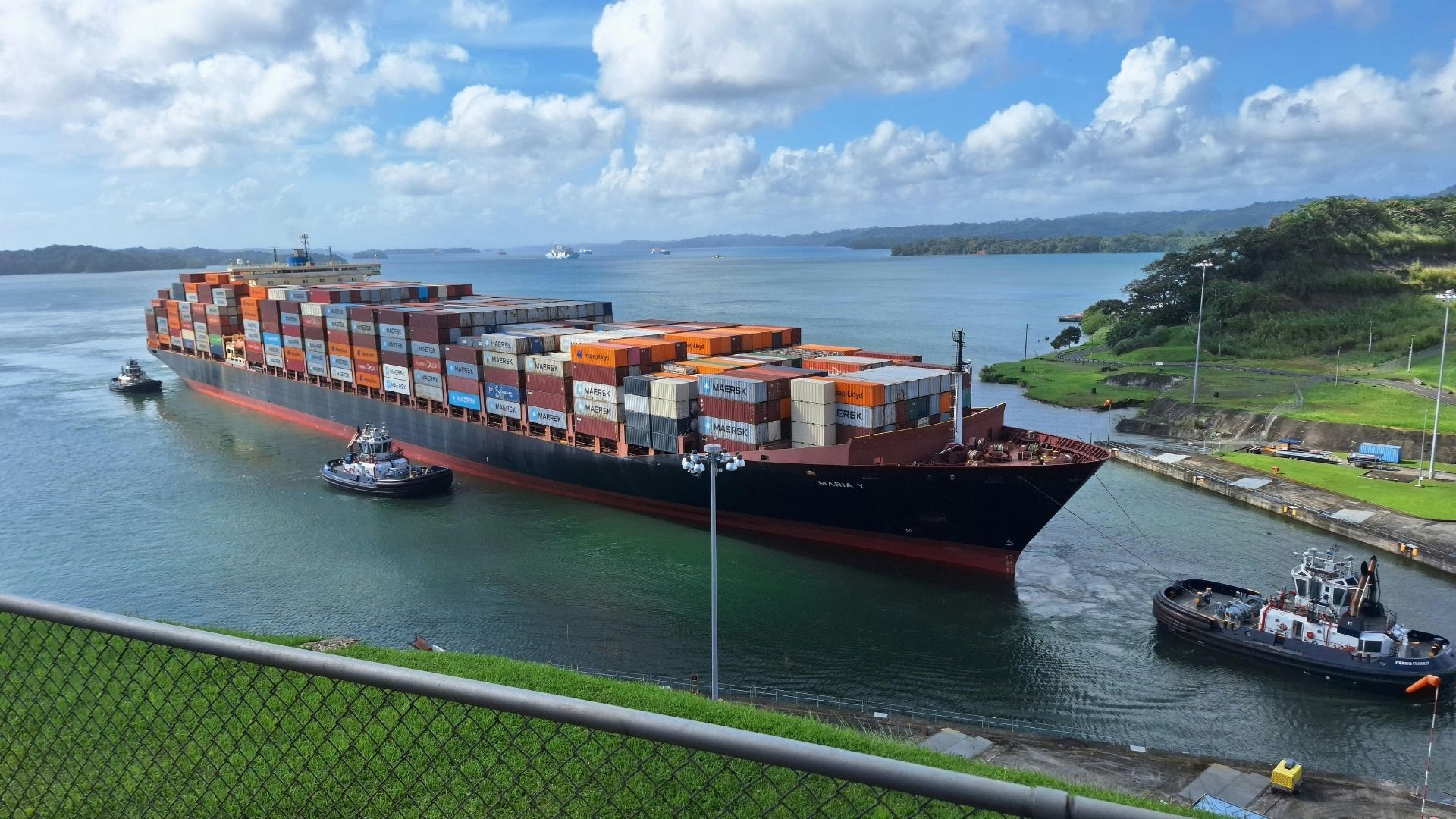
At the canal, reduced rainfall could mean less water available to operate the canal’s locks, limiting the number of ships that can pass through. According to the CPSO, the number of daily transit slots has already been reduced from 34 to 32.
As transit slots fall, priority slots could become more expensive, with shipping companies potentially bidding higher to secure passage. Recently, a record US$5.3 million was reportedly paid for a priority slot.
Lower water levels can also restrict the maximum load vessels can carry, meaning ships may have to reduce their cargo loads.
When canal use becomes difficult or expensive, some ships could be rerouted, increasing fuel use and crew and operating costs.
These extra costs could prompt carriers to add surcharges, which importers and consumers may end up paying.
“Auction premiums and low-water surcharges do not stay on the carriers’ books,” Patrick Antoine, CEO and Technical Director of the CPSO, said regarding the potential effects. “They are passed down the chain to importers, to distributors, and ultimately to the Caribbean consumer.”
The CPSO said it shared a plan called Derisking CSME Imports at the CARICOM Heads of Government Breakfast Meeting in Saint Lucia in July 2026. This plan includes a framework showing where “intra-regional production and alternative supply corridors can substitute for vulnerable long-haul imports”.
Pierre looks to regional solutions
Commenting on the issue in response to a question posed by St. Lucia Times at a pre-Cabinet press briefing on Monday, Pierre, the current CARICOM Chair, said that while what happens at the Panama Canal is out of the region’s control, moving goods between CARICOM countries is becoming more important.
“We need to get a ferry to move our food from one island to another; that’s the first step,” he said.
The prime minister outlined additional steps for countries such as Saint Lucia, where low production and other challenges remain a concern.
“…We have to increase our production and we have to strengthen the linkages between agriculture and tourism; that’s where the private sector must get together with the government in terms of creating these linkages, in terms of buying local, [and] in terms of getting our manufacturers to produce things so that they can sell.”
Despite the challenges, Pierre expressed some confidence in the region’s ability to substitute some food imports.
“…The first stage is seeing whether we can get this inter-island ferry going so that we can trade between ourselves because the region has some capacity to trade within itself.”
While the CPSO continues to support a regional ferry service and efforts to improve regional connections, it is also urging importers, as a short-term measure, to talk now with carriers and logistics providers about routes, possible surcharges and inventory planning for late 2026 and the 2027 dry season.




Any logically thinking individual will realize that life is changing both regionally and locally. We do not need to be told nor reminded that we must face the soil . Survival demands urgent agricultural initiatives. We either get aggressive in growing what we eat or eating what we don’t grow will cause our demise . Agriculture in schools should be on our priority list . Children should be taught from an early age that getting your hands dirty in a garden is a privilege and not a curse . Grow what you eat and eat what you grow is becoming not just good advice but a demand .