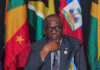
Young people must be involved in climate decision-making from the outset and given more than a token seat at the table, Saint Lucian youth climate advocate Kezia St Brice says.
St Brice, president of Climate and Health Action for the Rising Generation (CHARGE), said young people were already living with the consequences of climate change and developing solutions, and should not be brought into discussions only after decisions had been made.
“They must be part of the conversations from the start. Our responsibility is to ensure that the participation is meaningful, not just a seat at the table, but a voice at the table, not just a voice, but influence, and not just influence, but action,” she said on Wednesday at the launch of the UNICEF-commissioned Child-Centered Climate Analysis for Building Resilience at the Bay Gardens Hotel in Rodney Bay.
The study examines climate trends and their impact on children across Barbados, Dominica, Grenada, St Kitts and Nevis, Saint Lucia and St Vincent and the Grenadines.
“Young people are not merely the generation that will inherit the consequences of today because they are already living in those consequences, and they are already developing solutions,” St Brice said.
“Across our communities, we can see young people are organising, educating their peers, and coming up with solutions as well as asking the difficult questions.”
The youth climate advocate said climate events were experienced differently by children and young people, with the effects extending beyond the event itself.
“A flood can be a missed day of school, even weeks of school. A damaged home can become displacement. A disrupted livelihood can mean a family struggling to put food on the table, and repeated shocks can affect a child’s sense of security, their education, their opportunities, and ultimately their future.”
She noted this was why climate change also had to be considered in terms of development, opportunity and equity.
“The child who has the least ability to influence a climate crisis can often be amongst those who experience its greatest consequences,” St Brice said.
The study found that more than a third of children, schools and health facilities across the six Eastern Caribbean countries are already located in areas exposed to at least three climate hazards, with that figure projected to rise significantly by mid-century.
It proposes action across four areas – anticipatory action, shock-responsive social protection, structural resilience and fiscal transformation.
St Brice said resilience in small island states could not be treated as an afterthought.
“It has to be built into the way we plan, the way we invest, the way we educate, and the way we develop our communities.”
She also urged a change in how preparedness was viewed.
“Preparedness is not pessimism,” St Brice said.
“Preparing our young people for climate-related challenges does not mean we are giving up on their future. It means we believe their future is worth protecting.”
Noting that the release of the study should now be followed by action, she said, “A report cannot strengthen a school. A statistic cannot feed a family after a disaster. A recommendation cannot protect a child unless it is translated into action.”
St Brice further questioned whether the findings would become part of the decisions taken by governments and other stakeholders or simply remain in the report.
“Will this study sit on a shelf? Or will it sit at the table when policies are developed, budgets are prepared, programmes are designed, and decisions are being made?” she asked.
“The greatest value of this work will not be measured by the number of pages in the reports. It will be measured by what we do with what we have learned.”
St Brice said the focus should extend beyond preparing for the next disaster to preparing the next generation.
“What can we teach today that will empower a young person to become part of the solution tomorrow?” she asked.
The launch event was followed by a two-day workshop, hosted by UNICEF and CDEMA, aimed at strengthening regional media reporting on climate change, disaster risk and their impact on children.