
The Caribbean private sector is calling for permanent exemptions from United States maritime fees, warning that any increase in shipping costs could have implications for businesses, consumers and the movement of essential goods across the region.
The call has been made by the CARICOM Private Sector Organisation (CPSO) and the CPSO-US Business Council, which have jointly submitted comments to the United States Trade Representative (USTR) supporting a further suspension of the fees affecting Caribbean short-sea shipping.
The current suspension is due to expire on November 9, 2026. The USTR has proposed extending it for another two months, from November 10, 2026, to January 9, 2027.
However, the CPSO wants the exemptions protecting Caribbean shipping services to be made permanent, rather than leaving the region dependent on repeated extensions.
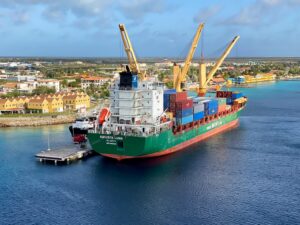
The fees, introduced in October 2025, target certain vessels built in China entering US ports. While exemptions were subsequently introduced for several categories of vessels, the CPSO says these provisions are essential to maintaining the shipping services on which Caribbean countries depend.
For Saint Lucia and other CARICOM countries, the issue is particularly important because more than 90 per cent of the region’s goods trade moves by sea, with no road, rail or pipeline alternatives.
The shipping routes are used to bring in food, fuel, construction materials and other essential supplies, as well as goods needed by businesses in sectors such as tourism and manufacturing.
The CPSO represents more than 6,250 businesses across CARICOM and says several member states have only two or three shipping companies serving their markets.
It warned that the original US fee proposal could have increased freight costs on Caribbean routes by between 50 and 60 per cent, potentially resulting in higher prices for consumers and losses for regional and US producers.
Since the exemptions were introduced in April 2025, no liner service to a CARICOM port has been withdrawn and no additional surcharge has been imposed on Caribbean shipping routes, according to the organisation.
The exemptions also have implications for disaster response. The CPSO pointed to the movement of food, relief supplies and building materials from Florida to Jamaica following the devastation caused by Hurricane Melissa, using the same short-sea shipping services protected by the arrangements.
Meanwhile, trade between the United States and CARICOM reached US$30.1 billion in 2025.
US exports to the region totalled US$18.6 billion, while imports from CARICOM stood at US$11.6 billion, giving the United States a trade surplus of US$7 billion.
CPSO Chief Executive Officer and Technical Director Dr Patrick Antoine said the exemptions had helped keep Caribbean markets supplied while allowing US goods to remain competitive in the region.
He said the organisation was asking the USTR to preserve the exemptions and eventually make them permanent so that Caribbean trade would not depend on repeated extensions or negotiations in which the region had no direct involvement.
The joint submission was made on behalf of the Caribbean private sector, building on the CPSO’s advocacy during the 2025 proceedings, which involved CARICOM governments, the CARICOM Secretariat, regional ambassadors, shipping companies and other stakeholders.