
Thirteen years after the 21-year-old died in custody at the Micoud Police Station, and as police move to close the case, inquest testimony from 26 witnesses reveals conflicting accounts of his final hours.
His death has left a family longing for accountability and some assurance that both he and they can finally move on in peace. It has also left a country worn down by the lack of answers about what happened. And now that Police Commissioner Verne Garde has declared his commitment to seeing the case through to its conclusion, questions remain about what that conclusion will look like.
Early autopsy reports confirmed that Chacadan Daniel died on October 23, 2013, from asphyxia, a deprivation of oxygen caused, in this case, by hanging. His head bore a fresh wound at the top.
When his body was cut down from a white cloth tied around his neck and secured to the burglar bars of his cell at the Micoud Police Station, records show that self-inflicted and staged hanging, as well as homicidal hanging, were being considered as possibilities. A very recent peer review of that autopsy by Dr Alfredo E Walker concluded that the death was a self-inflicted hanging.
That view, examined in more detail below, stands in stark contrast to the finding of a coroner’s inquest held in July 2015. After hearing testimony from 26 witnesses, some of whom offered conflicting accounts, jurors concluded that Chacadan died as the result of an unlawful killing, a legal term for the death of a person at the hands of another without lawful justification.
A coroner’s inquest is only a fact-finding inquiry and is not intended to determine criminal or civil liability. Still, the contradictory accounts presented there about what happened at the police station on October 23, 2013, cast a murky light on how a 21-year-old, arrested by police and held in their custody, came to be found dead in a cell.
It began weeks earlier
The names of the police officers involved have been omitted from this article due to no arrests having been made and no charges laid.
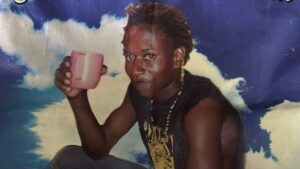
Chacadan was Frances Daniel’s youngest son. She had 13 children in her care, some she bore and others who were stepchildren. Unlike his brothers, who had the chance to grow older, marry and focus on their own families, Chacadan had not yet done so and helped her with farming and gardening.
Her one concern was his friendships. In an interview on September 25, 2026, she recalled a time when he encountered police at a friend’s home.
“He was at a friend’s home and they got things for marijuana there, and the friend said it’s his yet still, the friend is in jail right now and is Chacadan that died.”
She confirmed that the friend’s current imprisonment is unrelated to that marijuana discovery and did not draw a connection between that incident and Chacadan being held in custody at the Micoud Police Station in October 2013.
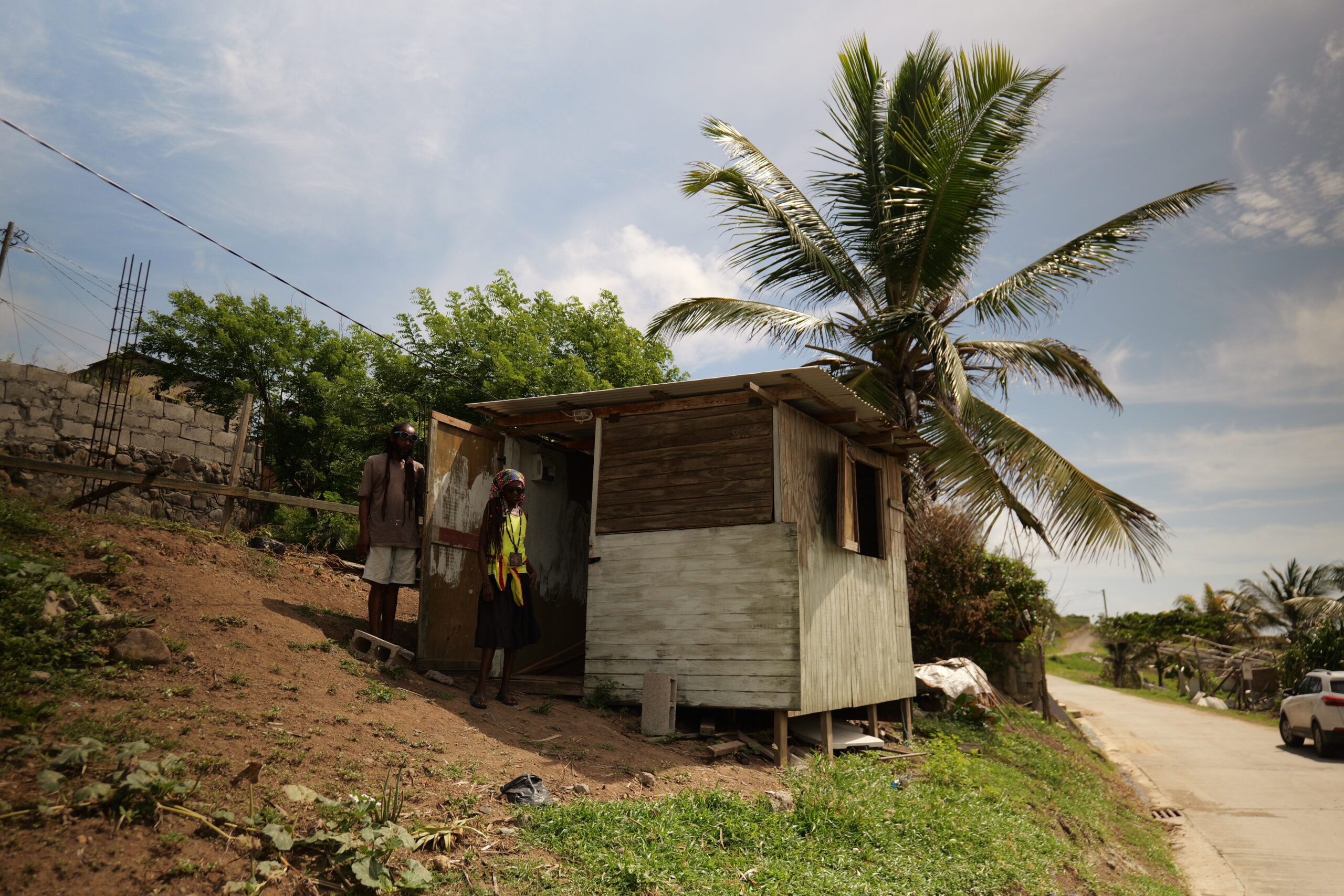
Frances says Chacadan’s later encounters with police grew fraught with intimidation and that she understood he had become afraid of the police during this period.
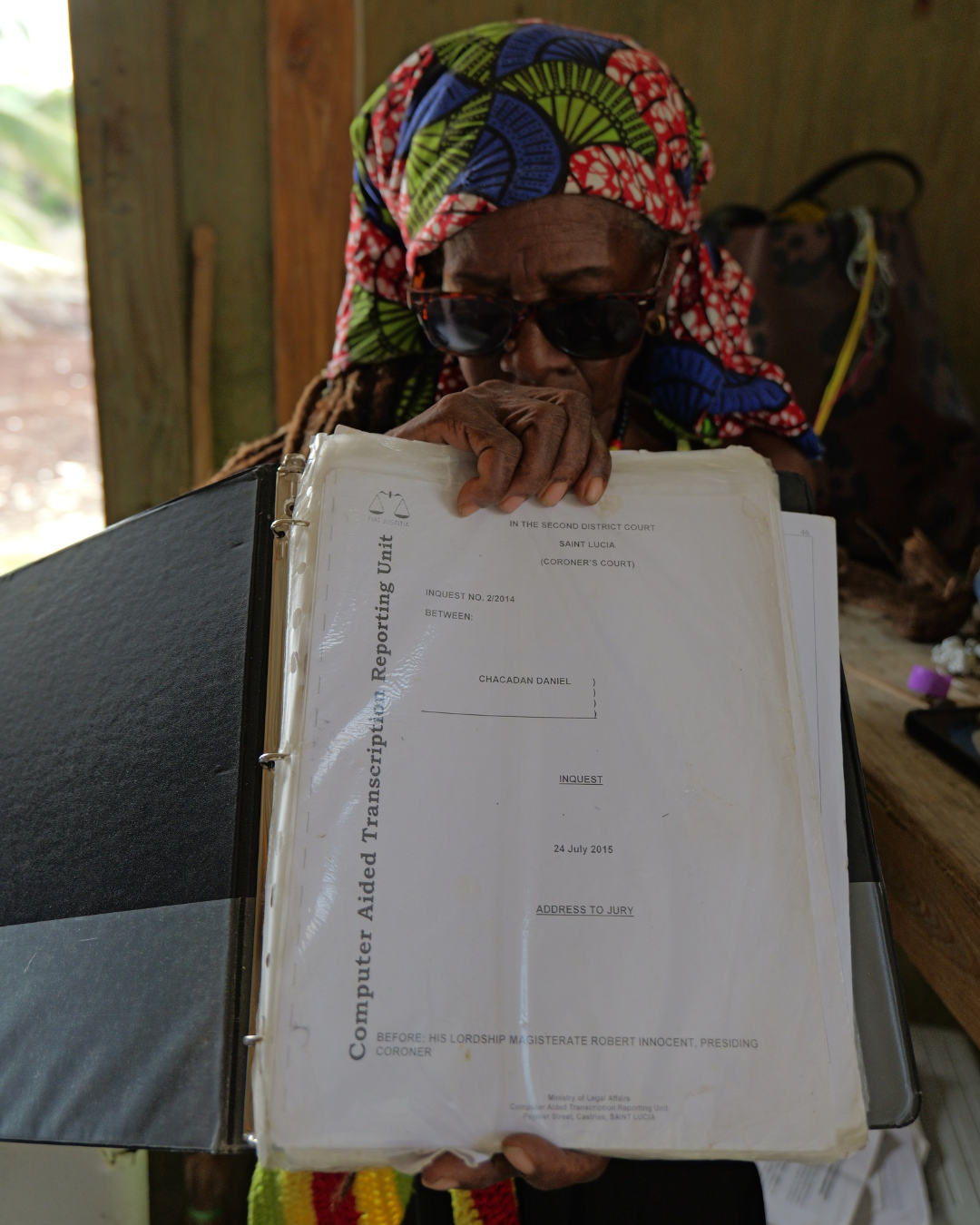
Court documents place the start of the incidents surrounding his death in early to mid-October 2013, and records from the 2015 inquest show that Chacadan had been taken to the Micoud Police Station around that time. In her statements featured in the coroner’s address to the jury, Frances said that two weeks before his death, Chacadan was standing by the road with a cousin when police arrived, said they had a bench warrant for his arrest and took him to the station.
In her most recent interviews, however, Frances repeatedly mulled over a detail she recalled from testimony heard during the inquest: that some statements indicated there was no warrant for his arrest. Attempts to corroborate this with the Royal Saint Lucia Police Force (RSLPF) at the time of publication were unsuccessful.
According to the coroner’s address, on October 6, 2013, a female officer who was on duty at the station when Chacadan was brought in and placed in a cell said in her statement that Chacadan, who was the only prisoner at the time, asked to use the bathroom and retrieve personal items from a locker. When she let him out of the cell, she watched him search the locker and declare some items missing before he said, “Officer, you know me, let me go.” She said she tried to move him back towards the cell, but the two ended up in a scuffle during which she was kicked in the stomach and face before Chacadan escaped. Another officer at the station “fired some shots” as Chacadan fled, according to the female officer’s account.
Efforts to locate Chacadan immediately afterwards were unsuccessful and the following details were mentioned in the coroner’s address; When Frances visited the station two days after Chacadan had been arrested, the same officer who had fired his weapon told her Chacadan had fled police custody and added a warning: “funeral they making for him”. In his witness statements, that officer denied saying that to Frances. He said he was not working at the Micoud Police Station in October 2013. However, he was confronted with the female officer’s testimony and admitted he was, in fact, at the station that month.
In an interview, Frances said police found Chacadan at his late father’s house. Inquest documents state that police found him with a cousin in Micoud. That cousin said one of the officers carrying out the arrest slapped Chacadan on the back of the head as he was led away, while a statement from another officer involved in the arrest said Chacadan said nothing and offered no resistance.
By October 21, 2013, Chacadan was back at the Micoud Police Station. Two days later, he was found dead.
When was Chacadan last seen alive?
Contents of the Micoud Police Station’s log book were discussed in the coroner’s address. According to those logs, Chacadan’s body was found about 7:40 a.m. on October 23, 2013, after Frances arrived at the Micoud Police Station around 7:35 a.m. and asked to see him.
One officer who served as the station orderly at the time said he saw Chacadan alive just 10 minutes before the body was discovered. According to his witness statement, at 7:30 a.m., Chacadan called him by his nickname and asked to use the bathroom. He granted the request, following Chacadan to the restroom and standing guard before escorting him back to his cell. He then informed Chacadan that he would be going to court that morning but did not know whether he would be charged or released.
A second officer’s account differed entirely. That officer said that when he saw the station orderly that morning, he was alone in an area of the station called the charge room. About 20 minutes before Frances arrived, at roughly 7:15 a.m., the orderly told him Chacadan had just had a bath because he was scheduled to appear in court that morning.
A third witness, a cleaner, also gave a different account. According to her, she arrived at the station around that time and found the second officer, the station orderly and a third, unnamed officer in the charge room area. She also saw the second officer between the station’s kitchen and the charge room at about 7:15 a.m., holding a wet pair of slippers.
Who first found Chacadan, and how?
In his account, the second officer said he went alone to fetch Chacadan, leaving the station orderly at the desk when Frances asked to see him. When he discovered Chacadan’s body hanging in the cell, he then called out to other officers.
Frances’ testimony differed. She said the station orderly did not remain at the front desk when she asked to see her son. The second officer was later recorded as corroborating her account that he and the station orderly both went to fetch Chacadan.
In his own statement, the station orderly said that when he went to check, he saw Chacadan hanging by the neck from a noose that pathologists say appeared to be made from the white top Chacadan had been wearing. He entered the cell with the second officer and checked for a pulse but found none. They called a corporal to report what had happened and later cut the noose, allowing Chacadan’s body to fall to the floor.
In her statements referenced in the coroner’s address, Frances said there was a flurry of activity in and around the cell shortly after her son’s body was discovered. She recalled seeing police personnel wearing gloves and moving things around, and that mopping was taking place with Chacadan’s body still in the cell.
According to the coroner’s address, minutes later, a fireman trained in first aid examined the body and said he “had attended to about 750 bodies and he had never come across a body as cold as Chacadan’s body felt that morning, and he said that takes a couple of hours before the body gets that cold.”
Pathologist Dr Stephen King, who had performed the autopsy on Chacadan’s body on October 25, 2013 said in a statement at a joint police press conference on October 29, 2026, “The finding that the body was cold at 7:46 a.m. is suggestive of death occurring earlier than 7:41 a.m., although skin temperature, and this is my opinion as well as science, is not a reliable measurement.”
Dr King’s autopsy had also found a contusion to the top of Chacadan’s head and four scratches on his head. Microscopic examination suggested a blunt injury that had occurred at any time within the eight hours before death, in other words, a fresh injury.
What did the cell checks show?
Witness accounts relating to the hours before Chacadan was found, and beyond, also contradicted each other.
Cell checks referenced during the inquest show that the station orderly recorded in the station’s log book that he checked Chacadan’s cell at 12:01 a.m. on October 23, 2013. The station orderly entered the cell after noticing Chacadan was not asleep and asked Chacadan why he was awake. During the inquest, the Coroner, Magistrate Robert Innocent, questioned why the officer needed to enter the cell to ask. Two hours later, the orderly said, he checked again and found Chacadan asleep. He called out “two to three times” and Chacadan answered “yes”. When asked if he was okay, he said Chacadan again answered “yes.”
The orderly recorded nothing out of the ordinary between 2:00 a.m. and 6:00 a.m. Yet, while testifying, he said no one else was in the charge room at about 6:15 a.m., while a postman who stopped at the station to collect keys at 6:15 a.m. said he saw the orderly and another police officer entering the charge room.
Further, the second officer referenced earlier had served as station orderly for most of the previous day, October 22, 2013. According to the inquest document, that officer said he checked Chacadan’s cell about 10 to 15 times during his shift. After his shift ended at 4:31 p.m. on October 22, 2013, he said he left for Vieux Fort to attend drill practice, returned to the station at about 7:00 p.m. and went straight to the male dormitory, where he remained until after 7:00 a.m. the next day. He said he could not recall whom he met at the dormitory when he returned that night.
Where things stand
No charges have been laid. After the 2015 inquest ruled that Chacadan was unlawfully killed, the case file sat pending a decision from the then Director of Public Prosecutions (DPP) on whether to indict any police officers. In 2015, however, the DPP’s office reportedly experienced a severe staffing shortage and a leadership transition, according to a United States Department of State report. Daarsrean Greene was appointed DPP on October 17, 2016, and inherited a backlog of unresolved criminal cases and fatal police-involved matters. Greene had also served as Frances’ legal representative before becoming DPP.
Another bottleneck was that, between May 2015 and February 2017, Saint Lucia’s only forensic laboratory remained closed over structural and evidence-security concerns, reportedly hindering forensic testing and the processing of evidence in criminal and police-custody cases. Yet, more than a decade after Chacadan’s death, no significant progress in the investigation had been noted until recently.
On July 29, 2026, a judge of the Eastern Caribbean Supreme Court ordered the investigation completed within six months and the state to pay Frances Daniel $75,000, though the Attorney General has since appealed the ruling.
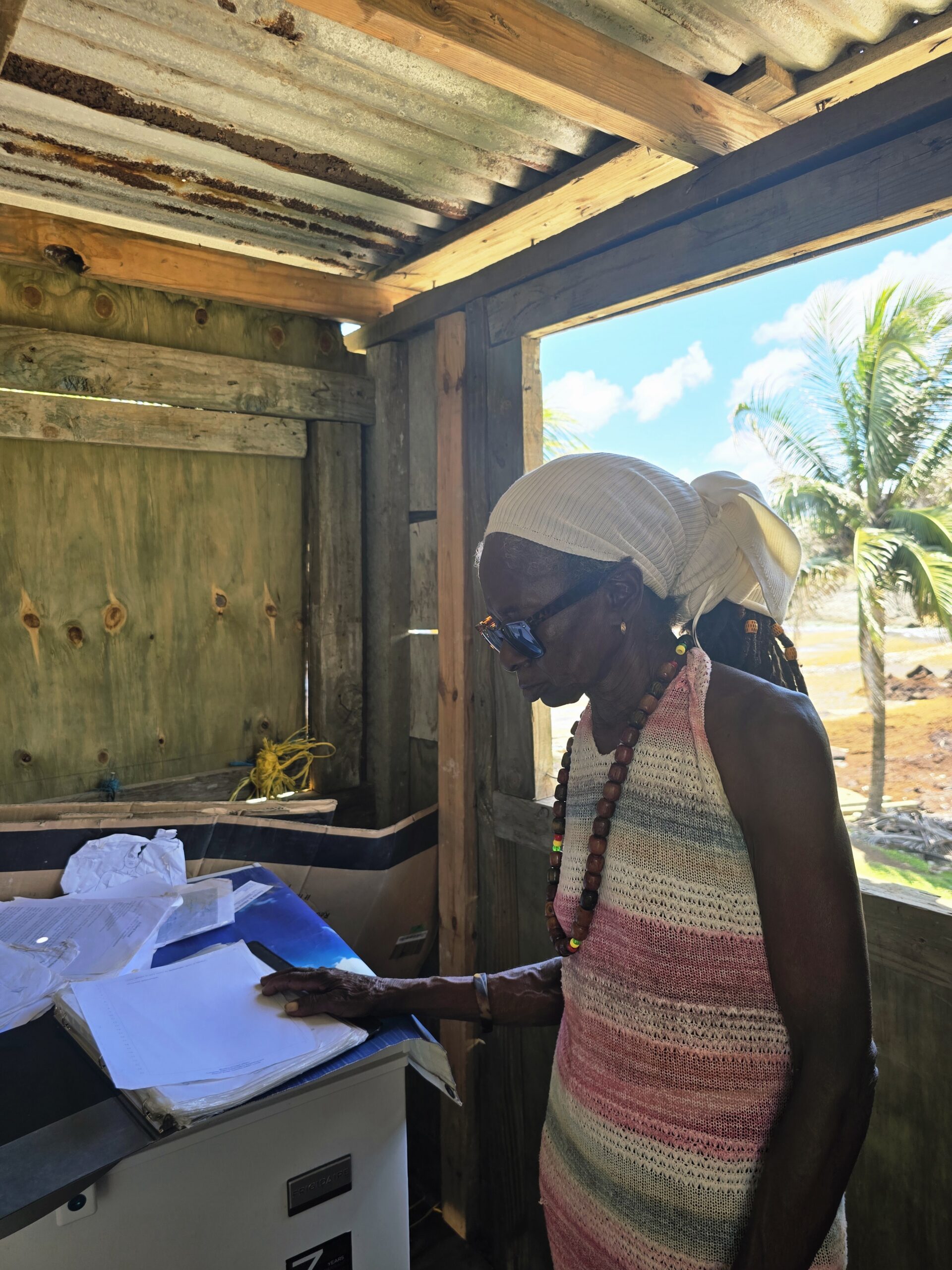
Following Commissioner Garde’s stated commitment to bringing long-pending cases like Chacadan’s to a close, the RSLPF held a joint press conference with pathologists and the director of the now-functioning Forensic Science Laboratory on October 29, 2026.
At the joint conference, Dr Walker, who had been contacted by Dr. King, to peer review the post-mortem findings at the RSLPF’s request, stated plainly that he was of the opinion that the 21-year-old hanged himself.
“With respect to the manner of death, the circumstances of his death and findings from review of the scene and post-mortem examination indicate self-initiated suspension as the plausible modality of hanging. There were no findings from the scene and post-mortem examination that detract from self-initiated suspension as the plausible modality of death …” Walker stated, adding that the reports had also been provided to Dr James MacPherson for further peer review.
Walker said MacPherson agreed with his interpretation.
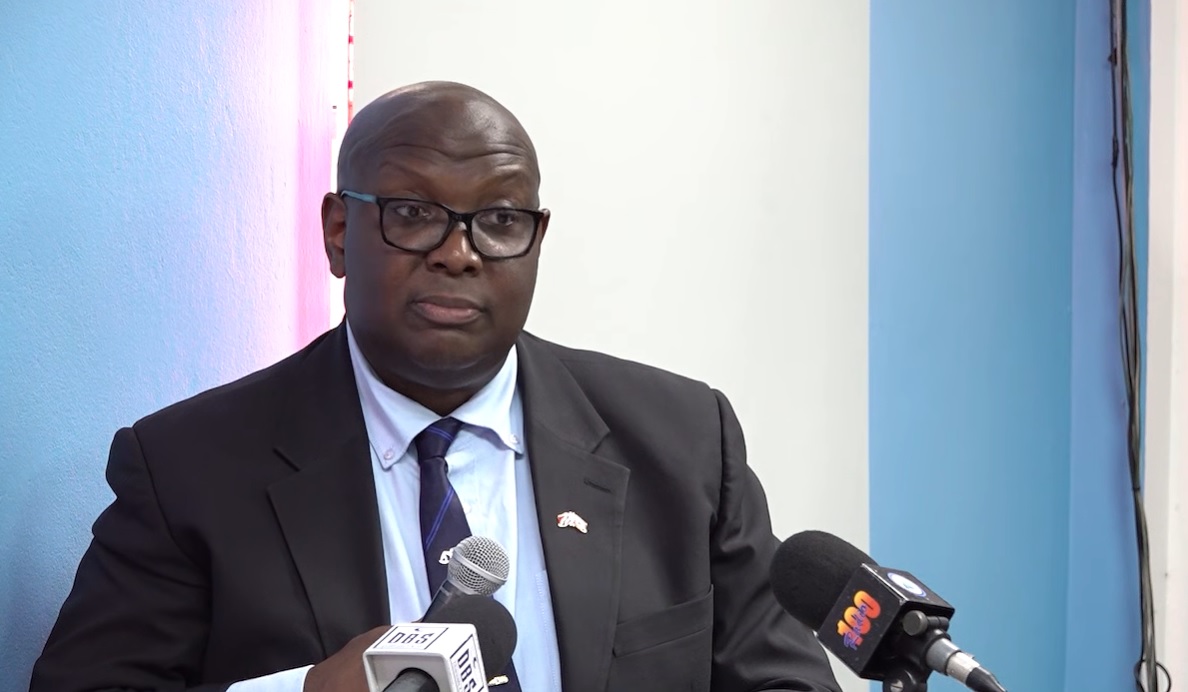
Dr. Walker also noted that toxicological analysis of bodily fluids was not performed, making it “impossible to comment” on whether Chacadan was impaired or intoxicated by sedative or hypnotic medications, alcohol or other illicit drugs at the time of death.
At the conference, Director of Forensic Science Services Fernanda Henry said that evidence including cheek samples from five key witnesses, two pieces of cloth that made up the noose, and swabs from Chacadan’s left and right hands had been sent to RGEN Inc. a forensic laboratory in Texas. No human DNA was detected on physical evidence such as the cloth and Chacadan’s hands.
Walker’s conclusions have been met with scrutiny from the Daniel family. On November 3, Frances shared her frustrations with this journalist. “Dr Walker came up with that point but he didn’t take Dr King’s other points, he only mentioned ‘suicidal’ and he said it’s his opinion. You cannot judge a case like that with an opinion.” She was referring to early statements that were brought up at the 2015 inquest where Dr King had weighed the probability of a self-inflicted hanging against the possible involvement of other people.
Questions still loom. In the event Chacadan’s death were ruled a suicide, a glaring question remains, why would the 21-year-old hang himself? Frances did not describe her son as suicidal.
This journalist attempted to ask the RSLPF about the case and the matters raised in this article. The Police Commissioner advised that DPP Daarsrean Greene be contacted. Attempts were made to reach Greene, but were unsuccessful.