When Lestin Celestin was asked whether he wished to accept his promotion to Master of Interventional Cardiology after presenting his thesis, he knew his answer carried more weight than a simple formality. Accepting would mark the final step in an academic programme that gave him the skills to fill a critical gap in Saint Lucia’s healthcare system: the provision of interventional cardiology services. If he were to practise at home, Celestin would be the only locally based specialist trained in the field.
Interventional cardiologists treat coronary artery disease, including ischaemic heart disease, which occurs when the arteries supplying blood to the heart become narrowed or blocked. The condition can lead to heart attacks and a range of other complications. Through delicate, minimally invasive procedures, interventional cardiologists can help restore blood flow to the heart, reducing the risk of further damage and helping to prevent long-term complications, including heart failure.
In Saint Lucia, however, access to these procedures remains limited. The service is available at the privately run Tapion Hospital through a specialist who periodically visits the island from overseas.
That public healthcare gap presents its own challenges. Unlike Barbados and Trinidad and Tobago, which have cardiac catheterisation laboratories that are accessible through public healthcare facilities, Saint Lucia’s main hospitals do not have these specialised units, where interventional cardiologists perform procedures. Still, Celestin remains optimistic about the possibility of establishing the service at home.
“A lab is not so expensive to create like other procedures,” he reasoned during an interview with St Lucia Times. “Cardiac surgery, for instance, needs a very big team, but interventional cardiology…a well-trained team is what’s needed. It’s something that we can have in Saint Lucia. So, my main goal is that we reach the point where we can have higher specialised care, especially treating ischaemic heart disease.”
His awareness of the gap in Saint Lucia’s healthcare system motivated him during his studies in Havana, Cuba, over the past 18 months–where, amid intensified sanctions imposed by the United States and declining fuel supplies, daily life was disrupted by economic crisis, fuel shortages and prolonged power outages.
He admits that awareness was also what motivated him to pursue a competitive placement in a specialised medical programme in the first place. “I’m not against private care, but I think more Saint Lucians should have access to those interventions-it’s life-saving…”
With that vision in mind, in January 2025, Celestin enrolled in Instituto de Cardiología y Cirugía Cardiovascular’s Masters in Interventional Cardiology programme. That was right after he completed a Clinical Cardiology Specialist Degree from Cienfuegos Medical Science University (CMSU) in Cuba. He had also completed his initial training as a medical doctor at CMSU in 2019 through the Saint Lucia-Cuba bilateral scholarship programme before completing residencies at healthcare facilities in Saint Lucia.
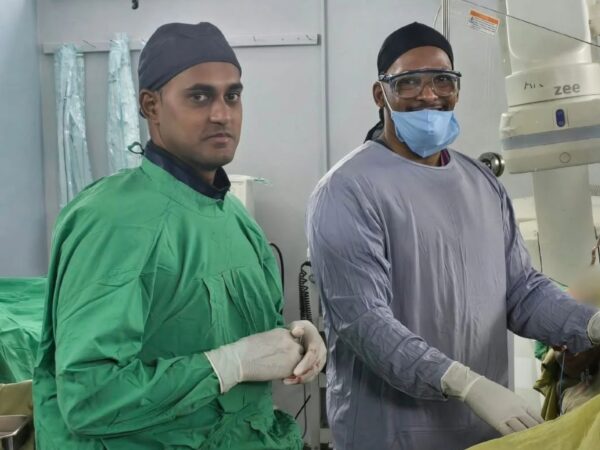
And although Celestin shared he was not able to receive the same level of financial support to pursue his specialisation in interventional cardiology–only securing a partial scholarship from his university due to a strong academic record–despite the financial demands, he says the experience has been well worth it.
“I actually feel happier now that I graduated as an interventional cardiologist than when I did as a general cardiologist because it’s something of an accomplishment. I’ve always wanted to reach this phase.”
Throughout the 18-month programme, and now as he awaits his next steps, Celestin works alongside a team in Cuba, handling at least five cases a day.
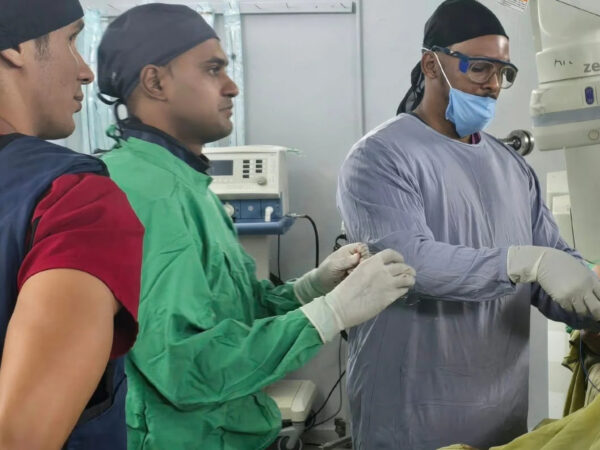
Celestin says he plans to finalise the translation of his qualifications before pursuing the next stage of his career. While he remains hopeful of finding an opportunity to put his skills to use in Saint Lucia, he says regional opportunities have also begun to emerge, some through colleagues.
For now, however, he admits his own heart and sights are still set on bringing his skills back home.