
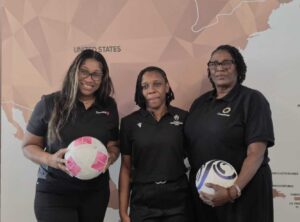
Saint Lucia was represented at a two-day regional anti-doping engagement at Concacaf headquarters in Miami, Florida, this week. Dr Natasha Gemma Innocent, the Saint Lucia Football Association’s medical lead, was among dozens of practitioners from the Americas participating in the exercise, which wrapped up on Thursday.
The workshop marked the launch of the inaugural Concacaf Anti-Doping Educator Programme. Concacaf convened the summit to establish a formal network of medical leads across its member associations, bringing together individuals responsible for testing oversight, regulatory compliance, and athlete education.

The timing of the meeting was tied to the upcoming 2027 World Anti-Doping Code and International Standards, which come into legal effect on January 1, 2027.
The working agenda addressed governance revisions, domestic education structures, and member association accountability. Presentations and practical modules were directed by specialists including Jeff Cook of the United States Anti-Doping Agency, Marsha Boyce of the Caribbean Regional Anti-Doping Organisation, Tammy Hanson of USADA, and Carlos Lopez of FIFA. Discussions focused on training national leads to build internal education programmes and execute anti-doping obligations within their home jurisdictions.

Dr Innocent’s participation follows ongoing capacity-building within the SLFA medical department. A medical practitioner who completed the advanced football medicine diploma through the Clinica Espregueira FIFA Medical Centre of Excellence, she is the team physician for Saint Lucia’s national senior men’s and women’s teams.
Innocent has participated in FIFA sports medicine conferences in London, Madrid, and Boston. Under Concacaf’s framework, she will act as the primary liaison between the continental governing body and the local association on anti-doping administration.
For Saint Lucia and the wider region, this initiative indicates an operational shift, certifying domestic educators, and placing the onus for compliance and player welfare directly onto national associations on a year-round basis. The true test will be whether the latest protocols can filter down to district leagues, club medical personnel, and youth coaches.