
By Darrion Poyotte-Lionel
For 32 years, a man sat in a Saint Lucia prison without ever being convicted of a crime. Found unfit to plead in 1991, he should have been hospitalised, with his detention regularly reviewed. Neither happened. A second man spent 24 years in the same limbo. No court, no ministry, and no lawyer noticed. They went free only because a private solicitor happened to hear of them and sued.
In 2023, the Privy Council ruled both detentions unlawful from the outset (Henry v Attorney General of St Lucia [2023] UKPC 41). Damages, first assessed at more than XCD$8.5 million, were sent back for reassessment.
This was no freak failure. It is what happens when a justice system has no one whose permanent job is to stand beside the accused.
Saint Lucia treats prosecution as an institution and defence as a transaction. The Director of Public Prosecutions (DPP) runs a permanent, salaried office protected by section 89 of the Constitution. The Legal Aid Authority, created in 2008, employs no defence lawyers at all. It means-tests applicants, issues certificates, and pays private attorneys a fee per case. When the case ends, the relationship ends. That is how two men could be forgotten for a combined 56 years.
Parliament should fix this by amending the Legal Aid Act to create a Public Defender Unit: a small team of salaried criminal defence lawyers, an investigator, and a duty roster that reaches people at the police station, where the costliest mistakes happen. No constitutional amendment is required.
The idea is tested. South Africa and New Zealand both began where Saint Lucia is now, paying private lawyers case by case, and both moved to salaried public defenders when that model buckled. In the OECS, St Kitts and Nevis, with roughly 53,000 people, opened a Public Defenders Department within its new Access to Justice Authority in 2024. On 14 September 2026, Barbados’ Chief Justice, Leslie Haynes, proposed the same institution to address a shrinking criminal bar and a backlog of 1 382 cases. Saint Lucia, with about two-thirds of Barbados’s population, carries a backlog of roughly 1 000, a heavier load per head. “The issue cannot be; it’s not as simple as increasing numbers,” he said. “Change must come at the institutional and structural levels.”
There is also an equality-of-arms problem. The Crown builds its case with police investigators and forensic analysts behind it. A legal-aid lawyer paid a fixed fee seldom has the money for an investigator or independent expert. Forensic evidence that is never tested is simply believed. A defender’s office with its own investigator lets the defence check the science, not just accept it.
The objections deserve straight answers.
The first is cost. But Saint Lucia is already paying for the gap. In Nazereus Andrew v Attorney General (SLUHCV2005/0090), a man waited almost seven years for trial because the DPP’s office was so understaffed that, for a time, the DPP prosecuted every case alone. The High Court found his right to a timely trial breached, warning that constitutional rights “cannot be placed at the mercy of Government inefficiency”. Underfunding one side of the courtroom created that liability; underfunding the other side can create the next one. Salaried defenders would also absorb cases now paid for through private fees. Admittedly, the unit has not yet been costed; a cheap audit of how much of that backlog it could absorb should come first.
The second objection comes from the private bar: why not raise legal-aid fees? Better fees buy more cases, not a career. A salaried post with a promotion ladder answers what a fee schedule cannot: the student debt that Chief Justice Haynes notes steers young lawyers away from criminal work. Private attorneys would still handle conflicts and overflow, and defendants facing the gravest charges, including capital ones, would keep the right to choose them.
The third objection is the strongest. The United States promised free counsel in Gideon v Wainwright (1963), calling lawyers in criminal courts “necessities, not luxuries,” yet American public defenders remain chronically overloaded and underpaid. South Africa’s Constitutional Court warned in S v Vermaas (1995) that promising accused persons a right to counsel without the machinery to deliver it “makes a mockery of the Constitution”. Recruitment is a real risk too: St Kitts and Nevis has already had to re-advertise its Public Defender post. The answer is to write protections into the law itself: salaries pegged to the matching Crown Counsel grades, a ring-fenced budget, an enforceable cap on each lawyer’s caseload, and a Chief Public Defender appointed by a panel drawn from government, the judiciary and the Bar.
The Minister for Justice should commission a caseload audit and consult the Bar Association, the DPP and the judiciary within six months. The prosecution has a ring, a house, and a pension. The defence gets paid by the visit and is told not to call. Any of us could need that defence one day, and we should ask why the State is ashamed to be seen with it.
Two men lost more than half a century between them because they were nobody’s client. A Public Defender Unit would make sure the next person in that position is somebody’s.
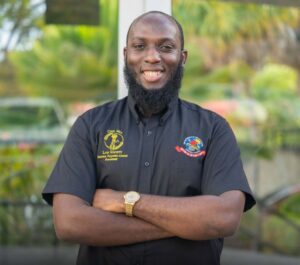
Darrion Poyotte-Lionel is a final-year law student at the University of the West Indies, Cave Hill Campus. He is interested in diplomacy, constitutional law, and criminal justice reform in the Caribbean.