Chair of the CARICOM Reparations Commission, Sir Hilary Beckles, has appealed directly to King Charles III to use his position to advance reparatory justice, as the monarch visits the Caribbean ahead of the Commonwealth Heads of Government Meeting (CHOGM) in Antigua and Barbuda next week.
His appeal comes amid renewed calls for Britain to address the legacy of the transatlantic slave trade and colonial rule, including the social and economic inequalities that, reparations advocates argue, continue to affect Caribbean societies.
In a statement, Sir Hilary said his appeal was not being made to the King in his capacity as Head of the Commonwealth or as constitutional monarch.
“I’m appealing to Charles Windsor, a parent, a grandparent, a man today who reflects upon the history of his family,” he said.
“We’re calling upon the King as a man, as a human brother, to provide leadership to this organisation over which he presides – the Commonwealth.”
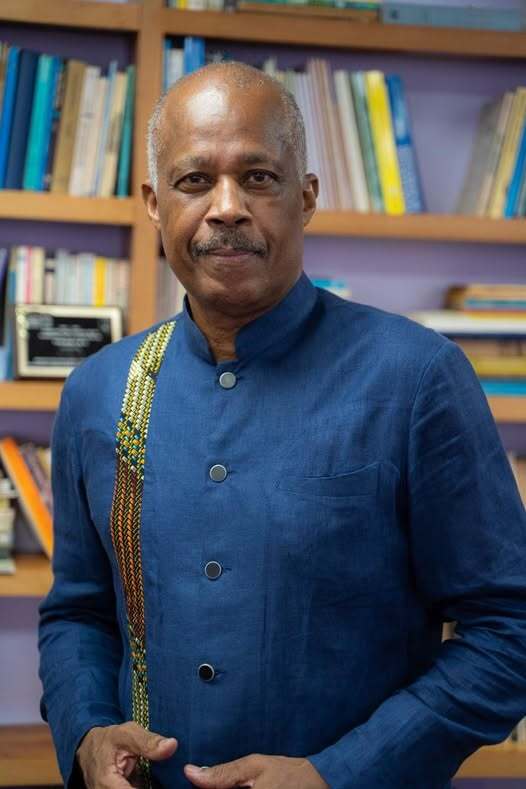
Sir Hilary said the Commonwealth had historical links to the transatlantic slave trade.
“The Commonwealth historically was the site of this crime (chattel enslavement),” he said.
He argued that the organisation could become a moral institution committed to human justice.
“… And this is what we are calling for in CARICOM, in the African Union, all of us who are committed to this process for reparatory justice for the people who have suffered the gravest crime in the modern world.”
Eric Phillips of the Guyana Reparations Committee also voiced support for the appeal, expressing confidence that King Charles could encourage further discussion on the issue.
“The King is a decent monarch based on his lifelong commitments to the world in which the environment for him is sacred. We Africans are also part of that sacred environment,” Phillips says.
“As an enlightened monarch, I strongly believe King Charles will want to promote a conversation of decency that reflects his character and values.”
On Tuesday in The Bahamas, the King’s first stop in the region, a group of Rastafarians staged a peaceful protest calling for reparations and restitution.
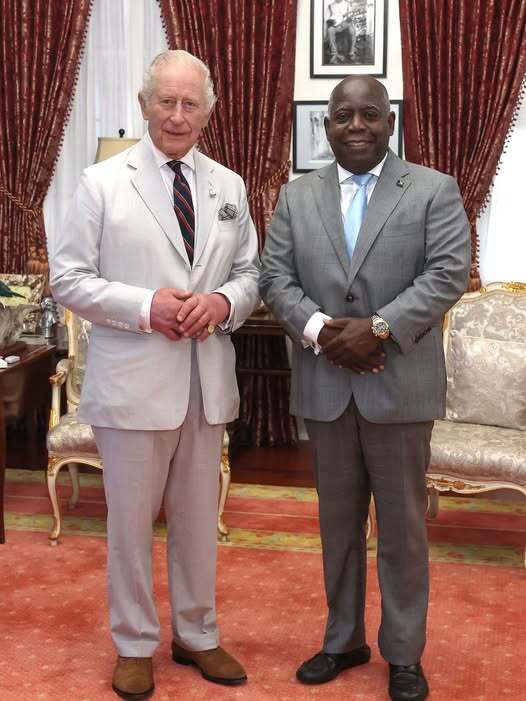
The King is visiting Guyana from October 29 to 30 ahead of CHOGM, scheduled for November 1 to 4. Guyana’s President Irfaan Ali has said that while the monarch has previously acknowledged slavery as a dark chapter in history, a formal apology is the necessary next step.
Ali has proposed a structural reparations framework centred on development financing, debt relief and targeted investment to address historical and continuing economic inequalities.
The proposal aligns with the CARICOM Reparations Commission’s 10-point plan, which calls for, among other measures, a formal apology, debt cancellation and public investment in health and education.
The British Government has repeatedly rejected demands for an apology or reparations in connection with the transatlantic slave trade.